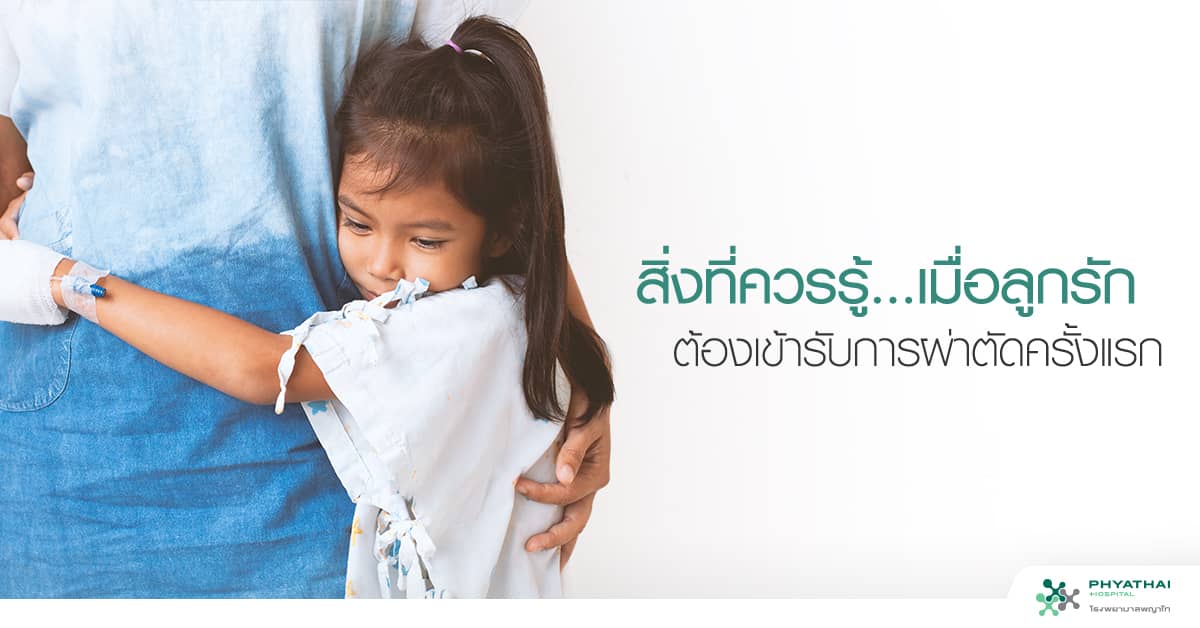
Baby first surgery
Pre-operative Preparation (Pre-op)
The surgery is one of treatments that helps relieve your child pain. Proper surgical procedure that causes change to the body is performed under doctor’s decision. People from different ages can have the surgery such as small one, newborns or even a baby inside a mother’s womb, adults and old people. Everyone undergoes different surgical procedures including anesthesia techniques according to ages. The risks and probability of having complications from anesthesia and surgery depend on many factors. Most complications occur when operation is unprepared. Moreover, in general, for non-emergency cases of pediatric surgery we recommend a child to undergo an operation when she/he is in good health condition. The children or babies with symptoms such as common cold, coughing and fever for safety are not recommended to be under procedure, and to make sure parents have proper understanding about process and what suitable activities that children are or are not allowed doing before and after procedure please always have your doctor consultation.
Surgical risks and post-operative care after procedure,
-
- Wound Infection
Around 1-3% of the cleanest wound can still be infected by bacteria; risks for infection possibly expand before and after procedure which also includes after dressing. However, the more dirty the more risks, since in dirty wound has about 20-25% of the risk therefore in order to lower the infection taking shower before coming to a hospital is recommended. In general, a doctor provides patients prophylaxis antibiotics before operating to prevent them from infection; however to minimize the risk of developing drug-resistant bacteria patient with contaminated wound or high risk will have to receive preoperative antibiotics. Moreover, if patients are found having redness or soreness developed within 3-4 days after operation please visit a hospital to evaluate the wound. However, if you have any query, you can make a call for the doctor or arrange the appointment.
-
- Bronchospasm
Bronchospasm affected by anesthesia is a kind of reaction that cannot be prevented. In normal healthy children, the chance is 3-5%. However if the child has cough with a lot of mucus or fever, chance of getting bronchospasm is higher to about 15-28%. Immediate medical attention and treatment by the anesthesiologist is required when the condition developed. If a child has severe bronchospasm, it is highly recommend to be observed symptoms in the ICU room for close supervision for 1-2 nights until the symptoms resolve. Therefore, if the baby has a cough with a lot of mucus or has a fever, we recommend to postpone the surgery until the baby is well.
-
- For Hernia, Hydrocele, Undescended testis, Phimosis/ Circumcision surgery
Mostly, the scrotum or penile area will be more swelling on the first 3 days due to the remodeling of the tissue structure, but it will be reduced by itself within 2 weeks or 2 months. To reduce inside pressure, please do not force or hold the urine after surgery and to prevent the wound from bleeding avoid cycling or playing contact-sports that need bumping or twisting movements such as kicking, playing basketball and swimming for at least one month. If the wound dehiscence or incision reopens clean the wound with normal saline solution or sterile water then go to the nearest hospital immediately to receive proper care for the wound.
-
- For Tongue-tie revision
Some minor bleeding in the mouth may occur on the first day after surgery, if the blood clots fall out quickly use clean napkin folds it thick then moisten it with drinking water and press it over the tongue by placing the index finger over and hold it for 10 minutes. If the bleeding still continues, parents should take the baby to hospital as soon as possible. On the following day, the white-yellow patch will be seen and starting to develop, which will lasts for about 7-14 days. Please do not try to remove it. After that, just wash your mouth with drinking water 10 times a day. The tongue exercise should be practiced for newborn baby or children, by making it touch the upper lip for instance licking ice-cream and learning to pronounce diphthongs and words such as giraffe, lun-la, and rainbow.
-
- For Open and Laparoscopic appendectomy
After your child wakes up from the surgery, tell them to take a deep breath as much as possible to reduce collapsed lung (atelectasis) which usually occurs on the first day after surgery. The bed should be lifting, rising your child’s head and chest above the pelvis. And the most importantly, the patient should try to get up and walk as much as possible, especially in the first 5-7 days after surgery.
If you have any query, you can make a call for the doctor or arrange the appointment. Feel free to call for pediatric surgery at the surgery center at 02-467-1111 ext. 3100 between 9:00-12:00 daily.
