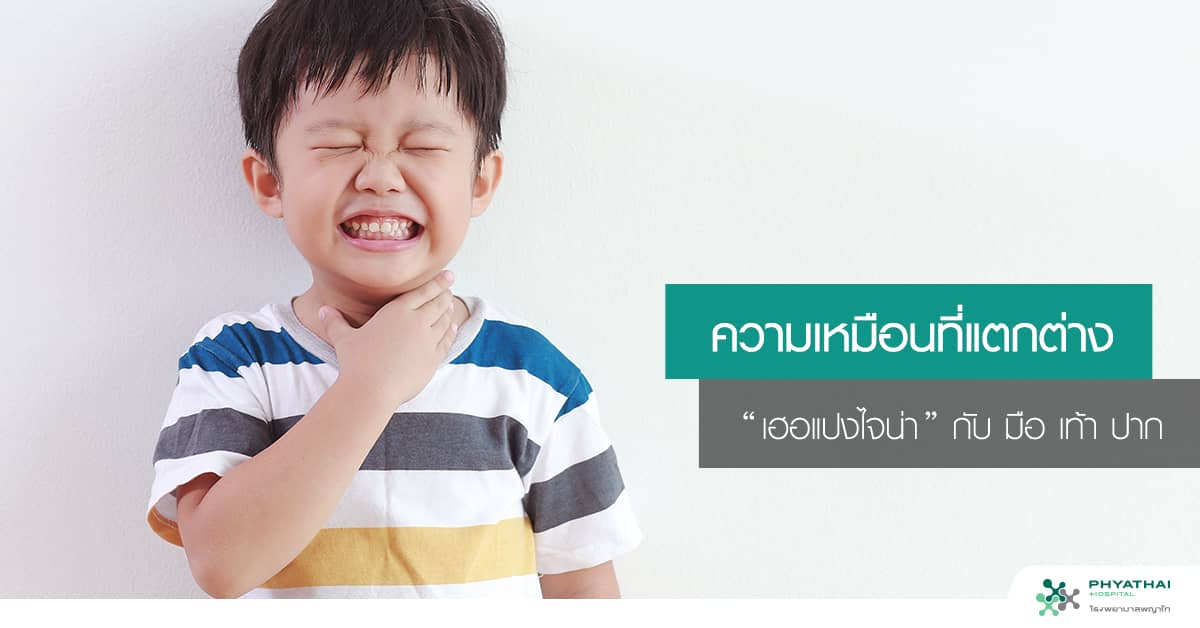
How are Herpangina and Hand, Foot, and Mouth Disease Different?
Herpangina and Hand, Foot, and Mouth Disease are illnesses that commonly occur in children under 5 years old. Both diseases have similar symptoms, causing sores in the mouth and throat. However, herpangina only causes small sores in the throat along with a red throat. In contrast, hand, foot, and mouth disease causes sores in the throat along with rashes on various parts of the body such as the palms, soles, or limbs. It may also cause fever, fatigue, poor appetite, vomiting, mouth pain, lethargy, and unusual irritability. The serious concern with both diseases is that if caused by the virus “Enterovirus 71 group”, it can lead to severe symptoms affecting the brain, causing encephalitis, lethargy, seizures, and abnormal breathing, which requires specialized treatment from pediatric infectious disease specialists and pediatric neurologists closely in the hospital.
How Does Herpangina Occur?
Herpangina and hand, foot, and mouth disease are caused by infection with viruses in the enterovirus group, which includes many strains. Once a child has had the disease, they develop immunity and will not get sick from the same virus strain again, but there is a chance of reinfection from other virus strains. The virus spreads through nasal mucus, saliva, sputum, feces, or contamination in water, food, utensils, hands, toys, tables, chairs, and other materials. Children can get infected through the mouth. This virus group has a very high potential to cause disease; infection can occur with as few as 10-100 viral particles.
Symptoms of Herpangina
Symptoms vary among children, but common signs include sudden fever that does not improve after taking antipyretics, and the fever may reach up to 40 degrees Celsius. Some children may have febrile seizures, difficulty swallowing, refusal to eat, loss of appetite, drooling, vomiting, and signs of dehydration such as dry lips, sunken eyes, crying without tears, dark urine, and reduced urination. Mouth sores are also found, which are small multiple sores on the soft palate, tonsils, or the back wall of the throat. These sores usually appear within 2 days after infection. The sores are 2-4 millimeters in size, white or light gray with red edges, and most sores heal within 7 days.
Although There Is No Antiviral Medication, It Can Be Treated
Currently, there is no antiviral medication that directly treats herpangina, but the disease is mild and can resolve on its own within 7-10 days with symptomatic treatment as follows:
- Give antipyretic medication such as paracetamol along with frequent sponging to reduce fever
- Encourage the child to sip cold water frequently or drink cold milk that is not too sweet
- Allow the child to eat ice or ice cream that is not sour or too sweet
- Provide bland, soft, and easily digestible food (avoid fruit juices or sour-tasting foods)
- If the child refuses to eat, the doctor may use medication containing a local anesthetic to help the child eat
However, if the child has a high fever that does not improve after taking antipyretics, has febrile seizures, refuses to drink water or milk, eats very little, shows clear signs of dehydration such as very dark and reduced urination, dry lips, deeply sunken eyes, unusual lethargy, or shows signs of restlessness, parents should promptly take the child to see a doctor.
How to Prevent Herpangina from Visiting
Since there is currently no vaccine to prevent this disease, parents must maintain hygiene by:
- Frequently washing hands thoroughly, especially before and after eating and before preparing food
- Washing hands after every use of the bathroom
- Washing hands before and after changing diapers, children’s underwear, or after contact with the child’s nasal mucus, saliva, sputum, or feces
- Using tissue, handkerchief, or the crook of the arm to cover the mouth when coughing or sneezing
- Disposing of used tissues in a tightly closed trash bin
- Regularly cleaning floors, tables, chairs, toys, and other materials that children often touch with disinfectant
- If a child has herpangina, they should stay home from school for 1 week to prevent spreading the infection to other children
Pediatric Infectious Disease Specialist
Children’s Health Center, Phyathai 3 Hospital
Make an Appointment