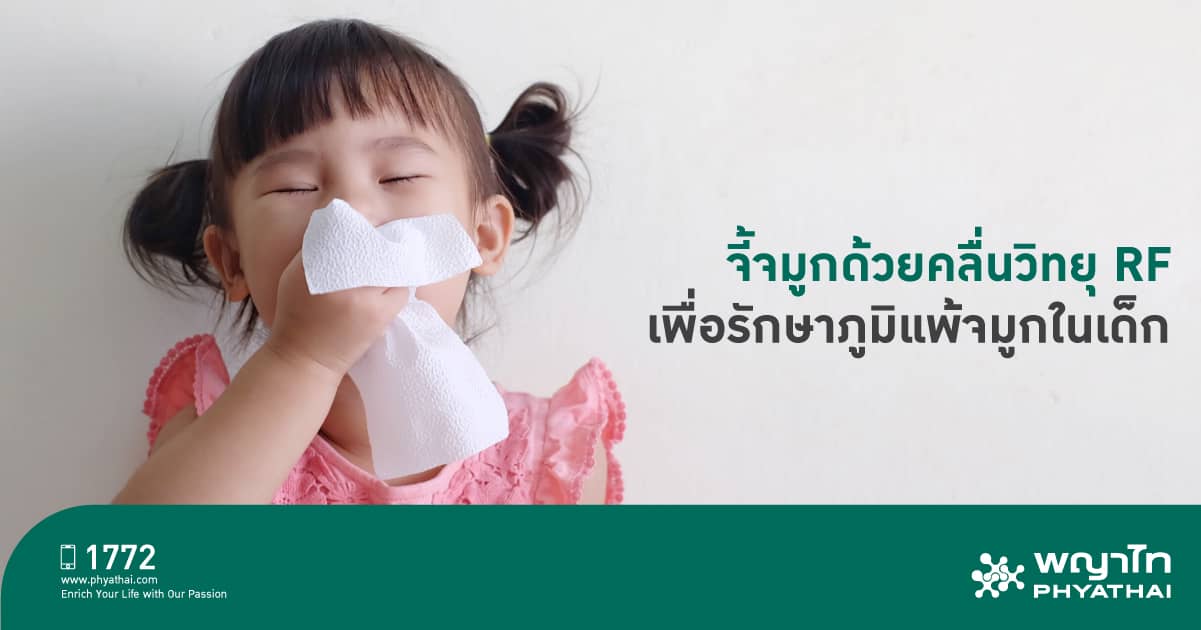
Currently, allergic rhinitis or chronic nasal inflammation in children is becoming more common. The main cause is usually genetic. If either the father or mother has allergies, the child has about a 30% chance of developing allergies. However, if both parents have allergies, the child’s chance increases to about 50%. Coupled with increasingly severe environmental pollution and more dust, children are at greater risk of being affected by allergic rhinitis. It is the direct responsibility of parents to closely observe symptoms and take good care of their children.
What are the symptoms of allergic rhinitis in children and how severe can it be?
Most children with allergies usually present with symptoms of “sneezing, itching, congestion, runny nose, and wheezing”, which are considered initial symptoms that may not be very severe. However, they should not be ignored because if left untreated, symptoms can worsen, such as difficulty breathing, severe nasal congestion, mucus blockage causing mouth breathing, and possibly snoring. Over time, this increases the risk of sinusitis, nasal swelling, and may even progress to nasal polyps.
How to treat allergic rhinitis in children?
The main treatment approach for allergic rhinitis in children includes avoiding dust and allergens, which can be identified through blood tests or skin tests. Treatment then involves medication, which can be oral or nasal sprays. Some cases may be treated with immunotherapy. The effectiveness of treatment depends on the symptoms and severity of the disease in each child patient.
RF Radiofrequency: A better alternative for treating allergic rhinitis in children
Many children, despite receiving treatment with oral and nasal spray medications and avoiding allergens, still do not improve. Currently, medical devices have been developed to offer a better treatment option, which is RF radiofrequency nasal ablation. This radiofrequency emits low heat, only about 40 degrees Celsius, causing the nasal tissue in the treated area to contract. This can reduce symptoms such as sneezing, itching, nasal congestion, and runny nose by up to 80%. The RF nasal ablation is performed under local anesthesia or general anesthesia for young children. Patients can go home immediately after treatment or rest for only one night. The procedure details for RF radiofrequency treatment of allergic rhinitis in children are as follows:
- The doctor decides whether to use local anesthesia or general anesthesia depending on the child’s age and cooperation.
- A small needle-like radiofrequency device is inserted into the swollen nasal area under endoscopic guidance.
- The radiofrequency is applied for about 6-10 seconds, causing the nasal mucosa to shrink and form scar tissue. The mucus glands and swollen tissue also shrink, reducing symptoms such as sneezing, itching, congestion, and mucus blockage by up to 80%. Results are clearly seen within 1-2 weeks.
- During the radiofrequency ablation, the nose is rinsed with saline to remove blood crusts and lymph fluid from the nasal cavity.
- The total treatment time is about 5-10 minutes. Older children can go home immediately after the procedure, but very young children who undergo general anesthesia may be observed for about 2 hours post-procedure before going home or may stay overnight in the hospital.
- Possible side effects include tightness or aching in the nasal cavity or face, slight bleeding for 2-3 days after the procedure, but these are not dangerous. Most patients can resume normal activities after surgery. Precautions include avoiding sneezing, forceful nose blowing, and vigorous nose picking.
Currently, RF radiofrequency surgery for allergic rhinitis in children is considered a highly effective treatment and a good option for children who have not improved with other treatments. However, allergic rhinitis and all types of allergies cannot be completely cured. Continuous monitoring, medication, and allergen avoidance as prescribed by the doctor are necessary. RF radiofrequency treatment can improve symptoms for about 3-5 years, reducing sneezing, itching, congestion, mucus blockage, and breathing difficulties by up to 80%. Nevertheless, if patients do not take good care of themselves, do not follow medical advice, do not avoid dust and allergens, or frequently catch colds, the effectiveness of the treatment will decrease and allergy symptoms may recur sooner.
Specialist Surgeon
Ear, Nose, and Throat Clinic, Phyathai 3 Hospital
