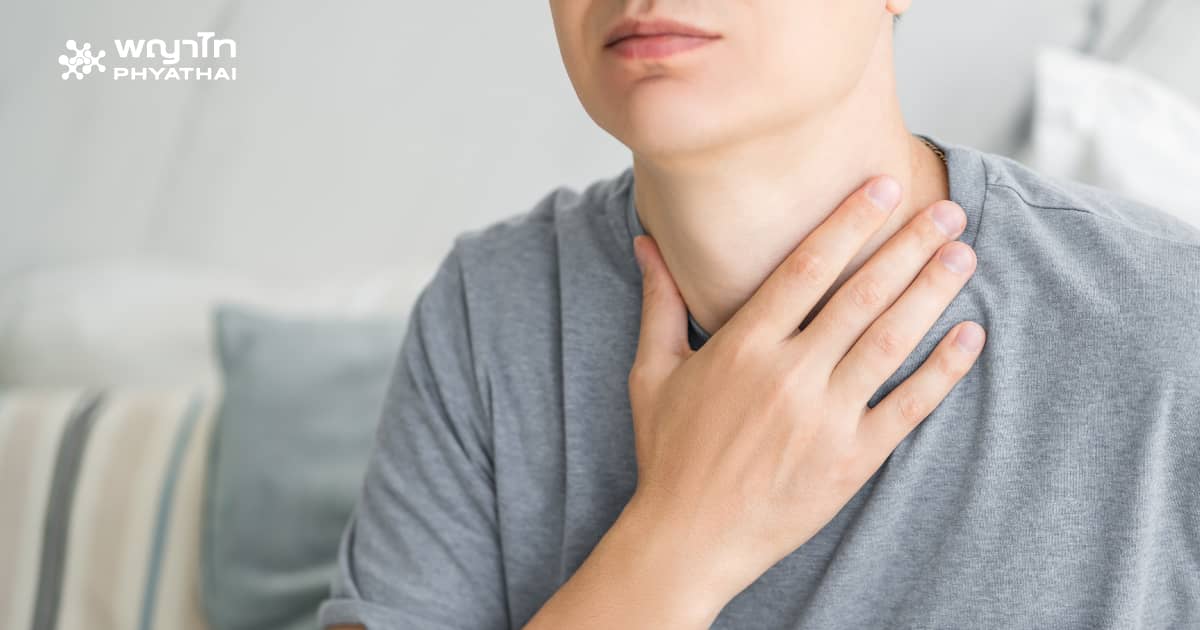
It is believed that many people have heard about hyperthyroidism, but did you know that there are other thyroid disorders that are equally dangerous? One of them is the condition of a “thyroid nodule”, which if left untreated, can eventually develop into thyroid cancer. Therefore, it should not be overlooked.
How to recognize symptoms… that indicate risk from a thyroid nodule?
Usually, patients with a thyroid nodule come to see a doctor after feeling a lump in their neck. The nodule can grow either quickly or slowly. If the thyroid nodule is large, the patient may experience a feeling of tightness in the throat, as if something is stuck, difficulty swallowing, or painful swallowing. However, if the thyroid nodule is small, there may be no other symptoms or it may not be palpable at all. This is why most patients visit the doctor only when the nodule has grown large. Therefore, diagnosis requires a medical history, physical examination, and radiological tests such as thyroid ultrasound. Sometimes, a biopsy of the thyroid tissue is needed to determine whether it is cancerous or just a benign tumor.
How dangerous is a thyroid nodule… and who is at risk?
Thyroid nodules can be either benign or malignant and can occur in all ages and genders. If found in children under 16 years old or in elderly people over 60 years old, the risk of thyroid cancer is higher. Women are more likely to develop thyroid nodules than men, but men have a higher risk of the nodules being cancerous. The causes of thyroid nodules include genetics, individual thyroid abnormalities, and environmental factors such as pollution or exposure to chemicals. Areas with radioactive contamination, such as nuclear power plants, often report higher cases of thyroid cancer than other places.
How to treat… when a thyroid nodule is found?
When a thyroid nodule is detected by palpation, the doctor will first determine whether the nodule is cancerous or a benign tumor. This includes blood tests to check hormone levels for hypothyroidism or thyroid hormone abnormalities, and ultrasound to assess the characteristics of the nodule—whether it is solid, cystic, or a combination of both, and whether there is calcification in the thyroid. The presence of calcification increases the risk of thyroid cancer. A biopsy may also be performed to check if the tissue is malignant or benign. If all tests indicate a low risk of cancer, treatment will primarily involve medication.
If medication treatment over 6 months to 1 year does not reduce the size of the thyroid nodule, or if abnormal growth is observed during treatment, surgery should be considered. Thyroid nodule surgery requires general anesthesia. The most important risk to be cautious of is “hoarseness”, a complication that occurs in more than 10% of cases. This is because behind the thyroid gland lies the Recurrent Laryngeal Nerve (RLN), which controls the vocal cords. This nerve is pale yellow-white and only 1-2 millimeters in diameter, which is very small. In some patients, the thyroid nodule is hard, fibrotic, and adheres to the trachea or esophagus, making thyroid surgery difficult. Locating the RLN can be challenging and the nerve may be injured, so the expertise of a specialized surgeon is required.
Safe thyroid nodule surgery… with new technology for detecting the Recurrent Laryngeal Nerve (RLN)
Because thyroid nodule surgery carries the risk of damaging the nerve that controls the vocal cords, a new technology called NIM or Nerve Integrity Monitor has been developed. This device resembles a pen and is used to detect the nerve’s location during surgery. The surgeon uses the device to probe areas suspected to contain the nerve. If the nerve is present, the NIM device emits a warning sound to alert the surgeon. If no sound is heard, it means there is no nerve in that area. This allows the surgeon to operate more effectively and reduces the risk of surgical errors to nearly 0%.
If the thyroid nodule is not malignant and not cancerous, it may not be dangerous and surgery may not be necessary. However, symptoms should be monitored and thyroid health checked regularly. If the nodule grows larger, surgery should be performed to prevent the risk of malignancy in the future. If the nodule is cancerous, after surgical removal of the malignant thyroid tissue, further treatment with radioactive iodine or radiation therapy will increase the chances of complete recovery. Therefore, the best way to prevent and stay safe from thyroid nodules and thyroid cancer is to regularly observe symptoms, palpate the neck for lumps, and undergo annual health check-ups for early detection. Early diagnosis increases the likelihood of successful treatment and cure.
