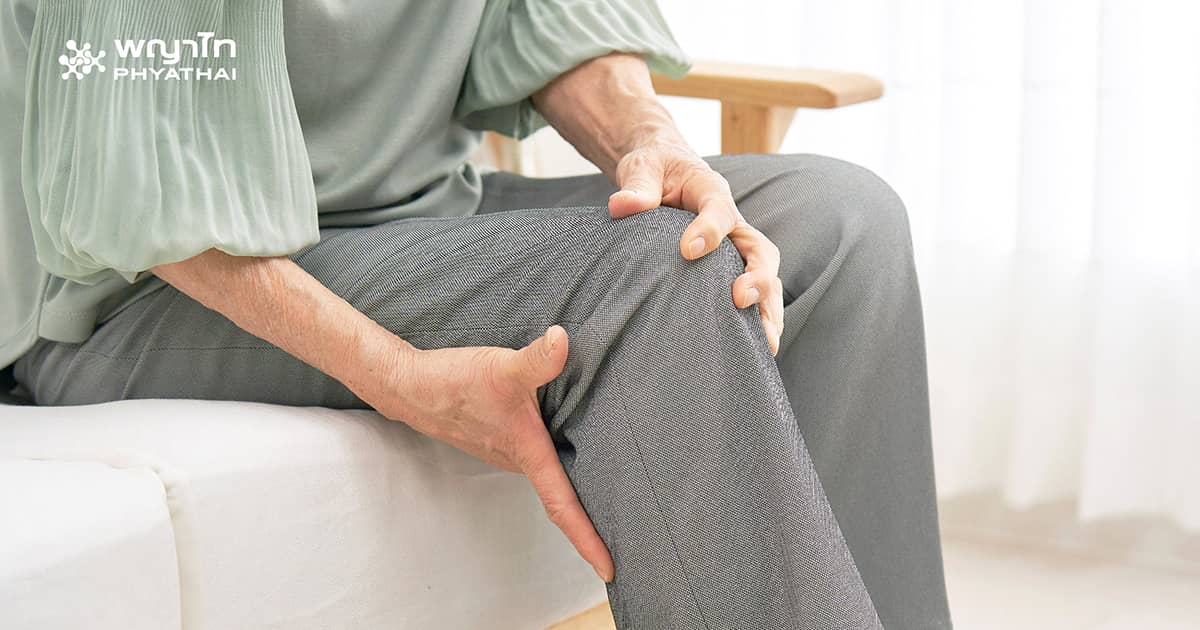
“Osteoarthritis of the Knee” is a common health problem found in the elderly, caused by long-term use of the knee joint (Primary OA knee). However, nowadays, osteoarthritis of the knee is increasingly found in younger people, especially in middle age, and the trend continues to rise. The cause may not be related to age but rather to being overweight and overusing or misusing the knee joint, leading to earlier onset of osteoarthritis. Symptoms include knee pain and stiffness, progressing to severe pain.
To help everyone maintain strong knees, today we have gathered information about osteoarthritis of the knee, suspicious symptoms, various causes, and proper care and treatment methods for everyone to know, in order to reduce risks and learn how to take care of themselves if they have osteoarthritis of the knee.
What is Osteoarthritis of the Knee?
Osteoarthritis of the knee (Knee Osteoarthritis) is a disease caused by the degeneration of the cartilage surface of the knee joint, including changes in shape, structure, joint bone function, and wear and tear of the bones near the joint with age. When the cartilage surface is no longer present to cover the bone, the bones collide under weight-bearing, causing knee pain, swelling, and joint stiffness. The condition worsens over time, leading to deformity of the knee and inability to perform daily activities normally.
What are the causes of osteoarthritis of the knee?
The causes of osteoarthritis of the knee can be divided into two main categories based on the nature of occurrence:
1. Primary knee osteoarthritis: or unknown cause, it is a condition caused by the degeneration of cartilage surface with age, such as
- Increasing age: the most common cause, as with age, the cartilage surface, muscles, and nerves degenerate. At age 40, osteoarthritis begins; at age 55 and above, knee pain and degeneration start; and by age 60, up to 40% may have osteoarthritis of the knee.
- Gender: more common in females than males by 2-3 times due to lack of estrogen hormone, which protects cartilage degeneration, especially after menopause, making women more prone to osteoarthritis.
- Genetics: studies show genetics are related; patients with family members or relatives with osteoarthritis have a higher chance of developing it, though there is no direct genetic inheritance pattern.
- Excess body weight: those who are overweight or obese have a higher risk of early osteoarthritis because every 0.5 kg increase in weight adds 1-5 kg of force on the knee joint. Excess fat cells also affect cartilage and bone cells, accelerating degeneration. Lack of exercise or regular alcohol consumption also contributes to early onset.
- Overuse: using legs and knees improperly or staying in unsuitable positions for long periods, such as standing for long hours, lifting heavy objects, frequent stair climbing, bending to lift, or activities with high knee pressure like kneeling, squatting, or sitting cross-legged.
- Joint component defects: such as loose knees or weak thigh muscles.
2. Secondary knee osteoarthritis: degeneration with known causes, which can be further divided into several causes as follows:
- Traumatic impact: in those who have had injuries or accidents involving the joint, ligaments, or chronic knee injuries from work or sports accidents causing high impact, such as falls with twisted knees, fractures around the knee, or bleeding in the knee joint. These cause knee pain and increase the risk of early osteoarthritis.
- Certain diseases: such as rheumatoid arthritis, gout, infectious arthritis, diseases affecting organs outside the knee, and various inflammatory joint diseases.
Symptoms and warning signs of osteoarthritis of the knee
Generally, symptoms of osteoarthritis develop slowly, causing most patients to neglect them because early-stage symptoms still allow normal activities. Therefore, if abnormalities occur and you are unsure if you are at risk of osteoarthritis, you can observe the following signs:
1. Beginning knee pain
The most common symptom, usually worsening with movement such as walking up or down stairs, squatting, or sitting on heels, but easing after rest. This is an easily noticeable symptom as it directly affects daily life. Typically, the pain is intermittent around the knee and lasts continuously for more than 6 months.
2. Knee crepitus (crackling sound)
When the knee joint starts to wear, friction occurs between the inner lining of the joint or thickened ligaments, and rough cartilage surfaces at the bone ends. Patients will hear crackling sounds when moving the knee and feel pain.
3. Knee stiffness, tightness, and rigidity
Usually noticed upon waking, patients feel stiffness and difficulty moving the knee in the morning, which gradually improves. It can also occur after staying in one position for a long time without movement, feeling loss of joint flexibility and inability to fully straighten or bend the knee.
4. Knee instability
Feeling instability, especially when walking or moving, caused by defects in joint components such as loose knees or weak thigh muscles.
5. Swelling, warmth, and tenderness
Caused by increased joint fluid and bone spurs at the knee edges. On palpation, the knee feels hard and thick with some softness. Some patients experience pain, swelling, and warmth in the knee, and pressing the knee increases pain.
6. Knee deformity, thigh muscle wasting, and joint deformity
Clear signs of osteoarthritis, observed as outward or inward bowing of bones around the knee, muscle wasting, deformity causing leg shortening, difficulty walking or performing daily activities, and pain during movement.
Stages of osteoarthritis of the knee
Generally, osteoarthritis of the knee is divided into 4 stages:
| Stage 1 |
Able to perform all activities normally |
| Stage 2 | Unable to perform heavy work |
| Stage 3 | Able to perform daily activities |
| Stage 4 | Unable to walk |
If symptoms are in stage 1 or early stage, self-care is possible by adjusting lifestyle behaviors, such as avoiding postures that put pressure on the knee, sitting properly, avoiding squatting, kneeling, sitting cross-legged, sitting on low chairs, crossing legs, or twisting the knee in any case. Be cautious when climbing stairs unnecessarily. For those with occupations requiring prolonged standing, such as vendors or cooks, taking breaks and avoiding heavy lifting can slow symptom onset.
For patients with warning symptoms from stages 2-4, it is recommended to consult a doctor to plan treatment, which helps prevent further joint damage and reduces the chance of severe osteoarthritis.
What type of knee pain requires immediate medical attention?
Since osteoarthritis often presents with pain as a warning sign, intermittent pain can be monitored while adjusting behavior and self-care. However, some types of pain should not be delayed and require immediate medical consultation as they may cause balance problems or inability to walk in the future, such as:
- Severe knee pain even at rest
Persistent pain even when still, worsening with movement or weight-bearing, possibly indicating accumulated inflammation in the knee joint.
- Knee pain with swelling and bruising
Pain, swelling, bruising, and warmth in the knee, indicating severe inflammation of the bone or surrounding ligaments, or bleeding in the joint, often accompanied by fever. - Pain radiating down the leg with limited knee bending
Pain radiating down the leg, inability to fully bend the knee, difficulty walking or standing. This may indicate obstruction in the joint, calcification, or severe cartilage wear, risking future inability to stand or walk.
Treatment approaches for osteoarthritis of the knee
1. Non-pharmacological therapy involves lifestyle adjustments to eliminate causes, such as weight loss, exercise, joint care, and proper joint use.
2. Physical therapy focuses on muscle rehabilitation to relieve knee pain, such as ultrasound, laser therapy, or using knee braces or soft splints. However, prolonged use may cause muscle atrophy.
3. Pharmacological therapy may be oral or injectable. Current medications include pain relievers and non-steroidal anti-inflammatory drugs (NSAIDs), and drugs that modify joint structure, which must be prescribed and monitored by a doctor.
4. Surgical treatment is increasingly popular due to good outcomes, allowing patients to return to normal life without knee pain. Surgical methods include:
-
- Arthrodesis (joint fusion surgery)
- Arthroplasty (knee replacement surgery)
- Osteotomy (bone realignment surgery)
Each surgical method is suitable for different patient conditions. Before surgery, evaluation and treatment planning are done with the patient, considering medical history, gait, knee shape, thigh and surrounding muscle condition, signs of inflammation, pain, swelling, redness, warmth, joint movement (bending and straightening), and crepitus, along with X-rays, CT scans, or MRI.
Although osteoarthritis occurs with aging, it can be delayed, and there are various suitable treatment options for each individual. Therefore, anyone experiencing knee abnormalities should pay attention and start treatment early. If pain and difficulty in daily life occur, it is recommended to consult a doctor promptly for diagnosis and proper treatment planning to reduce severity, progression, and pain, improving quality of life.

