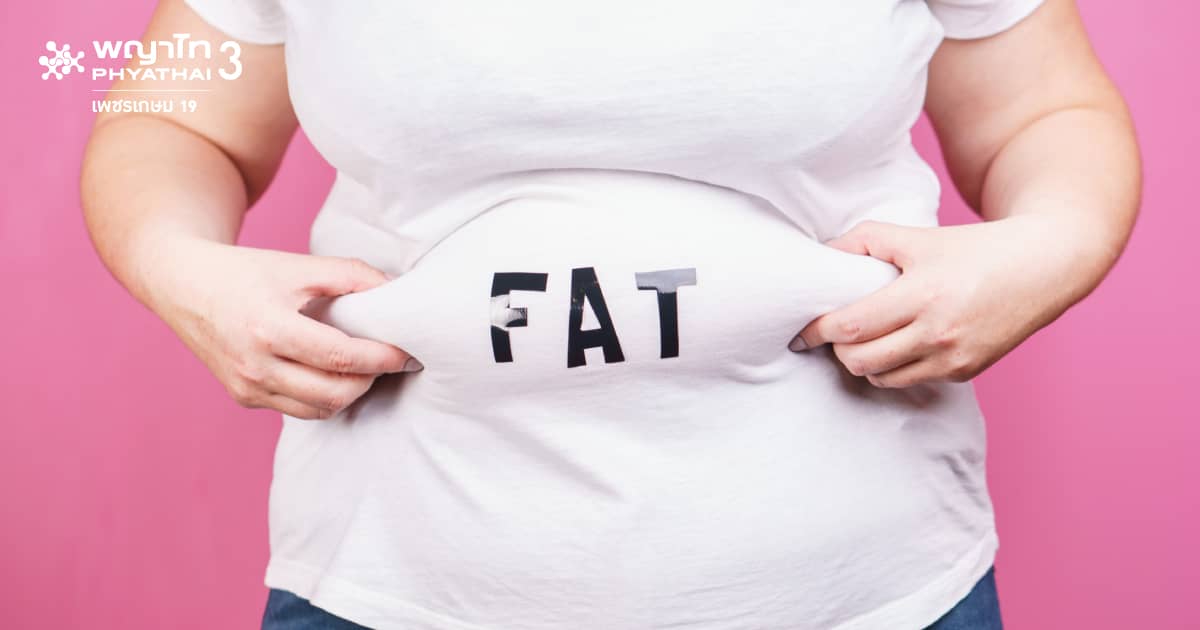
Obese!! A short word but it can be so harsh that it hurts many people. But believe me, for some, obesity may not be as frightening as being diagnosed with “obesity disease,” which means having a weight above the standard, leading to many dangers and serious diseases. Currently, the obesity rate in Thailand is alarmingly increasing, especially among children who rank as the most obese in ASEAN!! Therefore, obesity and obesity disease are things we should understand well and be aware of to protect ourselves from the risks of various serious diseases that could take our lives at any time.
Getting to Know Obesity, the Disease We Should All Stay Away From
Obesity is a condition where the body accumulates excessive fat beyond what is necessary, causing adverse health effects. To determine if we are obese, we can consider the BMI or Body Mass Index, which is calculated by dividing weight (kilograms) by height squared (centimeters). If the BMI value is between 25-30, it means we are obese and at risk of other diseases.
What diseases are at risk when obese?
Whenever our body is in an obese state, we are at risk of many dangerous diseases. The most frightening and dangerous diseases caused by obesity include:
- Heart disease
- Diabetes
- High blood cholesterol
- High blood pressure
- Sleep apnea
- Various types of cancer
- Osteoarthritis
Currently, obesity is considered one of the most serious global public health problems because it is a leading cause of death among patients with various diseases. The number of obese people is increasing every year, prompting countries, including Thailand, to actively address this issue.
Who Can Undergo Gastric Surgery for Weight Loss
- 18 years old and above
- Failed to lose weight by other methods
- BMI greater than 32.5
- No contraindications for surgery
What Causes Lead Us to Obesity
Eating behaviors and habits are the main causes that lead us all to obesity, especially for those who like to snack, do not control food portions well, enjoy buffets, high-fat foods, etc., which increase the chance of becoming obese more easily than others. However, besides eating behaviors, there are other factors that can cause obesity, such as
Genetics, with a chance of over 80% that if parents are obese, the child will also be obese. But this is not always the case, as it depends on understanding and food choices in life.
Stress Many people have experienced “emotional eating” to some extent, feeling that eating delicious food relieves stress. This makes it difficult to control food intake and leads to habitual eating as a coping mechanism—when stressed, eating immediately, seeking sweets as a reward, which becomes a habit and eventually causes obesity.
Gender Although the main cause is behavior, statistics show that women have a higher chance of being obese than men.
Age As age increases, the body’s metabolism worsens. Without proper control of eating behavior, the chance of obesity increases.
Laparoscopic weight loss surgery: a solution for severe obesity
For patients with severe obesity, having a BMI over 35 or weighing more than 100 kilograms, this is considered a severe condition with high risk, both from excessive weight and from other serious diseases that may occur. Generally, internationally, laparoscopic gastric surgery is considered to reduce stomach size, resulting in less food intake, longer satiety, enabling patients to effectively lose weight and gradually return to a normal body shape and normal life.
Gastric Surgery for Weight Loss to Treat Obesity
Currently, it can be done using minimally invasive laparoscopic surgery techniques, where patients have about 5 small incisions on the abdomen, each no larger than 2 cm. This is due to the use of special instruments for small incisions, allowing patients to recover quickly, experience less pain, and return to normal life faster without long hospital stays.
Can You Live Normally After Choosing Gastric Surgery to Treat Obesity?
After laparoscopic gastric surgery for weight loss to treat obesity, patients must immediately control their diet to maximize the surgery’s effectiveness. During the first week, patients can only consume liquid foods. In the following week, they can eat solid foods but only small pieces, such as rice porridge. Patients need to chew food thoroughly and should not drink water with meals. They should eat first and drink water about 30 minutes after eating to feel full longer. Another important rule to remember and follow is: if you are not hungry, do not eat. Eating just because you want to will make the surgery meaningless, as it was intended to help control weight.
Good to Know for Complete Recovery from Obesity
There is no treatment for obesity more effective than “controlling our eating behavior.” Even if we undergo surgery to reduce stomach size, if we do not change our eating habits, weight loss will never be successful. Therefore, whether we have had weight loss surgery or not, focusing on proper eating habits is the most important factor to successfully lose weight, have a good body shape, and maintain strong, healthy bodies.
Advanced Surgical Interventional Technologies (ASIT)
Tel. 02-467-1111 ext. 3100
Inquiries or appointments Line OA@phyathai3family
