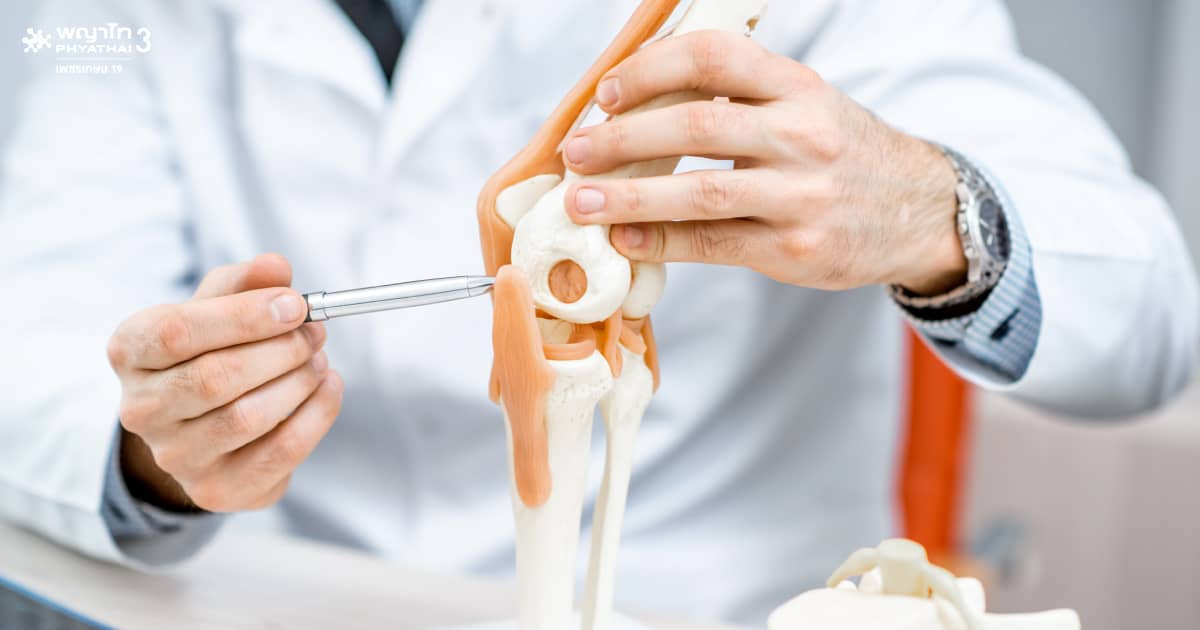
Currently, there is an increasing number of patients suffering from knee osteoarthritis. At the same time, it is also found that patients undergoing “knee replacement surgery” are getting younger as well. Previously, it was mostly seen in people aged 50-60 years, but nowadays, even those as young as 40 years old are starting to have knee osteoarthritis problems. This has resulted in tens of thousands of knee replacement surgeries being performed annually in Thailand, with everyone hoping that after surgery, they can return to their normal daily lives without enduring pain. In reality, this should be the case if patients take care of themselves and follow the doctor’s advice correctly.
However, among those who have undergone knee replacement surgery, there are still quite a number of patients who suffer again because the replaced knee joint becomes damaged, worn out, and deteriorates rapidly.
How long does a knee replacement last?
Normally, a “knee replacement” can last for 20 years. According to data, 8 out of 10 patients who undergo knee replacement surgery can maintain the use of the knee replacement for over 20 years. However, there are some patients whose replaced knee joint deteriorates and becomes damaged earlier than expected due to lack of proper care and failure to have regular annual follow-ups or neglecting minor problems, which leads to increased damage until they need to undergo repair surgery again.
How to know when a “knee replacement” starts to deteriorate
The first signs when the knee starts to have problems can be noticed by the patient through decreased joint function, such as inability to fully straighten or bend the knee as before, feeling unstable while walking, experiencing pain around the knee that was not present before, or abnormal noises. If these abnormalities occur, it is important to see a doctor early. The doctor will diagnose the cause of the wear and tear to plan appropriate treatment for knee replacement repair, as treatment methods vary depending on the cause. Therefore, identifying the cause is crucial for treatment.
4 factors that cause “knee replacement” to deteriorate quickly
- Improper use, such as excessive heavy use like carrying heavy loads, squatting behavior, or overexerting during exercise putting too much weight on the knee.
- Infection, which is common in Thailand within the first 3 years after surgery. Factors causing infection in the knee replacement include:
- Originating from the patient themselves, such as those with weakened immune systems like uncontrolled diabetes, gum and dental problems, tooth decay, urinary tract infections, which can cause infection and spread to the knee replacement.
- Patients with compromised immunity, such as those with rheumatoid arthritis, who are more prone to infections.
- Those who do not maintain personal hygiene, such as frequently holding urine, leading to urinary tract infections that can spread to the knee joint.
- Environmental factors during surgery, such as infection occurring during the operation.
- Accidents or severe trauma to the knee area.
- Originating from the patient themselves, such as those with weakened immune systems like uncontrolled diabetes, gum and dental problems, tooth decay, urinary tract infections, which can cause infection and spread to the knee replacement.
- Looseness and wear due to aging, caused by imbalance in the tension of surrounding muscles and ligaments, leading to faster wear and looseness than normal.
These 4 factors are all causes of knee replacement deterioration and necessitate “revision surgery,” which is considered a more complicated and difficult treatment compared to the initial knee replacement surgery. It is like repairing a house being harder than building a new one because the patient has physical health problems such as injury, swelling, tissue damage around the joint, bone erosion, and mental decline due to injury, making treatment more challenging than in patients who have never had surgery before.
What to know before knee replacement surgery
The most important thing is to study information about knee replacement surgery and choose a medical facility with qualified and experienced medical personnel specializing in knee replacement surgery, including anesthesiologists, physical therapists, and nursing staff who provide guidance and care after surgery. To prevent rapid deterioration of the knee replacement, it is also important to learn how to preserve the knee replacement. Additionally, check if the medical facility is well-equipped with resources and materials to replace worn parts such as bone and tissue in case the knee replacement becomes damaged. The medical team must be prepared for bone grafting and tissue banking for use during surgery. Having modern surgical technology and a standard operating room is also important.
However, once you decide to undergo knee replacement surgery, the first surgery is the best and most important. You should strictly follow the doctor’s instructions to ensure your joint has good quality and the longest possible lifespan.
Information by Prof. Dr. Keerati Charoencholwanich
Orthopedic Surgeon Specialist in Joint Surgery, Knee and Hip Replacement Surgery
Joint Replacement Surgery Institute, Phyathai 3 Hospital
