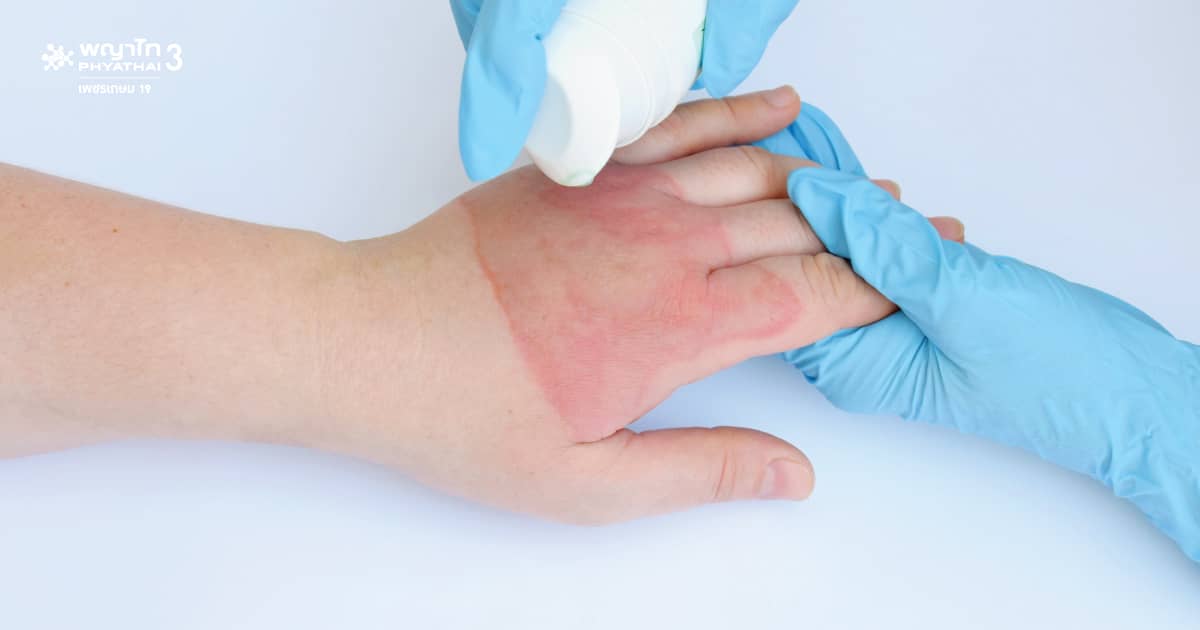
What type of wound is called a burn wound?
A burn injury is a wound where the skin is damaged by heat or cold. In some cases, the wound may extend deep to the bone. The term “burn wound” does not only refer to wounds caused by fire or scalding hot water but also includes wounds caused by high-voltage electric shock, contact with very hot objects, or exposure to hazardous chemicals.
Why is wound assessment important?
Wound assessment can be divided into two types: assessment based on the cause of the wound and assessment based on the depth and severity of the wound.
1. Wound assessment based on the cause of the wound includes:
1.1 Wounds caused by flames (Flame Injury)
1.2 Wounds caused by hot liquids (Scald Injury)
1.3 Electrical burn wounds (Electrical injury)
1.4 Chemical burn wounds (Chemical injury)
2. Wound assessment based on depth and severity is divided into 3 levels:
- First degree burn: The initial signs at this level are redness of the skin, pain when touched, and a burning sensation, but no blisters.
- Second degree burn: At this level, the wound is swollen and red, with blisters and intense burning pain.
- Third degree burn: The patient does not feel pain at the wound site. The wound tissue appears white, charred, dry, and hard.
In addition to the above criteria, wound assessment must also consider the size of the wound, the patient’s age, and any pre-existing medical conditions.
The importance of this assessment lies in selecting the appropriate treatment approach and helping the patient understand the treatment process. Treatment methods vary according to the severity of the wound.
Treatment guidelines
- For minor injuries with wounds that are neither wide nor deep, treatment can focus solely on wound care.
- For severe injuries with deep or wide wounds, additional treatments are required, such as intravenous fluids, mechanical ventilation, cardiac stimulants, or management of other systemic diseases. These cases may require multidisciplinary care to address all patient issues. For deep and wide wounds, besides wound care, some patients may need skin grafting to replace damaged tissue beyond what the body can naturally repair.
Throughout the treatment process, we emphasize care by experienced and specialized physicians, selecting medical personnel with expertise and specialized training. Providing good care to prevent infection and using effective wound care materials and equipment are essential. Nowadays, wound care materials and treatment devices have improved, helping wounds heal faster. Additionally, we also focus on nutrition and provide nutritional education to patients concurrently.
Treatment duration
Naturally, when starting treatment, some patients want to know how long the recovery will take. The duration depends mainly on the size, depth of the wound, and the patient’s age. For example, if there is only a small and shallow wound, treatment may take about 2-3 weeks.
For larger wounds, it is necessary to consider what percentage of the total body surface area the wound covers and the patient’s age group. Elderly patients tend to heal more slowly. For instance, a large wound covering 40% of the body surface area may heal quickly in children but may require several months of hospitalization for some elderly patients.
Proper first aid benefits treatment
When a burn or scald accident occurs, proper first aid before seeing a doctor is very important. Incorrect first aid can worsen the wound, such as making it deeper or causing infection. So, what is the correct first aid?
- In case of hot liquid burns, immediately run clean, room-temperature water over the wound for about 15-20 minutes. Do not use ice-cold water as it may cause further tissue damage. Do not apply toothpaste or any other substances to the wound.
- In case of flame burns, quickly extinguish the fire, remove hot objects from the patient, and remove all clothing from the affected area to reduce body heat.
- In case of dry chemical burns, cut off the affected clothing and change into new clothes immediately.
- In case of electrical burns, immediately cut off the power source because assisting while the current is still active may put the helper at risk.
When a burn or scald accident occurs, promptly provide first aid and seek medical attention immediately to receive proper treatment.
—
Assoc. Prof. Dr. Kusuma Chin-arunchai
Specialist Surgeon in Trauma and Wound Care, Phyathai 3 Hospital
For more information, call 02-467-1111 ext. 3100
