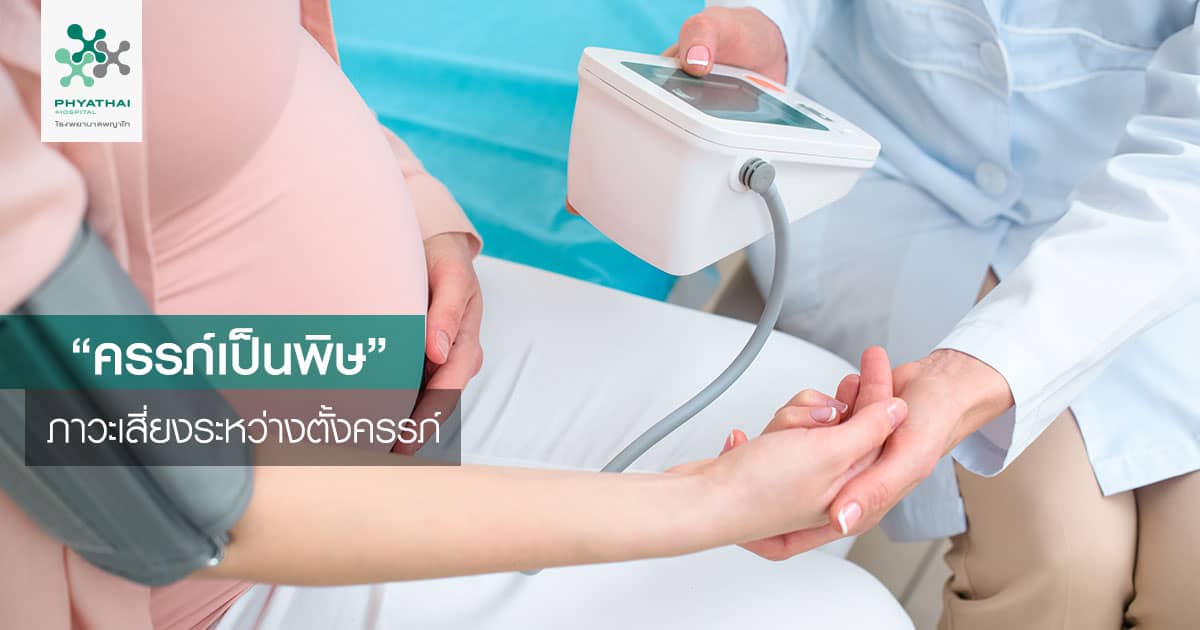
Another condition that causes concern for pregnant mothers, because if not treated correctly and promptly, it may lead to seizures during pregnancy and other severe complications. Preeclampsia is therefore considered a critical pregnancy complication that is dangerous to both the mother and the fetus.
“Preeclampsia” is…
Preeclampsia is a condition in which a pregnant mother has high blood pressure equal to or greater than 140/90 mmHg, along with protein or albumin in the urine and possibly swelling. In severe cases, abnormalities in liver, kidney function, and blood clotting may be found. This condition usually occurs after 20 weeks of gestation.
Main causes of “Preeclampsia”
Studies suggest that preeclampsia results from immune system mechanisms and abnormalities in certain hormones in the body, causing abnormalities in the blood vessels supplying the placenta. This leads to some parts of the placenta being deprived of blood, causing tissue death in parts of the placenta and releasing substances that cause the blood vessels throughout the mother’s body to constrict, leading to high blood pressure and preeclampsia. However, symptoms usually disappear almost immediately after the baby and placenta are delivered.
7 Signs to Watch for “Preeclampsia Symptoms”
-
- High blood pressure of 140/90 mmHg or higher, detected twice at least 4 hours apart
- Excess protein or albumin detected in urine, or other signs indicating kidney problems
- Severe headache that does not improve with painkillers, often located at the back of the head or forehead
- Blurred vision or unclear sight
- Upper abdominal pain, usually under the breastbone
- Shortness of breath or difficulty breathing due to fluid in the lungs
- Rapid weight gain and swelling in the body, such as swelling of the face, hands, ankles, or feet
Pregnant Mothers “At Risk”
-
- Patients or direct family members with a history of preeclampsia
- Having underlying diseases such as high blood pressure, hyperthyroidism, kidney disease, diabetes, or autoimmune disorders existing before pregnancy
- Pregnant at an age younger than 18 years or older than 35 years
- First pregnancy
- Pregnancy with twins or more than two fetuses
- Molar pregnancy
Here! The steps to diagnose preeclampsia
To diagnose preeclampsia, doctors must detect high blood pressure along with at least one abnormal symptom after 20 weeks of gestation. The diagnostic methods include:
-
- Patient history: Headache, blurred vision, chest tightness, swelling, or rapid weight gain
- Physical examination: Blood pressure measurement equal to or greater than 140/90 mmHg
- Blood and urine tests: To detect protein or albumin in urine, complete blood count to assess concentration and platelets, liver and kidney function tests, uric acid, and blood clotting to evaluate complications or disease severity
- Fetal ultrasound: To assess fetal growth and amniotic fluid. If growth restriction and low amniotic fluid are found, it indicates severe preeclampsia
Complications to Watch For
There are also complications that close relatives should watch for in pregnant mothers, such as seizures or HELLP syndrome, a severe complication that can be life-threatening to both mother and fetus. Other complications include fetal growth restriction, preterm birth, placental abruption, and damage to organs such as the eyes, liver, kidneys, lungs, or heart. These may cause stroke depending on the severity of preeclampsia.
Treatment of “Preeclampsia”
Preeclampsia varies in severity. The definitive treatment is to end the pregnancy because symptoms gradually resolve after delivery. However, many factors must be considered before delivery, such as symptom severity and gestational age. If immediate delivery is not possible, close monitoring and symptom management are required until it is safe to deliver. If the pregnancy is at 37 weeks or more, doctors will recommend inducing labor or cesarean section to prevent worsening symptoms and reduce the risk of other dangerous complications to both mother and fetus.
Learn to “Prevent” from Expert Advice
Regular prenatal care and attending scheduled doctor visits help detect abnormalities early and allow timely treatment, especially for high-risk pregnant mothers. Getting enough rest, exercising regularly, drinking 8 or more glasses of water daily, and avoiding very salty or high-sodium foods are recommended. Taking aspirin as prescribed by a doctor can help prevent preeclampsia in high-risk groups. Supplementing with calcium, vitamin C, and vitamin E during pregnancy can also be beneficial.
Dr. Paweena Butrdeewong
Obstetrics and Gynecology Specialist
Women’s Health Center, Phyathai Nawamin Hospital
