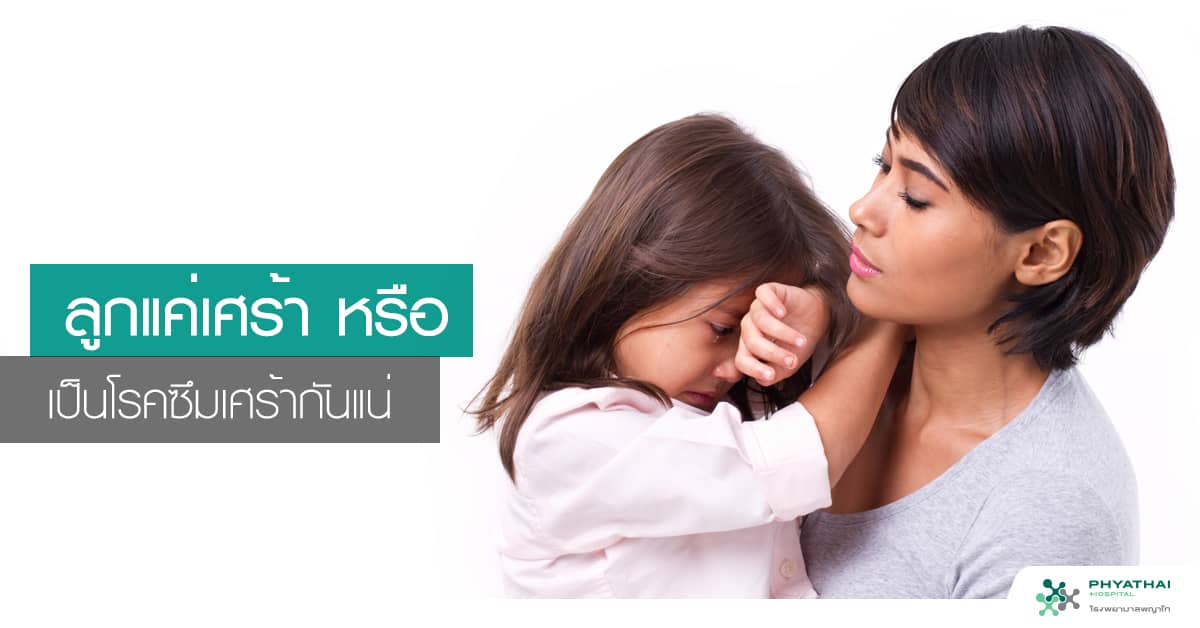
Depression is a type of emotional disorder in which patients often feel sad almost all day and continuously for more than 2 weeks. This condition can occur in all genders and ages. Parents who are concerned about their children may worry about how their children will adapt to social life at school as they grow older. When they notice their children accumulating stress, showing behavioral changes, becoming withdrawn, speaking less, or not wanting to go to school, they may wonder if it is due to depression. Today, we have the answers for you.
What Causes Depression in Children?
- Genetics: If there is a family history of depression, the child is more likely to develop depression than other children.
- Children taking certain medications, such as chemotherapy drugs, blood pressure medications, or various substances.
- Certain diseases, such as autoimmune diseases.
- Environmental factors or stress, including family problems, conflicts with partners or friends, poor academic performance, frequent bullying by peers, feelings of dislike, fear, anxiety about people around them, lack of self-confidence, and fear of competition.
What Symptoms Might Suggest That Your Child Has Depression?
- Feeling increasingly sad or bored, or in some cases, irritable.
- Becoming withdrawn and speaking less than before.
- Losing pleasure or happiness in activities they used to enjoy, or no longer wanting to do activities they once liked, such as drawing.
- Loss of appetite and weight loss, or in some cases, overeating.
- Difficulty sleeping, restless sleep, waking up earlier than usual, or in some cases, sleeping all day.
- Feeling sad, lethargic, and unwilling to do anything.
- Difficulty concentrating on studies and worsening memory.
- Feeling guilty, blaming themselves, and feeling worthless.
- Crying alone secretly.
- Being overly sensitive to everything others do or say.
- Having suicidal thoughts or expressing a desire to die.
However, having these symptoms does not necessarily mean your child has depression. If parents suspect it, they should take their child to consult a specialist doctor for a proper diagnosis to determine the exact condition and whether it is depression, so that appropriate treatment can be provided.
How to Cope When Your Child Has Depression
If your child has been diagnosed with depression by a doctor, parental care and attention are just as important as medication and counseling. Therefore, parents or guardians should do the following:
- Regularly talk with your child, observe their behavior, and ask about their feelings, happiness, and daily experiences.
- Engage in activities with your child, create new atmospheres and new activities to increase their happiness, but avoid activities the child dislikes as this may worsen their condition.
- Talk to your child using reason and logic, not emotions, and always provide care and warmth.
- Allow your child to share their problems without rushing them, creating a relaxed and non-stressful environment.
- Monitor your child’s behavior and seek help from teachers to observe your child’s behavior as well.
- Communicate openly with teachers to exchange information about your child’s problems at home and school, working closely together to solve the issues.
- Regularly consult a psychiatrist for proper and continuous treatment.
Dr. Rattanapoom Wattanapanyasakul
Pediatric Specialist
Child and Adolescent Health Center, Phyathai Nawamin Hospital
