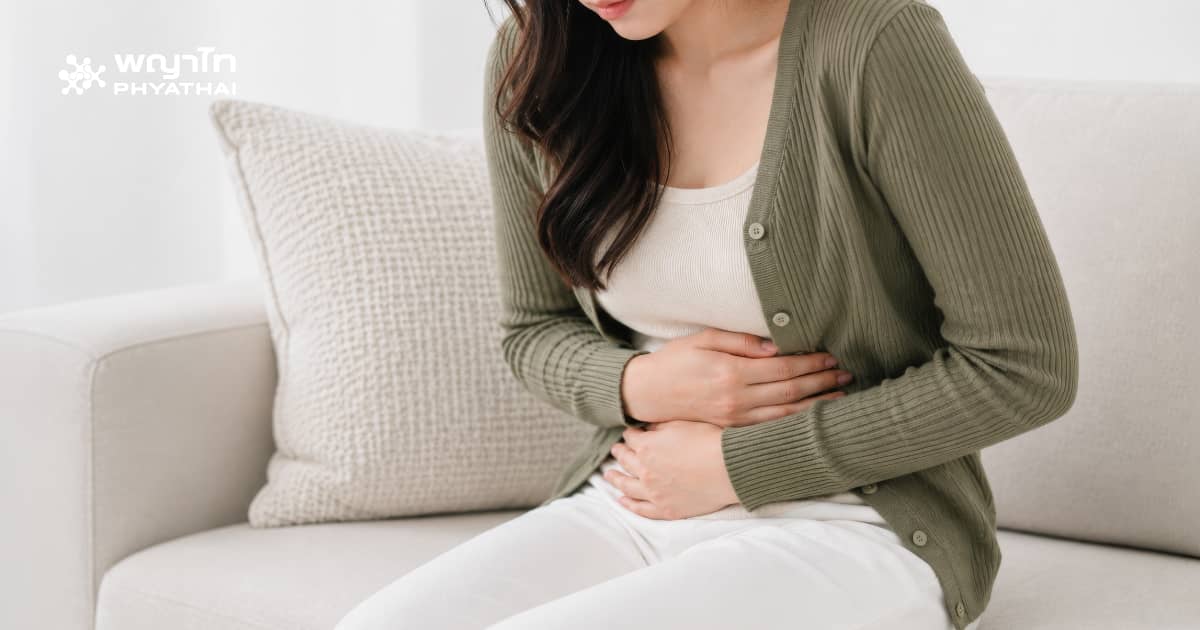
Most women have experienced menstrual pain and often consider it a natural occurrence, especially if the pain is mild and daily life can continue as usual. However, mild but long-lasting menstrual pain may be a sign of a serious disease, just like severe menstrual pain that affects quality of life. Therefore, it is advisable to see a doctor at the Women’s Health Center, Phyathai Nawamin Hospital, to diagnose the true cause of the menstrual pain. But for now, let’s understand menstrual cramps first.
What is menstrual pain?
Many women experience abdominal pain 1-2 days before menstruation and during the first few days of their period. Menstrual pain ranges from mild dull or cramping pain to severe pain in the lower abdomen and may be accompanied by other symptoms such as lower back pain, nausea, vomiting, sweating, diarrhea or constipation, bloating, dizziness, and headaches.
Causes of menstrual pain
On average, every 28 days, if the egg is not fertilized by sperm, the uterine lining will shed as menstruation. Menstrual pain is caused by hormone-like substances called prostaglandins, which form in the ‘uterine lining’ during menstruation. Prostaglandins cause the muscles to contract and cramp similarly to labor pains. They also cause nausea and diarrhea. If the body releases a large amount of this substance, it increases the severity of contractions, resulting in more intense menstrual pain.
Types of menstrual pain
Menstrual pain can be divided into 2 types:
- Primary Dysmenorrhea is the most common type of menstrual pain. It is usually caused by the uterine lining producing excessive prostaglandins.
- Secondary Dysmenorrhea results from abnormalities of the uterus or other reproductive organs, such as:
- Endometriosis occurs when the uterine lining grows outside the uterus. When it grows abnormally but still functions to produce menstruation, blood may accumulate in the pelvic area where the uterine lining implants each menstrual cycle, causing severe lower abdominal pain and possibly infertility.
- Adenomyosis is when the uterine lining grows within the uterine muscle. Patients experience severe menstrual pain and/or heavier and longer menstrual bleeding than usual.
- Uterine fibroids are usually benign tumors ranging from very small to large sizes. Large fibroids often cause heavy menstrual bleeding or prolonged spotting for weeks, along with menstrual pain or chronic lower back pain.
- Cervical stenosis occurs when the cervix is too narrow, causing slow menstrual blood flow. If completely closed, fluid can accumulate inside the uterus, causing severe and chronic abdominal pain.
- Problems with the uterus, fallopian tubes, or other reproductive organs that are congenital abnormalities can cause lower abdominal pain during menstruation.
Prevention and relief of menstrual pain
If experiencing menstrual pain, patients can take care of themselves by:
- Using a hot water bag to apply heat to the lower abdomen and back
- Taking a warm bath
- Using relaxation techniques such as yoga or meditation
- Taking non-steroidal anti-inflammatory drugs (NSAIDs) should be taken when pain starts or before pain begins. Painkillers may have side effects, so they should only be used for severe pain.
- Getting enough rest
- Exercising regularly
- Eating vegetables and fruits. Studies have found that foods containing Vitamin E, Omega-3 Fatty Acids, Vitamin B1, Vitamin B6, and Magnesium help reduce menstrual pain.
When should you see a doctor?
For most women, menstrual pain is normal. However, if you experience any of the following symptoms, it may indicate a more serious condition than typical menstrual pain, and you should see a doctor:
- Taking medication but the pain does not improve
- Menstrual pain worsens and affects daily activities
- Fever along with menstrual pain
- Menstrual bleeding is heavier than usual, requiring frequent changing of sanitary pads every 1-2 hours or more than 80 ml per cycle
- Experiencing lower abdominal pain even without menstruation
- Having infertility issues
