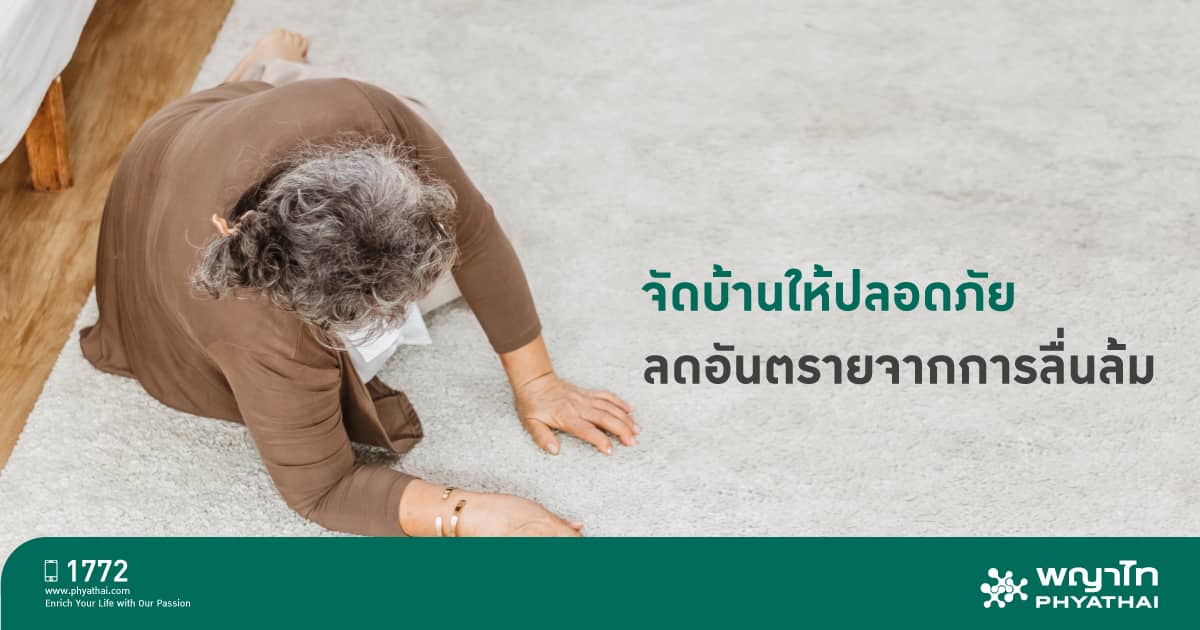
Degeneration and deterioration of the body due to the passage of time often cause elderly people to have illnesses and be prone to accidents. The most common accident is “falling”, which can lead to injuries and other complications. Therefore, we should regularly take care and find ways to prevent it to reduce the risk for them.
Impact of Fall Accidents in the Elderly
Common falls include slipping in the bathroom, falling from bed, falling down stairs, tripping while walking, etc. These accidents not only cause injuries to the legs, hips, arms, head, or other body parts but can also severely affect the nervous and vascular systems, potentially leading to paralysis. Even more seriously, it can result in death.
“Falling accidents” not only directly affect the body but also impact mental health. Injuries can cause patients to lose their ability to perform daily activities, leading to a loss of confidence and reduced self-assurance in doing various activities due to fear of falling again. This may reduce social interaction, leading to isolation and potentially depression.
Multiple Risk Factors… That Cause Fall Accidents
There are many risk factors for fall accidents in the elderly. We should prevent these by reducing the risks, which include:
- Physical risk factors and decreased abilities
If elderly people have vision problems, unclear sight, or reduced balance and muscle strength, they may walk unsteadily and have difficulty moving. Their perception may slow down. Chronic diseases such as arthritis, osteoporosis, depression, dementia, diabetes, stroke, and Parkinson’s disease also increase the risk of falling. Therefore, we should reduce these problems by treating the diseases the elderly have to improve their condition as much as possible. - Medication-related risk factors
Many elderly people may use sleeping pills, blood pressure medications, antidepressants, sedatives, and diuretics, or take four or more types of medications (excluding vitamins). Therefore, we should consult doctors about medication side effects and ensure proper medication use. - Behavioral risk factors
Many elderly people enjoy socializing or drinking excessive alcohol, do not exercise, and wear clothing that hinders walking and movement, such as loose clothes or ill-fitting shoes that do not grip the floor well. Therefore, we should prepare appropriate clothing and shoes for them. Risky behaviors should be monitored and controlled, and they should be encouraged to exercise with family members. - Environmental and housing risk factors
Slippery floors and stairs, uneven or rough surfaces, insufficient lighting, obstacles, and lack of handrails in stairs and bathrooms are common hazards. Therefore, we should improve the environment to reduce accidents.
Prevention… Reducing the Risk of Falling
Although the rate of falls in the elderly increases every year, we can prevent it from happening to our elderly family members by closely caring for and paying attention to their daily life details.
Elderly Health Care to Prevent Falls
- The elderly should be assessed for their risk of falling and be aware of their health risk status.
- Consult healthcare professionals for advice on medication use, vision, walking, and movement.
- Practice walking and exercise to strengthen muscles, such as heel-to-toe standing alternately 10 times. Focus on balance and movement exercises like yoga and Tai Chi.
- Always change positions slowly when sitting or standing to prevent orthostatic hypotension, which can cause dizziness and falls.
- If there are walking or balance impairments, use assistive devices such as walkers or canes.
- Wear properly fitting clothes and shoes. Choose low-heeled shoes with soles that grip well and are non-slip.
Arranging Suitable Housing for the Elderly
- Housing for the elderly should be designed and arranged to suit their lifestyle, helping to prevent fall accidents.
- The elderly should live in a single-story house. If the house has more than one floor, the elderly should stay on the ground floor.
- Install handrails or support rails in the house, especially in areas frequently used by the elderly.
- Provide sufficient lighting.
- The bedroom should have a bed at knee height to make sitting, standing, and lying down easier and safer.
- The bathroom should be adjacent to the bedroom, have non-slip floors, no water pooling, handrails, and a shower chair.
- Floors and walkways should be even, non-slippery, dry, free of obstacles, avoid level changes, have no door thresholds, and doors should have lever handles or be sliding doors.
Although time brings deterioration to the body,
if children and family members fully care for the elderly,
by regularly observing symptoms and abnormalities,
and providing close help and attention,
the elderly will have both strong physical and mental health.
Care and arranging an environment suitable for the elderly’s lifestyle
is one way to keep them healthy and prevent fall accidents easily.
Dr. Kobsak Udomdej
Orthopedic Surgery Specialist
Muscle, Bone, and Joint Center Phyathai Nawamin Hospital
