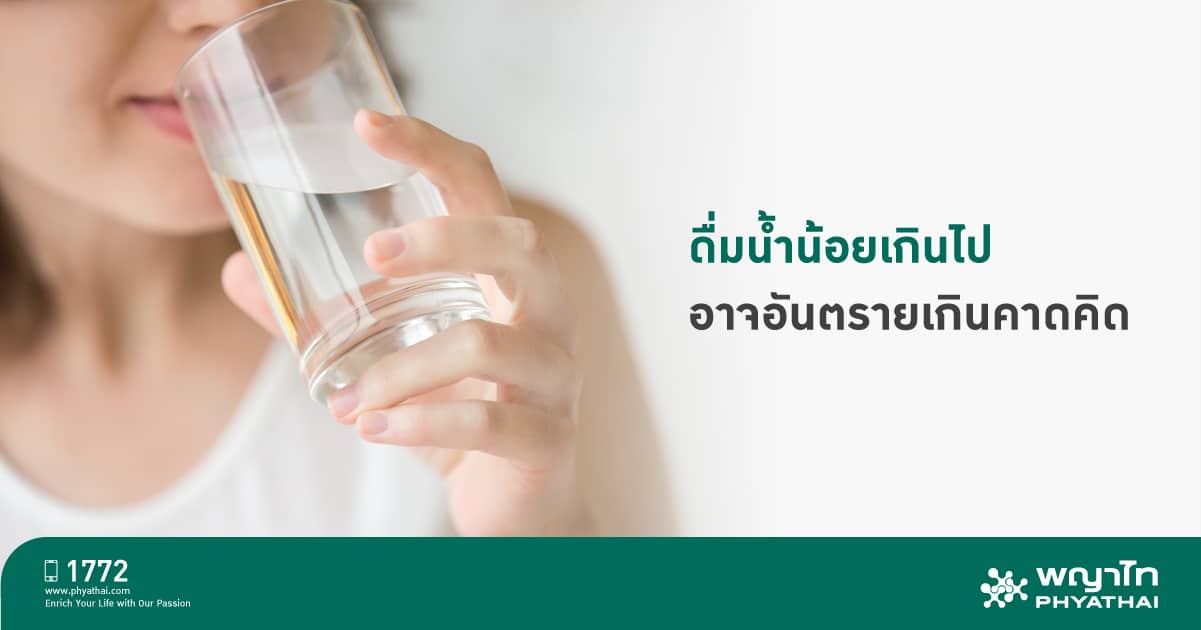
Although the human body consists of “water” up to 60% of body weight, the body also loses a lot of water every day. Therefore, we should drink enough water to meet the body’s needs to compensate for the lost water. If we do not drink enough water, it will definitely cause the body to be in a “dehydration” state.
What is “Dehydration”??
Dehydration (Dehydration) is a condition where the body loses more water than it receives, resulting in insufficient water volume that affects the fluid circulation system and the functioning of various organs such as the heart, kidneys, brain, digestive tract, muscles. If dehydration is left untreated for a long time, it can be life-threatening.
What happens when the body is dehydrated?
Symptoms of dehydration vary depending on the severity of the condition.
- Mild to moderate symptoms
- Thirsty
- Dry eyes, dry mouth, dry skin
- Less sweating
- Less urine than usual
- Constipation
- Dizziness, headache, nausea, vomiting
- Severe and dangerous dehydration symptoms
If you have these symptoms, you should see a doctor immediately- Severe thirst
- Little urine with dark color or no urine
- Fatigue
- Fever
- Strong and rapid heartbeat, shortness of breath, rapid breathing
- Shock, unconsciousness
Why does “Dehydration” occur?
“Water” is important to the body because it is a main component in various circulation systems. You might not expect that “just drinking little water” is one cause that can lead to dehydration. Let’s see what causes you to have “dehydration”
- Excessive water loss from the body
- Severe vomiting
- Severe diarrhea
- Being in hot weather for a long time
- Excessive sweating from prolonged exercise
- Sweating in people with high fever or infections
- Excessive urination in diabetic patients, those using diuretics, blood pressure medications, and those who consume large amounts of alcohol
- Insufficient water intake
- Drinking too little water, especially in comatose patients or those using ventilators
- People with colds, sore throats, causing loss of appetite and reduced water intake
- People who dislike drinking water and do not drink enough to meet the body’s needs or drink less than 5 liters per day
Diagnosis to find the cause
It can be seen that “dehydration” can occur from many causes, so a doctor should diagnose to find the exact cause.
- Physical examination
to find signs of dehydration, such as checking heart rate, pulse, and blood pressure when the patient changes from lying down to standing. If there is too little water in the blood, the heart rate will increase and blood flow to the brain will be insufficient, causing dizziness or fainting. - Urine test
such as urine color and detection of ketones in the urine
- Blood test
such as blood sugar level, sodium and potassium levels in the blood, and red blood cell concentration
Self-care when “dehydrated”
“Dehydration” can occur in both children and adults, with different care methods. If symptoms are not severe, patients can take care of themselves easily.
Newborns and children under 1 year old
- Give frequent milk or breast milk and promptly see a doctor at the hospital
- In case of needing to drink oral rehydration salts, consult a doctor before giving to the infant
Children aged 1-11 years
- Try to give children water frequently to compensate for body water
- Drink oral rehydration salts
- Avoid drinking fruit juice, soda, or sweetened drinks with high sugar content
Children aged 12 years and older and adults
- If doing activities, take breaks and stay in a well-ventilated area
- Drink plain water or electrolyte drinks to compensate for body water
Self-care before “dehydration” occurs
The most important thing is… to drink enough water to meet the body’s needs, especially for those who are sick such as vomiting, diarrhea, fever, or those who have to stay outdoors for a long time, including those who exercise heavily and lose a lot of sweat. The adequate amount of water for the general population is about 1.5-2 liters or 8 glasses per day. However, patients with kidney or heart disease may need to limit water intake. This should be consulted with a doctor individually.
It is unbelievable that “dehydration” can affect the body more than expected. Therefore, we should take good care of ourselves and those around us… just “drink enough water” to maintain the body’s water balance… This simple method can keep us away from “dehydration”.
Dr. Thitiwut Hu
General Practice Specialist
Health Promotion Center, Phyathai Nawamin Hospital
