Oral and Dental Care for Your Little One
Taking care of your little one’s oral and dental health is something mothers should prioritize from birth. Besides chewing food and providing aesthetics, teeth also help with speech development, stimulate the growth of the jaw and face to develop normally, and positively affect the digestive system.
Why Are Baby Teeth Important?
The first baby tooth appears at about 6 months of age and gradually erupts until all 20 teeth are present by the time the child is 2-3 years old. At this age, children cannot take care of their teeth by themselves, so parents and guardians play an important role in ensuring their child has good dental health.
Common Dental Problems in Little Ones
- Tooth decay (dental caries) caused by bacteria in the mouth, which results from foods or drinks containing sugar. Therefore, to reduce the risk of tooth decay, children’s teeth should be cleaned every time after eating.
- Crowded and misaligned teeth can cause bite problems, affecting the child’s ability to chew food properly. This is often caused by bottle feeding or thumb sucking after the age of 1 year.
6 Practices for Good Dental Health in Your Little One
- Regularly check your child’s teeth yourself.
- Brush teeth at least twice a day, in the morning and evening, using toothpaste containing fluoride.
- Stop night-time milk feeding when the child is about 6 months old. Avoid letting the child fall asleep while sucking on a bottle, and stop using the bottle by around 18 months of age.
- Eat a balanced diet with all 5 food groups, avoid sticky sweets and crunchy snacks.
- Parents should set a good example in oral and dental care for their children.
- Take your child to see the dentist every 6 months.
Techniques for Brushing Your Child’s Teeth
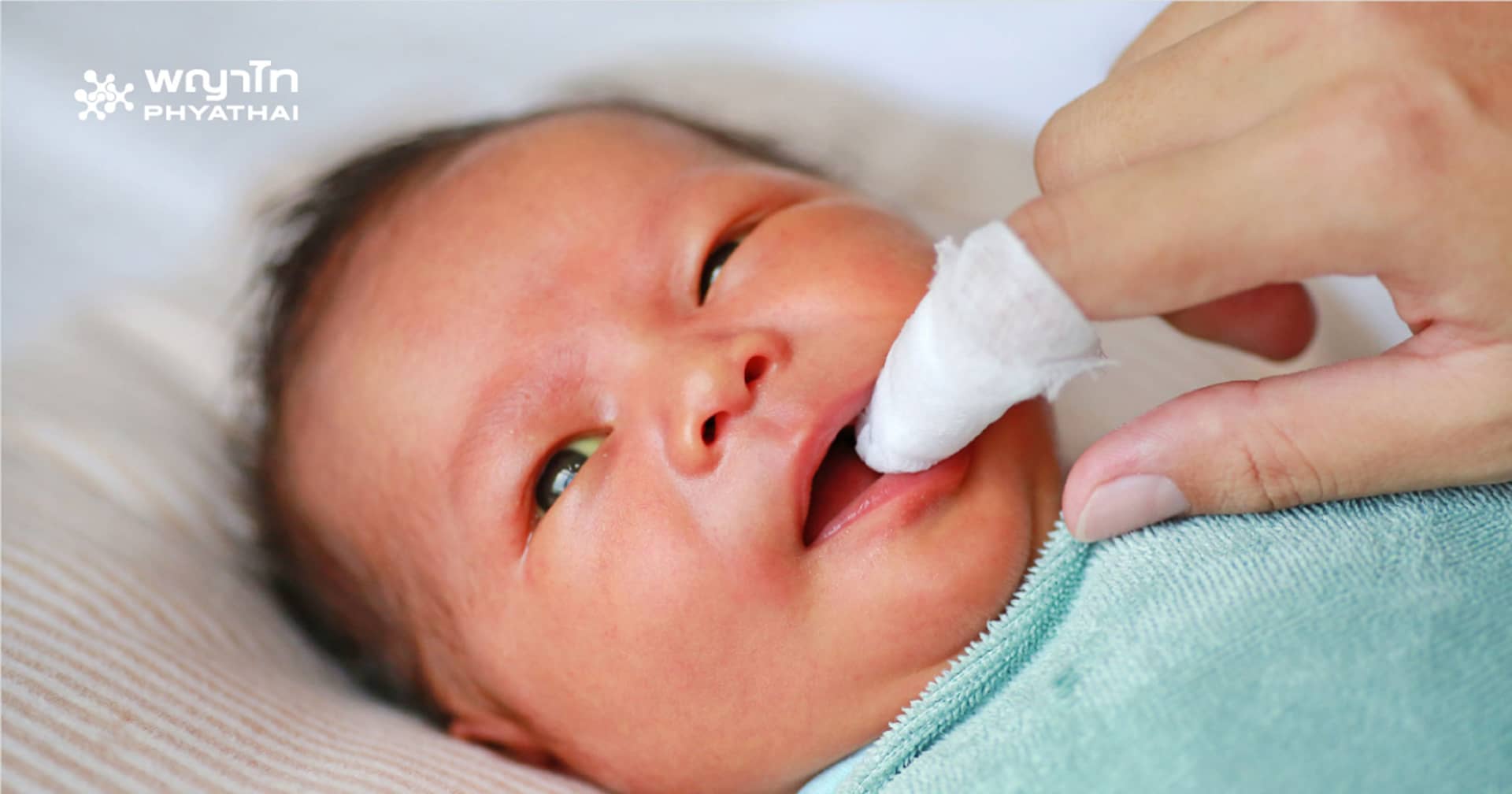
You can start brushing your child’s teeth when the first baby tooth appears in the mouth. Begin by using a clean, soft cloth dampened with water to wipe the teeth to help the child get used to it. After the two lower teeth have fully erupted, you can start using a soft-bristled toothbrush. Brushing teeth in children under 1 year old often faces challenges such as the child refusing to open their mouth or stay still, sometimes crying or struggling. Therefore, it is necessary to have someone help hold the child still while brushing. If brushing alone, it is best to brush in a position where you can clearly see the teeth, such as sitting on a long chair or on the floor with the child lying on their back, head resting on the mother’s lap, both facing the same direction. This method allows clear visibility of the teeth and thorough brushing. Adults should supervise the child’s tooth brushing until about 8 years old, observing whether the child can turn the toothbrush by themselves. If the child can tie shoelaces or bows neatly, it indicates fine motor development in the hands, and the child will be able to brush their teeth cleanly on their own.
