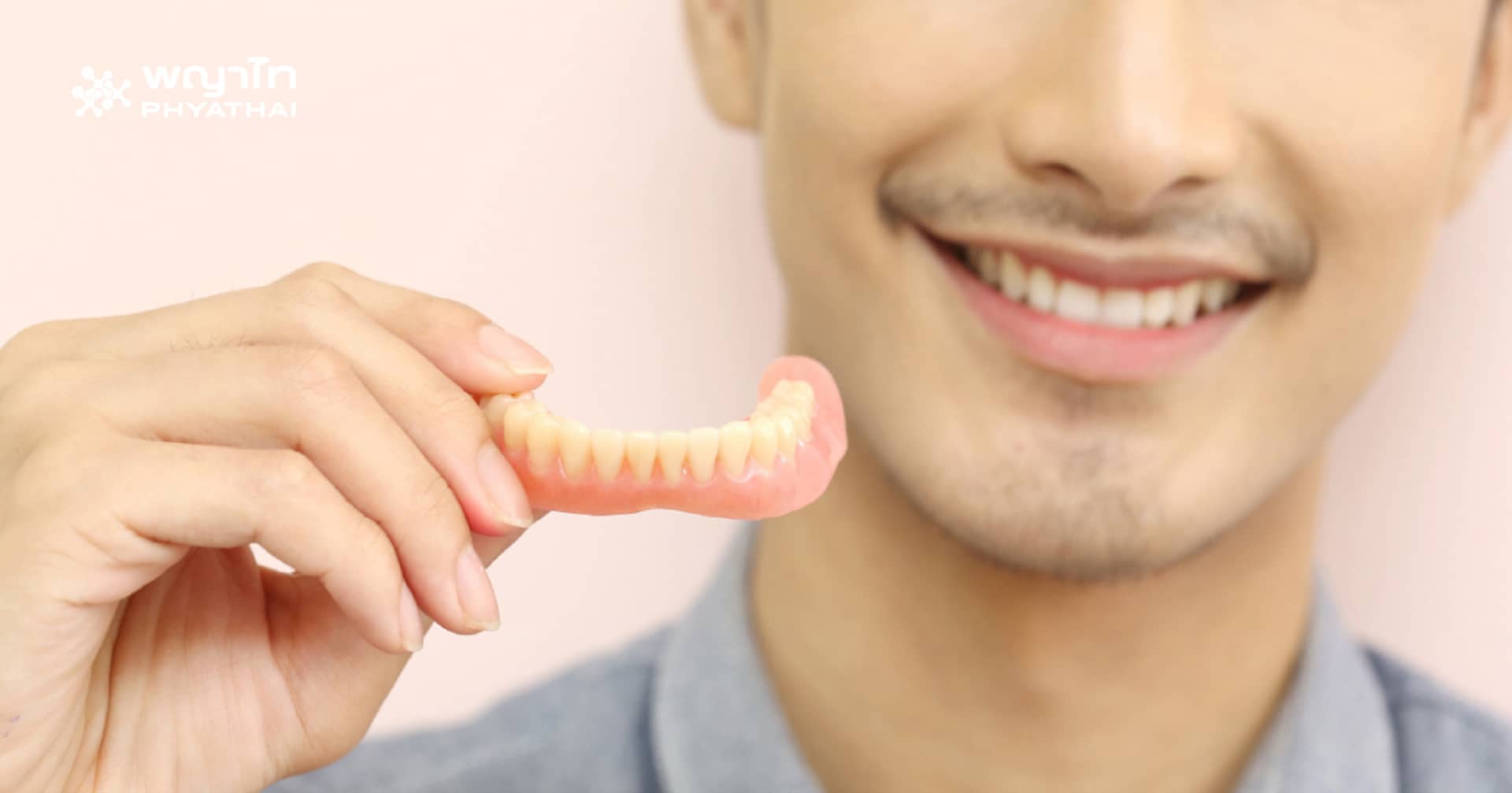
Removable dentures are dentures used to replace missing natural teeth, including the surrounding tissues. They are made from nickel-chromium alloy, titanium, or acrylic resin.
Advantages of Removable Dentures
- Can replace multiple missing teeth
- Can replace and correct cases with significant loss of gums and bone
- Cheaper than fixed dentures
- Used when the abutment teeth are not strong enough for fixed dentures
- Used as temporary dentures while waiting for other treatments or to help evaluate the aesthetics and function of fixed dentures
Types of Removable Dentures
- Complete dentures: These are used for patients who have lost all their teeth or have only a few remaining (usually no more than 6 teeth). If teeth are missing in only one jaw, it is called a single denture.
- Partial removable dentures: Used to replace several remaining natural teeth. They can be made from metal, called metal-based partial dentures, or from acrylic resin, called acrylic partial dentures. Some types are made from highly flexible nylon but have limitations in use. The choice depends on the patient’s dental condition, financial status, and individual needs.
- Immediate dentures: These are usually temporary dentures used when multiple teeth need to be extracted or as long-term removable dentures. For a few extractions, the dentist prepares the dentures beforehand and schedules the patient for extraction and immediate denture placement. On the extraction day, the patient must wear the dentures continuously and will need to have the denture base relined 1-2 months after extraction.
- Overdenture: This type of removable denture uses natural tooth roots or dental implants along with attachments to help secure the denture firmly in the mouth. In some cases, metal bars are used to support chewing forces.
Steps for Making Removable Dentures
Removable dentures take 1-6 weeks to make, depending on the type and complexity for each individual. After wearing removable dentures, adaptation and cooperation from the patient are necessary for the body to accept the new dentures. If the patient cannot adapt, the dentures will not be successful. The steps and procedures are summarized as follows:
- Step 1: Oral examination and assessment. The dentist examines and evaluates the condition of the teeth, occlusion, gums, supporting bone, patient expectations, tooth shape, and color. Then, X-rays are taken of the potential abutment teeth, and impressions are made to create dental models.
- Step 2: Treatment planning. After detailed diagnosis, the dentist plans the treatment, including the position of denture clasps, the type of teeth to be used, wax-up to evaluate the denture shape, and plans for preparing abutment teeth to support the clasps.
- Step 3: Final impression. The final impression is taken. If abutment teeth need preparation, it is done before the final impression. The impression is then used to make the denture framework.
- Step 4: Try-in. The dentist tries in wax bite blocks and arranged teeth to evaluate the shape, color, tooth arrangement, facial contours, and occlusion for further denture fabrication.
- Step 5: Denture insertion. After the patient is satisfied with the try-in, the final denture is made and fitted. After insertion, there may be sore spots due to inaccuracies, and the patient will be scheduled for adjustments. The adaptation period varies from 1 week to 2 months. Patients without posterior abutment teeth may find it more difficult to adapt to the dentures.
Care for Removable Dentures
- Remove and clean dentures after every meal. Use a container with water to prevent dropping and breaking the dentures.
- Brush and clean remaining natural teeth after removing the dentures.
- Do not use toothbrushes or toothpaste with abrasives to clean dentures, as this causes small scratches, making dentures wear out, stain easily, and harbor microorganisms. Using soapy water with gauze to clean dentures is sufficient.
- Do not wear dentures while sleeping. Remove, clean, and soak them in water. Wearing dentures overnight can cause fungal accumulation and inflammation of the oral tissues.
- Regular check-ups are necessary because the bone ridge resorbs over time, causing dentures to rock and rub against oral tissues, leading to gum inflammation, sores, bone and tissue overgrowth, fungal infections, damage to abutment teeth, and in some cases, may develop into malignancy.
- Dentures should be replaced every 2-5 years.
- Do not leave dentures to dry out, near heat, or drop them, as this can deform the dentures and make them unwearable.
