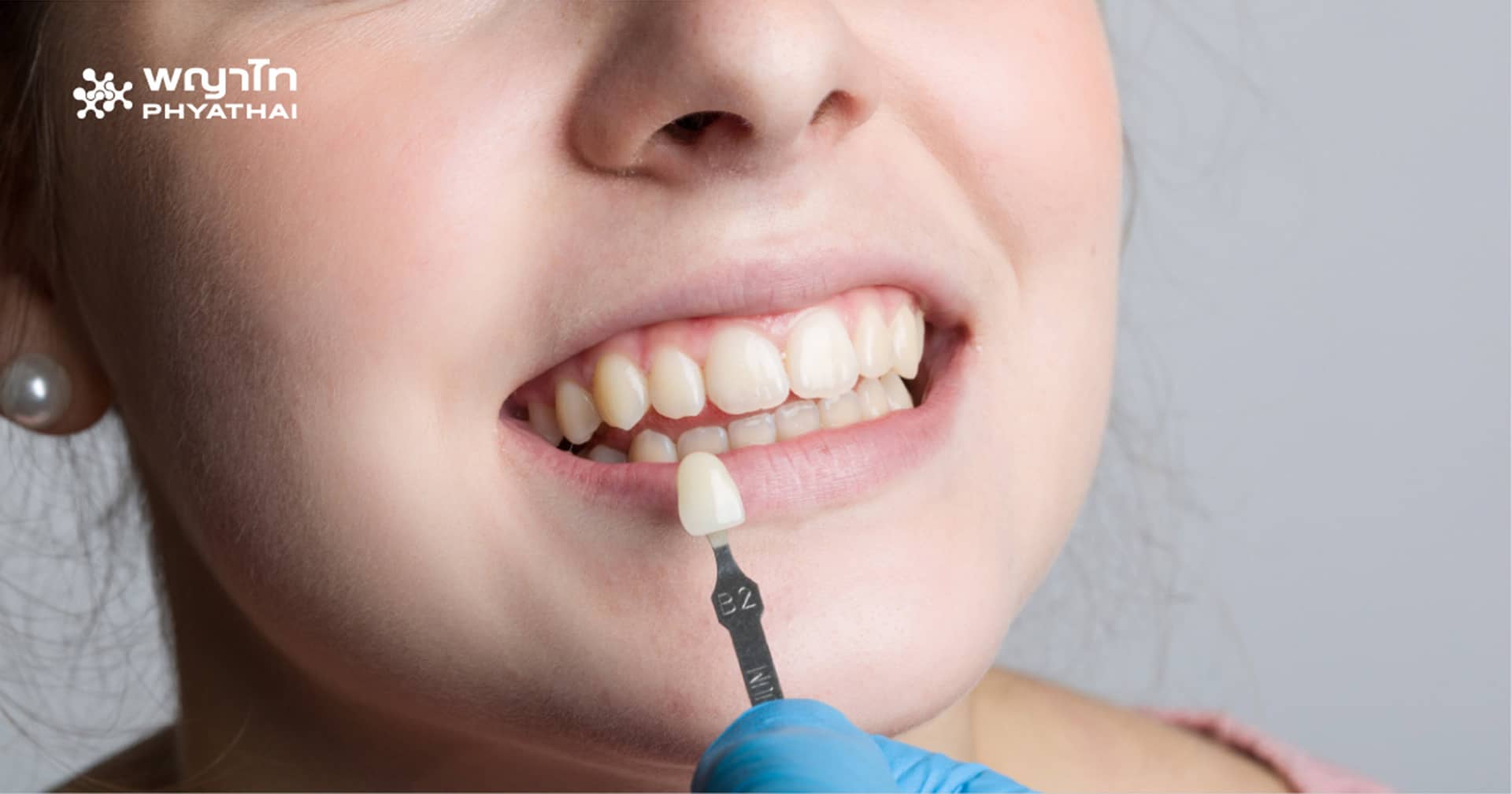
Veneers are cosmetic dentistry that can be used to correct abnormalities in tooth shape, tooth color, and (slightly) abnormal tooth alignment.
Getting to Know Types of Dental Veneers
Materials used for dental veneers aim to mimic the natural appearance of teeth while offering high quality, strength, and durability. There are two main types of materials used:
- Resin Composite: This type of veneer is cost-effective and can be repaired efficiently without the need for new pieces. However, over time, resin composite veneers may change color and lose their luster.
- Porcelain/ Ceramic: These veneers offer superior quality, high strength, and resistance to breakage. They do not change color or dimensions over time and are resistant to staining from substances like tea, coffee, and cigarettes. They maintain their beauty throughout their lifespan and are biocompatible with gum tissue, promoting healthy gums and minimizing bacterial plaque accumulation. However, they are more expensive, and the dentist may need to provide temporary solutions while waiting for the actual veneers to be made. Treatment time can range from 60 to 180 minutes depending on the number of teeth being treated.
Benefits of Dental Veneers:
- Closing small gaps between teeth.
- Correcting misshapen teeth.
- Repairing chipped teeth without affecting the dental nerves.
- Correcting abnormal veneer appearance.
- Correcting teeth with abnormally dark colors or intrinsic stains that cannot be corrected with teeth whitening.
- Correcting mildly misaligned teeth without the need for extensive orthodontic treatment.
Steps for Dental Veneer Treatment:
- Consultation with a Specialist Dentist: The dentist thoroughly examines the teeth, checking for any signs of decay or pain, assessing tooth vitality, and taking X-ray images to evaluate the condition of the dental nerves and tooth roots. Then, the dentist takes an impression of the mouth to create a model of the teeth, plans the treatment, designs the veneer appearance, selects suitable materials, and creates a veneer mock-up for the patient to approve, aiding in treatment planning. This appointment typically lasts 30-60 minutes.
- Veneer Preparation: The dentist prepares the teeth by slightly reshaping the surface of the enamel, usually about 0.3-0.5 millimeters, to create space for the veneers. Local anesthesia may be used to prevent discomfort. Then, the dentist takes another impression of the teeth to record the prepared teeth for veneer fabrication, which takes about 2-4 weeks. Temporary veneers may be placed during this time. The treatment time can range from 60 to 180 minutes depending on the number of teeth being treated.
- Veneer Try-In: The patient returns for a try-in appointment where the temporary veneers are removed, and the actual veneers are tried on the teeth for the patient to evaluate their appearance before final bonding. The treatment time can range from 60 to 180 minutes depending on the number of teeth being treated.
Follow-up Appointments: Following the bonding of the veneers, the patient returns for follow-up appointments after 1 week, 1 month, and every 6 months thereafter for evaluation of treatment outcomes. Each appointment typically lasts 15-30 minutes.
Maintenance: The lifespan of veneers depends on maintenance and usage. Patients should follow oral hygiene practices, avoid biting hard objects with veneered teeth, and consider wearing a nightguard to prevent veneer breakage during sleep.
