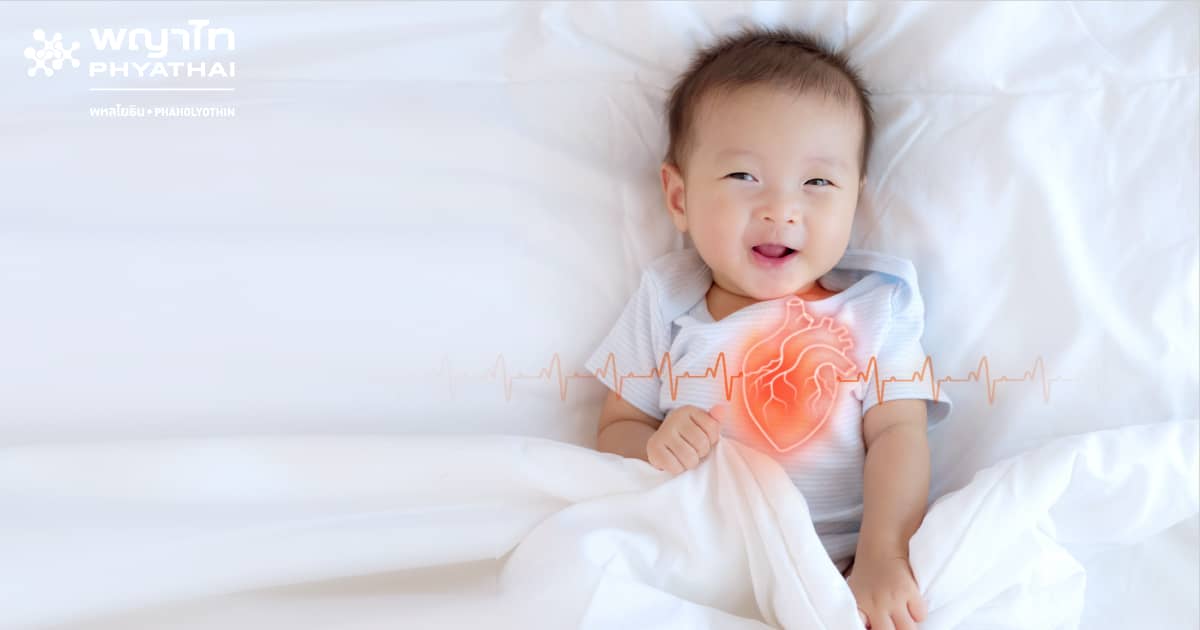
What is Congenital Heart Disease?
Congenital Heart Disease (CHD) is a condition where the structure of the heart or the blood vessels connected to the heart is abnormal from the time the baby is still in the mother’s womb. It usually occurs during the first trimester of pregnancy, which is the period when the heart and blood vessels are developing. Common conditions and main types of congenital heart disease include septal defects, valve abnormalities, abnormalities of the major blood vessels connected to the heart, and cyanotic congenital heart disease, which is characterized by abnormal blood circulation causing cyanosis.
Understanding Septal Defect
Septal defect refers to the presence of a hole or gap in the heart’s septum, which includes:
- Atrial Septal Defect (ASD), which is the most common type
- Ventricular Septal Defect (VSD), less common but affects health similarly to ASD
When there is a hole in the heart septum, oxygen-rich blood from the left side of the heart, which should be sent to the body, flows back to the right side of the heart, which normally receives oxygen-poor blood from the body to send to the lungs. This causes a condition called left-to-right shunt, resulting in increased workload for the heart and lungs. The severity depends on the size of the hole and the body’s response, which may lead to complications such as cardiomegaly, pulmonary hypertension, and heart failure.
How Does a Septal Defect Occur?
Although the exact cause of congenital septal defects is not fully understood, genetic and environmental factors play important roles, such as a family history of congenital heart disease, maternal infections during pregnancy like rubella, exposure to certain medications, and contact with chemicals that may affect fetal heart development.
However, septal defects can also occur later (Ventricular Septal Rupture: VSR) due to other diseases or causes, such as acute myocardial infarction causing damage to the septal muscle, or as complications after heart surgery or procedures.
What Symptoms May Arise from Septal Defects?
Symptoms from septal defects depend on the size, location of the hole, and the patient’s age, and can be categorized as follows:
In infants and young children, especially with large ventricular septal defects (VSD), symptoms are usually obvious. Small atrial septal defects (ASD) in young children often show no symptoms unless the hole is very large and/or there are other complications. Observable symptoms include:
- Easily fatigued, rapid breathing, shortness of breath noticed during feeding, often feeding for a short time and needing frequent breaks or feeding less than usual
- Delayed development, poor weight gain due to the body using more energy for heart and lung function
- Excessive sweating especially on the head, even in cool weather
- Frequent lower respiratory infections such as pneumonia or bronchitis from pulmonary congestion
- Cyanosis including lips, fingertips, toes, or nails, seen in severe heart disease or cyanotic types, especially with abnormally high pulmonary pressure (Eisenmenger syndrome) causing blood to flow backward from the right to the left heart
In older children, adolescents, and adults, especially with atrial septal defects (ASD) that often show no symptoms in childhood, or mild ventricular septal defects (VSD), symptoms may include:
- Easily fatigued especially during exertion, exercise, or heavy activities
- Palpitations or irregular heartbeat feeling of rapid, strong, or irregular heartbeats, especially in those with large atrial septal defects
- Shortness of breath difficulty breathing, especially when lying flat or exerting
- Chest pain usually from abnormal heart workload or increased pulmonary pressure
- Swelling especially in feet, ankles, or abdomen, indicating heart failure
- Stroke especially with atrial septal defects where clots from the right heart may pass through the hole into brain vessels (Paradoxical Embolism)
- Pulmonary hypertension which may cause increased fatigue, cyanosis, or loss of consciousness
- No symptoms if the hole is very small, often found incidentally during physical exams by detecting heart murmurs or from routine health checks showing enlarged heart shadows on chest X-rays or abnormal EKGs
Examination and Diagnosis of Septal Defects
To diagnose and plan timely treatment for septal defects, doctors use initial screening and confirmatory diagnostic methods as follows:
- Medical history taking such as complications during pregnancy or delivery, family history of congenital heart disease, and symptoms in the child like easy fatigue, shortness of breath, poor feeding, cyanosis, or poor weight gain
- Physical examination especially listening for heart murmurs with a stethoscope, which is the most important initial screening tool indicating abnormalities
- Electrocardiogram (EKG/ECG) to assess heart rhythm and detect heart enlargement
- Chest X-ray to evaluate heart size and shape, as well as lung condition; large septal defects may show an enlarged heart or abnormal pulmonary congestion
- Echocardiogram (Echo) the most important and accurate diagnostic tool to confirm septal defects, allowing doctors to see moving images of the heart, septum, valves, and blood flow clearly, including the location, size, direction, and amount of blood shunting
- Cardiac catheterization used when detailed assessment is needed or for treatment by closing the defect via catheter
Factors in Choosing Treatment for Septal Defects
Treatment of septal defects, whether atrial (ASD) or ventricular (VSD), requires comprehensive evaluation by doctors considering important factors such as:
- Type and location of the defect which affect the specific characteristics and suitability of treatment methods
- Size of the defect as small defects, especially in young children, may close naturally
- Patient symptoms indicating necessity and urgency
- Patient age which affects surgical tolerance
- Impact on heart and lungs such as cardiomegaly or pulmonary hypertension, indicating disease severity and treatment need
Treatment Methods for ASD and VSD
Generally, there are three main treatment approaches for septal defects as follows:
- Observation and monitoring for small defects, especially small ventricular septal defects in young children (VSD) that may close naturally, or asymptomatic atrial septal defects (ASD) without significant heart impact. Doctors will schedule close follow-up.
- Transcatheter device closure is a treatment using a small catheter inserted through blood vessels to deliver a special device to close the defect. It is mainly used for secundum-type atrial septal defects, the most common type of atrial septal defect located in the central interatrial septum between the left and right atria, and for some muscular or perimembranous ventricular septal defects. This method is less invasive than open-heart surgery and has a shorter recovery time. However, some atrial septal defects and ventricular septal defects near the valves may not be suitable for this method.
- Open-heart surgery is a long-established and still standard treatment for septal defects. Surgeons open the chest to access the heart directly. During surgery, the heart is temporarily stopped, and a heart-lung machine takes over blood circulation and oxygen exchange. The surgeon closes the defect by suturing or using synthetic materials like Gore-Tex patches or the patient’s own tissue to patch the hole. This is suitable for large, complex defects, defects that cannot be closed by catheter, or those with other complications such as valve abnormalities. It is often the main option for large ventricular septal defects or some atrial septal defects.
After treatment, whether by catheter closure or surgery, patients need follow-up and echocardiogram examinations as prescribed by the doctor to evaluate treatment outcomes and prevent long-term complications.
If you or your loved ones have suspicious symptoms related to congenital heart disease or need accurate diagnosis and treatment planning, consulting a heart specialist promptly is essential to receive appropriate and timely care. Phyathai Phaholyothin Hospital has a team of specialized cardiologists and cardiac surgeons, equipped with modern medical technology and tools, ready to provide effective diagnosis and treatment planning, which helps reduce the risk of long-term complications and improves patients’ quality of life for many years.
Dr. Ongkarn Komsan
Cardiologist
Phyathai Phaholyothin Hospital
