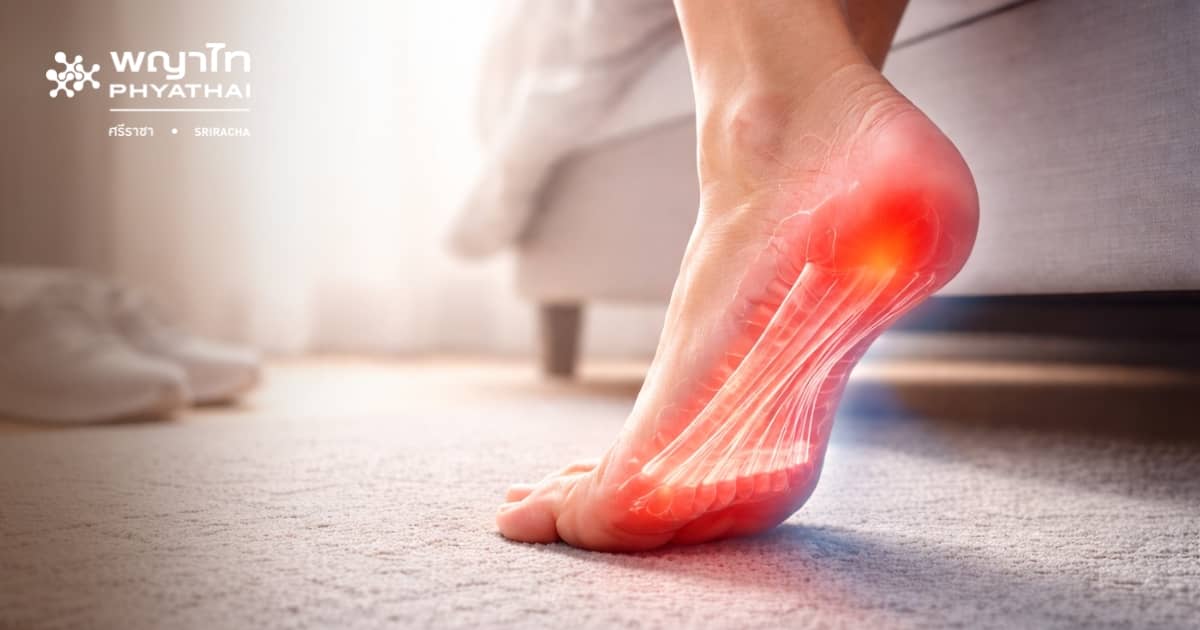
Heel pain when walking, especially during the first step after waking up or after sitting for a long time and then standing up to walk, is a symptom many people are familiar with. One of the common causes is plantar fasciitis or inflammation of the plantar fascia.
Many people often ignore it, thinking it is just ordinary fatigue. However, if the pain persists for a long time, it may start to interfere with walking, exercising, or daily life. Common questions include how to treat plantar fasciitis, whether it can heal on its own, and when to see a doctor.
This article will introduce treatment approaches for plantar fasciitis, from basic self-care, physical therapy, the use of supportive devices, to medical treatments for cases that do not improve.
What is plantar fasciitis? Why does it cause heel pain?
Plantar fasciitis is a condition where the plantar fascia becomes inflamed or irritated due to repetitive use. This area helps support weight and distribute force while standing, walking, or running. When it becomes tight or inflamed, it causes pain in the heel or under the foot, especially after resting and then resuming activity.
Although many people call it “plantar fasciitis,” medically it is often related to plantar fascia inflammation, which is a common cause of heel pain in working-age adults and those who put heavy use on their feet.
What symptoms indicate plantar fasciitis?
Common symptoms include:
- Heel or underfoot pain, especially during the first step after waking up
- Pain after sitting for a long time and then standing up to walk
- Increased pain after standing or walking for a long time
- Tenderness when pressing on the bottom of the heel
- A feeling of tightness in the foot or calf muscles
Some people may not have constant pain but experience sharp pain when starting to walk or after heavy use, such as walking a lot, exercising, or standing for a long time.
How is plantar fasciitis treated?
Treatment usually starts with non-surgical methods. Doctors will consider the severity, duration, and individual risk factors.
1) Rest and reduce activities that impact the heel
During severe pain, reduce repetitive weight-bearing activities such as running, jumping, long walking, or prolonged standing. Overusing the foot can worsen inflammation and make it chronic.
Rest does not mean stopping walking entirely but reducing activities that trigger symptoms and adjusting lifestyle appropriately during recovery.
2) Adjust footwear and weight distribution
Shoes greatly affect plantar fasciitis symptoms. Wearing shoes with thin, hard soles or lacking arch support can increase heel stress.
Shoes should:
- Have adequate shock absorption
- Support the arch
- Not be too flat
- Be comfortable and fit the foot shape
For some, changing to appropriate shoes early can significantly reduce pain.
3) Stretch the plantar fascia and calf muscles
Many with plantar fasciitis have tightness in the plantar fascia and calf muscles. Proper stretching is an important part of treatment.
Common examples include:
- Calf stretches
- Plantar fascia stretches before getting out of bed
- Using a ball or roller to gently massage the sole
Regular practice helps reduce tightness and may lessen morning first-step pain.
4) Physical therapy
If symptoms persist or pain affects walking, physical therapy may help. Treatment may include:
- Stretching and strengthening muscle programs
- Training proper weight distribution
- Reducing tightness in the foot and calf
- Using physical therapy devices as deemed appropriate by the doctor or therapist
Physical therapy helps address both symptoms and behaviors that may cause recurrence.
5) Medication to reduce pain and inflammation
In some cases, doctors may prescribe medication to reduce pain and inflammation during severe symptoms. Medication use should be under medical supervision, especially for patients with underlying conditions such as gastritis, kidney disease, or those taking certain medications.
6) Use of supportive devices such as heel pads
Some patients may benefit from supportive devices such as:
- Heel pads
- Arch supports
- Devices that help distribute pressure on the foot
These devices help reduce impact and make walking more comfortable but should be chosen to fit the foot shape and cause of symptoms.
7) Procedures or additional treatments for chronic cases
If self-care has been tried for a while without improvement or symptoms are chronic, doctors may consider additional treatments based on individual cases, such as:
- Specialized procedures
- Treatment by rehabilitation or orthopedic specialists
- Assessment for other contributing causes
The key point is not to buy devices or continue treatment for too long without proper evaluation, as heel pain is not always caused by plantar fasciitis.
Can plantar fasciitis heal on its own? How long does it take?
Many cases of plantar fasciitis can improve with appropriate early care, such as reducing activity, adjusting footwear, stretching the foot, and regular physical therapy.
However, recovery time varies. Some improve within a few weeks, while others may take several months, especially if aggravating factors remain, such as prolonged standing, excess body weight, or inappropriate footwear.
When should you see a doctor?
If you have plantar fasciitis or heel pain and symptoms do not improve, you should see a doctor for proper evaluation, especially if you experience:
- Heel pain lasting several weeks
- Severe pain making walking difficult or pain with every step
- No improvement despite self-care
- Pain interfering with work, walking, or daily life
- Swelling, redness, warmth, or unusually severe pain
- Suspected causes other than plantar fasciitis, such as tendonitis, tendon tears, stress fractures, or foot structural problems
Seeing a doctor helps determine whether heel pain is truly from plantar fasciitis and allows for targeted treatment planning, especially in chronic or complex cases.
At Phyathai Sriracha Hospital, there is a specialized orthopedic team ready to care for patients with plantar fasciitis, heel pain, and foot weight-bearing problems. Doctors will assess symptoms individually to plan treatment suitable for the cause and the patient’s lifestyle.
Summary
Plantar fasciitis is a common cause of heel pain, especially pain during the first step after waking or after prolonged rest. Treatment usually starts with non-surgical methods such as rest, footwear adjustment, foot stretching, physical therapy, supportive devices, and medication as advised by a doctor.
If symptoms do not improve or become chronic, seeing a doctor helps evaluate further treatment and identify other possible causes to restore comfortable walking and daily life.
FAQ Frequently Asked Questions
Q: Is it better to apply heat or cold for plantar fasciitis?
A: During severe pain or heavy use, cold packs may help reduce pain. However, the appropriate method depends on the cause and stage of symptoms. If unsure, consult a doctor or specialist.
Q: Can I continue exercising with plantar fasciitis?
A: It depends on the severity. If pain is severe, avoid activities that impact the heel, such as running or jumping, and choose lower-impact activities temporarily.
Q: Is plantar fasciitis the same as heel spurs?
A: Not always. Some people have plantar fasciitis without heel spurs, and some have heel spurs that are not the main cause of pain. Evaluation with symptoms and physical examination is necessary.
Q: Does walking barefoot frequently worsen plantar fasciitis?
A: In some cases, it may increase pain, especially when walking on hard surfaces for a long time, as the heel absorbs direct impact.
Q: Can plantar fasciitis recur?
A: Yes, it can recur if risk behaviors persist, such as wearing inappropriate shoes, prolonged standing, excessive foot weight, or not regularly stretching the muscles and plantar fascia.
