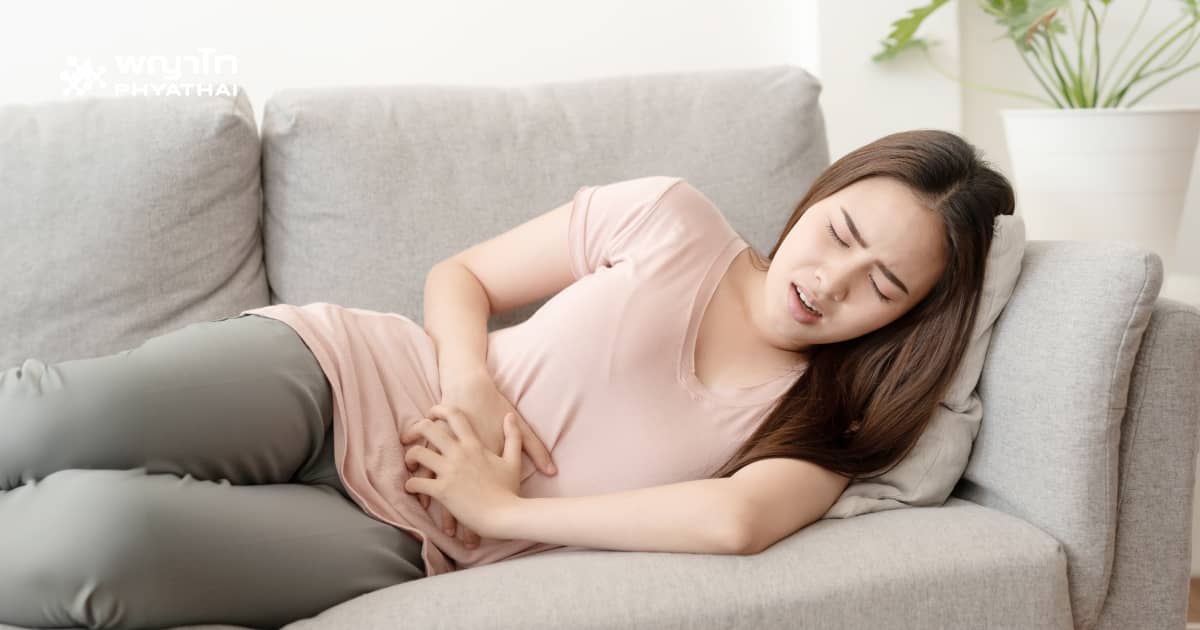
Menstrual Pain is a common symptom in reproductive age women, with prevalence varying by age group from about 20-90 percent. It is the most common abnormal condition related to menstruation. Generally, it begins from the first year of menstruation. In cases without other underlying diseases, the pain usually improves with age or after childbirth.
Causes of Menstrual Pain
The causes of menstrual pain can be divided into two types as follows:
- Primary dysmenorrhea caused by prostaglandins that directly affect the uterus.
- Secondary dysmenorrhea caused by various diseases including endometriosis, uterine fibroids, intrauterine device insertion, abdominal adhesions, etc.
Different Menstrual Pain Symptoms by Cause
In gynecology, menstrual pain symptoms are divided into two groups according to the cause of the pain as follows:
1. Primary dysmenorrhea
This is menstrual pain without any disease or pathological condition. The pain is caused by prostaglandins, chemicals secreted from the endometrium during menstruation. These substances cause uterine muscle contractions, resulting in lower abdominal pain and reduced blood flow and oxygen supply to the uterus, similar to labor pain. These substances may also cause nausea and diarrhea in some cases. Generally, the specific symptoms of primary dysmenorrhea are as follows:
- Pain starts shortly after the first menstruation (less than 6 months after menarche)
- The duration of symptoms occurs within 48-72 hours of menstruation
- The pain is cramping or similar to labor pain
- The pain usually starts in the pelvic area and may radiate to the back or thighs
- Pelvic examination shows no abnormalities
- May be accompanied by nausea, diarrhea, fatigue, and tiredness
2. Secondary dysmenorrhea
This is menstrual pain caused by pathological conditions or other diseases that cause the pain. The pain is usually more severe or chronic than primary dysmenorrhea, as follows:
- Pain begins between ages 20-30, with no or less severe menstrual pain before
- Pain becomes more severe, affecting daily activities; some cases require injectable pain relief
- Heavy or abnormal menstrual bleeding accompanies the pain
- Abnormalities in the pelvic area or physical examination findings
- Does not respond to NSAIDs or oral contraceptives
- Infertility
- Pain during sexual intercourse
- Abnormal vaginal discharge
Severe or Chronic Menstrual Pain: What Diseases Could It Indicate?
Generally, as mentioned, primary dysmenorrhea is usually not severe. In cases of severe or chronic pain, it is mostly secondary dysmenorrhea caused by:
1. Endometriosis
This is a condition where endometrial tissue grows outside the uterus or in other areas not inside the uterine cavity. These endometrial cells respond to hormones during the menstrual cycle like those inside the uterus, causing bleeding every cycle. If these cells are located in other parts of the body, especially the ovaries or peritoneum, blood may accumulate, forming cysts called chocolate cysts or cause bleeding in the abdomen, leading to pain, irritation in the lower abdomen, increased menstrual pain, and can cause abdominal adhesions. This results in chronic lower abdominal pain, pain during pelvic examination, and pain during intercourse. It is also a cause of infertility in the future.
If endometrial tissue grows into the uterine muscle, it is called adenomyosis, which causes uterine enlargement, heavy menstruation, severe lower abdominal pain during menstruation, and in some cases, abdominal swelling or enlargement before menstruation due to bleeding within the uterine muscle.
2. Uterine fibroids, especially submucous myoma
This is a common benign tumor of the uterus. Pathology reports show fibroids in up to 80% of uterine surgeries, but only about 12-25% cause symptoms. Submucous myomas account for 5-10% of these cases.
This type of fibroid causes increased uterine contractions to expel the obstruction inside the uterine cavity, leading to increased menstrual pain.
3. Intrauterine device (IUD)
Since the IUD is placed inside the uterine cavity, it causes increased uterine contractions and may also cause uterine adhesions.
4. Abdominal adhesions
These adhesions may result from cesarean section, previous abdominal surgeries, or pelvic and abdominal inflammation, causing adhesions that pull the uterus. When the uterus contracts during menstruation, the pain worsens. Sometimes, chronic lower abdominal pain unrelated to menstruation may occur.
5. Cervical stenosis
This is a cause of impaired menstrual blood flow from the uterine cavity, causing increased uterine contractions and more severe menstrual pain.
6. Obstructive malformation of the genital tract
Structural abnormalities may block menstrual flow, increasing menstrual pain. Other causes of severe chronic menstrual pain include ovarian neoplasm, peritonitis, pregnancy, various uterine fibroids, adrenal insufficiency and adrenal crisis, urinary tract infections and cystitis, ectopic pregnancy, chronic inflammatory bowel disease, irritable bowel syndrome, pelvic inflammatory disease, etc.
How to Relieve Menstrual Pain?
When experiencing menstrual pain, there are four treatment and care methods as follows:
1. Non-medical therapeutic options
This may be initial care for mild symptoms or used alongside medication to enhance treatment effectiveness, including:
- Exercise, as studies show it improves mood and stress related to menstrual pain, reducing associated symptoms and pain
- Acupuncture and transcutaneous electrical nerve stimulation (TENS)
- Yoga exercises
- Use of heat packs
2. Medical therapeutic options
Medication treatment is divided into non-hormonal and hormonal drugs.
Non-hormonal drugs
- Acetaminophen, Tylenol
- NSAIDs, COX-2 inhibitors, Transdermal glyceryl trinitrate
NSAIDs are found to be quite effective, especially if taken immediately at the start of menstruation or when symptoms begin and continued for 2-3 days. However, these drugs are contraindicated in cases of bleeding disorders, asthma, aspirin allergy, liver dysfunction, or stomach ulcers.
Hormonal drugs
- Combined oral contraceptive (OC) is commonly used to treat menstrual pain by suppressing ovarian function, reducing endometrial growth, decreasing menstrual flow, and reducing prostaglandin secretion, uterine contractions, and uterine muscle spasms.
- Progestin regimens especially depot medroxyprogesterone acetate injections, work by inhibiting ovulation, causing endometrial atrophy and amenorrhea in 55-60% of users after 12 months.
- Levonorgestrel intrauterine system (LN-IUS) is a progestin-releasing IUD placed inside the uterus, directly affecting the endometrium, causing atrophy and inactivity. Menstrual blood loss is reduced by 74-97%, and 16-35% of users become amenorrheic after 1 year, improving menstrual pain.
3. Surgical treatment
This is usually an option when pain does not improve with painkillers and hormonal treatment, especially in suspected endometriosis or abdominal pathology or tumors. Statistics show that in patients unresponsive to medication and undergoing laparoscopy, up to 80% have endometriosis. Surgical treatments for menstrual pain include:
- Laparoscopy is a diagnostic method for chronic pelvic pain and can detect pelvic organ pathology well, allowing simultaneous surgical treatment.
- Uterine artery embolization is used to treat fibroids by reducing tumor size and blood supply, suitable for those wishing to preserve the uterus.
- Hysterectomy is a treatment option for uterine pathology such as fibroids or adenomyosis, suitable for women who have completed childbearing. It provides long-term relief by removing the uterus, stopping menstruation, while preserving ovaries for hormone production if premenopausal.
- Presacral neurectomy is surgery to cut presacral nerves supplying pelvic organs, which can reduce menstrual pain in some cases but may cause constipation and urinary problems in about 5%.
- Laparoscopic uterosacral nerve ablation (LUNA) has shown effectiveness in some cases, but recurrence occurs in about 27% of patients after follow-up.
4. Complementary and Alternative Medicine (CAM)
Reported treatments for primary dysmenorrhea include vitamins and various herbs such as Vitamin E, Fish oil/Vitamin B12 combination, Magnesium, Vitamin B6, Toki-shakuyaku-san, Fish oil, Neptune Krill oil, but research on their effectiveness is still limited.
Recommendations for Those with Menstrual Pain
Menstrual pain is a common condition occurring in all reproductive-age women, with varying severity. However, severe or chronic pain may be a warning sign of diseases requiring specific care. Therefore, women with abnormal symptoms should consult a specialist for proper diagnosis and timely treatment to maintain a good quality of life.
