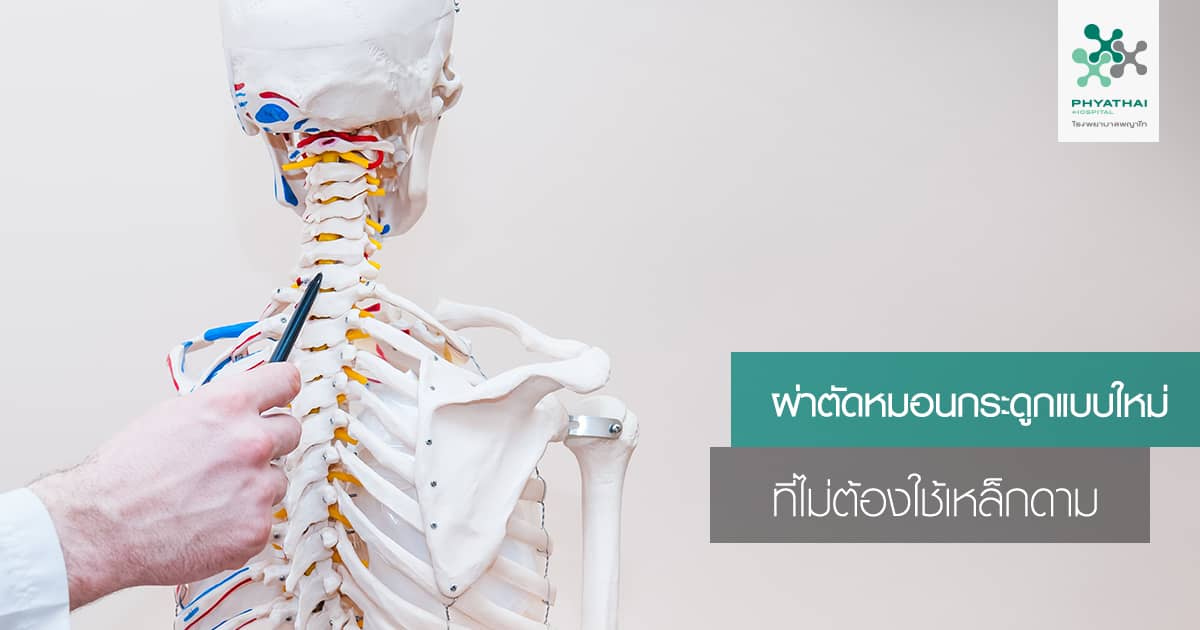
“Intervertebral Disc” is an important organ that functions to support weight and cushion the spine. As we age, the intervertebral discs begin to degenerate, causing back pain from this degeneration. When it becomes severe, it affects daily life, especially when walking, sitting, or changing posture, causing pain that radiates down the leg! This is a problem that should be addressed before it worsens.
Intervertebral disc problems caused by excessive vibration!
Radiating leg pain is a common problem in patients with intervertebral disc disease, especially elderly patients due to natural degeneration, causing spinal stenosis. This differs from younger patients who often suffer from acute herniated discs caused by activities and risk factors such as:
- Those who frequently engage in activities with vibration or severe impact, such as playing football, basketball, or other sports, or accidents. Severe impacts greatly affect the intervertebral discs.
- Those with a high Body Mass Index (BMI) or obesity are more prone to intervertebral disc disease than those with normal weight.
Additionally, people with low body weight are also at risk of intervertebral disc disease due to other causes such as genetics combined with the original strength of the intervertebral discs. These are all defects that are difficult to avoid.
We can see that diseases related to intervertebral discs are common and occur more easily than we think. Most patients fear surgery because it was once considered risky. However, nowadays, innovations in treating herniated or degenerated intervertebral discs have greatly advanced. Minimally invasive surgery results in pain relief and very low risk of complications, allowing most patients to return to normal life quickly.
Endospine Surgery (Endoscopic spinal surgery)
Solves all problems of herniated discs/degenerative, narrowed spinal canal
When abnormalities of the intervertebral disc are found from chronic back pain or radiating leg pain, patients should consult and be diagnosed by a doctor directly, not just self-medicating with painkillers.
During examination, the doctor will perform an MRI scan to check the size of the damaged disc and determine if it is a herniated disc or degenerative, narrowed spinal canal. Once the cause is confirmed, Endospine surgery will be performed, which is considered minimally invasive compared to traditional treatments.
Advantages of Endospine Surgery
- Small incision of 8 millimeters
- Less blood loss, shorter recovery time
- Local anesthesia (no need for intubation), reducing risks and side effects, or general anesthesia if the patient prefers (after general anesthesia, patients should be observed in the hospital for 1 day)
- Success rate over 95%
- Lower cost than traditional surgery requiring metal implants or artificial discs
The duration of surgery depends on the severity, type, and location of the problematic disc, along with any bone spurs in the area (commonly found in elderly patients). After surgery, patients can walk immediately, helping restore quality of normal life.
An option for patients: a new life without metal implants!
When it comes to disc surgery, patients often imagine major surgery with significant pain and possibly needing metal spinal implants. This is not the case with Endospine (Endoscopic spinal surgery) technology, which not only targets the disc disease precisely but also reduces the rate of metal spinal implants by over 85%.
Metal spinal implants fuse the vertebrae, preventing movement at that segment. Restricted movement causes surrounding vertebrae to work harder, accelerating wear and tear. This is why patients who have had metal implants often require repeat surgeries.
Endoscopic spinal surgery requires the expertise of a surgeon who deeply understands the problem and is skilled in this technique to achieve successful treatment and symptom relief, allowing patients to move normally again and no longer suffer from back pain.
