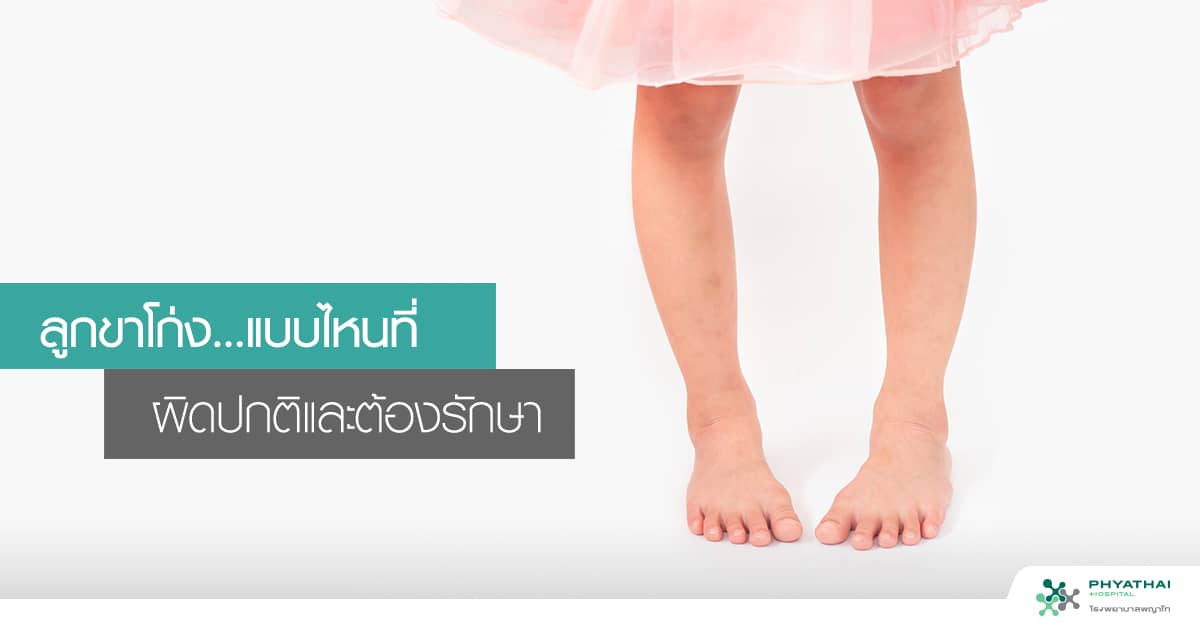
Bowed legs may sound like a condition that is not seriously dangerous, and most parents might think it is normal that soon, as their child’s bones grow with age, the legs will straighten on their own. This is not wrong. However, there are cases of bowed legs caused by other reasons or abnormal bone diseases, which if left undiagnosed and untreated, can negatively affect the child’s posture and physique as they grow up. Therefore, understanding “bowed legs” is something that every parent of young children should not overlook.
What are bowed legs? Is it a disease or a natural condition?
Bowed legs are a common condition where parents often clearly notice that their child’s knees curve outward and separate from each other. In reality, all newborns have “bowed legs” initially because it is a natural early stage. By around 2 years old, the previously bowed legs gradually straighten on their own without correction, and by about 3 years old, the legs start to angle inward or knock together, returning to normal straightness by around 7 years old. This entire process is a normal natural phenomenon. However, there are some cases of “bowed legs” that are not natural but caused by diseases or abnormalities, which require careful observation and medical examination to prevent abnormal leg growth. One such non-natural bowed leg condition is Blount’s Disease.
What type of bowed legs qualify for a diagnosis of Blount’s Disease?
Blount’s Disease is one of the bowed leg conditions that is not natural. It is mostly found in young children who are overweight or obese because the excess weight presses on the inner part of the knee, causing the growth plate to not develop fully, resulting in outward bowing. A key sign that the bowed legs observed by parents might be Blount’s Disease is if the child is over 2 years old and the legs remain bowed or worsen. In natural bowed legs, after 2 years old, the legs should straighten on their own. If the bowing does not improve, parents should urgently consult a doctor for diagnosis. Besides Blount’s Disease, other abnormalities can cause bowed legs, such as metabolic diseases like vitamin D deficiency. Children with this condition are not obese like those with Blount’s Disease but still have persistent bowed legs beyond 2 years old. Diagnosis requires X-rays and blood tests.
How dangerous is it if bowed legs are left untreated or medical consultation is delayed?
If a child has bowed legs from Blount’s Disease and does not receive treatment, the bowing will gradually worsen because the growth plate inside the knee is compressed and does not grow, while the outer bone continues to grow with age. The consequences include poor posture, pronounced bow-legged walking, loss of self-confidence, and possible knee pain due to stretched knee ligaments when walking. Therefore, parents should closely observe their child’s bowed legs. If the child is 2 years old and the bowing persists, especially if the child is overweight, they should urgently consult a doctor as there is a high chance of Blount’s Disease.
How is Blount’s Disease treated once diagnosed?
Treatment for bowed legs caused by Blount’s Disease depends on the severity. If the bowing is mild and the child is seen early, treatment involves wearing a corrective brace continuously for about 1-2 years. However, most children resist wearing the brace, so if there is no improvement after about 6 months, surgery is considered. The type of surgery depends on the severity of the bowing. For mild cases, surgery involves realigning the bone and applying a cast for 1-2 months until the bone heals and returns to normal. For severe cases treated later in childhood, when the growth plate is completely damaged, surgery is more complex as the dead growth plate must be removed first. Therefore, parents must carefully monitor their child’s bowed legs and seek medical advice immediately if there is no improvement by age 2, as delayed treatment reduces the chances of successful correction compared to early intervention.
Will surgery cure bowed legs from Blount’s Disease completely?
Surgical treatment for bowed legs from Blount’s Disease, if done early in childhood by specialists, has a good chance of complete cure and restoring normal legs. However, whether the bowed legs will recur depends on the child’s weight. If there is no control or change in eating habits and the child becomes overweight again, the bowing may return. Therefore, after surgery, doctors must monitor and manage the patient’s diet with personalized plans and counseling by nutrition specialists to address the main cause of excess weight pressing on the growth plate, leading to a true cure of bowed legs.
Bowed legs can be a natural condition that resolves on its own or an abnormal condition requiring treatment. Thus, parents need to understand and closely monitor their child’s growth. If a child is born with bowed legs before age 2, there is no need to worry as it is natural. But if the bowing persists beyond age 2 without improvement, parents should promptly consult a doctor for timely diagnosis and treatment, ensuring their child grows into a healthy adult with good posture and confidence without concerns about leg abnormalities.
