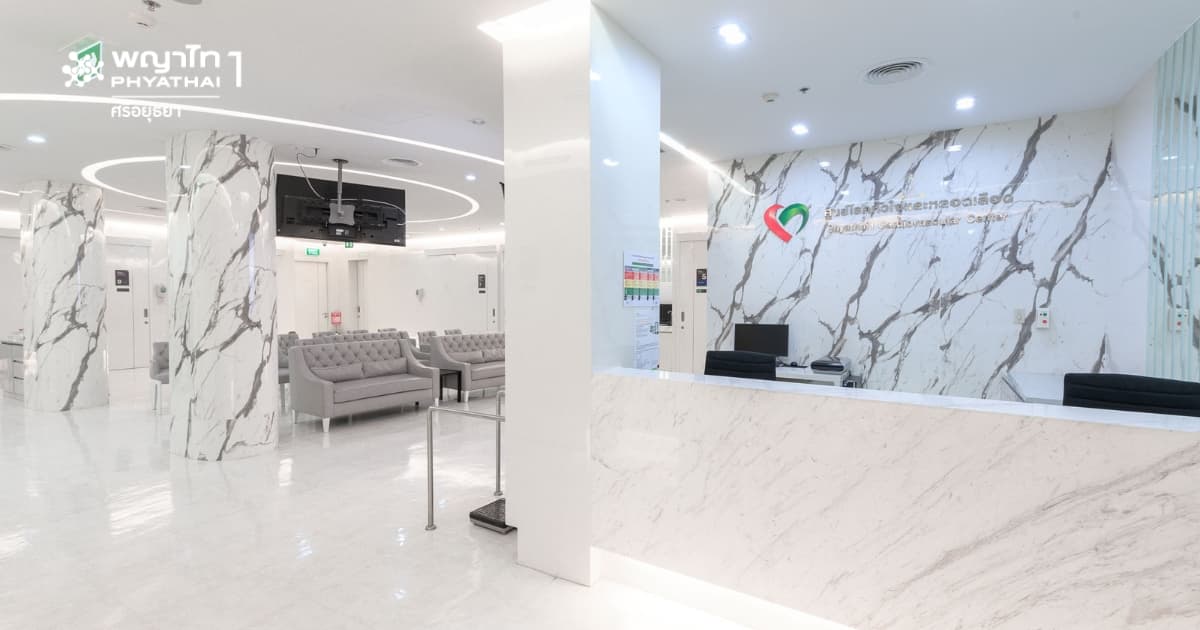
Specialized services for comprehensive heart disease diagnosis using Echocardiography technology, led by a team of expert doctors with modern equipment to assess heart health and detect abnormalities accurately and in detail, from basic to advanced techniques, enabling early detection of heart disease.
Innovation in High-Frequency Heart Ultrasound Examination Echocardiography
1. Transthoracic Echocardiogram
The most commonly used standard method for heart examination, consisting of:
- 2D Echocardiography A basic technique that displays real-time heart function images, allowing doctors to effectively assess key structures such as heart chamber size, muscle wall thickness, and valve function.
- 3D Echocardiography An advanced technology that creates realistic heart images in all dimensions, helping doctors to evaluate valve and heart chamber function in clearer detail than 2D, ideal for diagnosing and planning treatment for complex heart diseases.


- Transesophageal Echocardiography (TEE)
A special technique using a high-resolution probe inserted through the esophagus, which is located close to the heart, providing clearer images than standard examinations. It is suitable for:
- Detecting blood clots in the heart chambers
- Diagnosing infections of the heart valves
- Assessing valve abnormalities such as regurgitation or stenosis
- Studying congenital heart defects
3. “Strain Echo”
A term commonly used to refer to Echocardiography combined with Strain Imaging technique, which analyzes heart muscle movement using data from Echocardiography to detect contraction and expansion of the heart muscle in various dimensions. It can be used with 2D or 3D examinations, especially when using Speckle Tracking Echocardiography (STE), which increases accuracy in assessment and can diagnose before severe heart abnormalities occur.
Heart Examination in Cancer Patients
The Strain Echocardiogram plays an important role in monitoring cancer patients undergoing treatments that may affect the heart (Cardiotoxicity), especially those receiving chemotherapy drugs in the Anthracyclines group (such as Doxorubicin, Epirubicin) and HER2 inhibitors (such as Trastuzumab).
This technology, used alongside Echocardiogram, can detect heart changes at an early stage (Early Detection) and helps doctors adjust treatment plans promptly to prevent serious complications.
Groups Recommended for High-Frequency Echocardiography Examination
- Cancer patients
- Patients with valve abnormalities
- Patients with heart abnormalities or ischemic heart disease
- Individuals suspected of having heart disease with symptoms such as chest pain or tightness, unusual shortness of breath, palpitations, or fatigue during exercise
- Those seeking preventive heart health check-ups even without symptoms