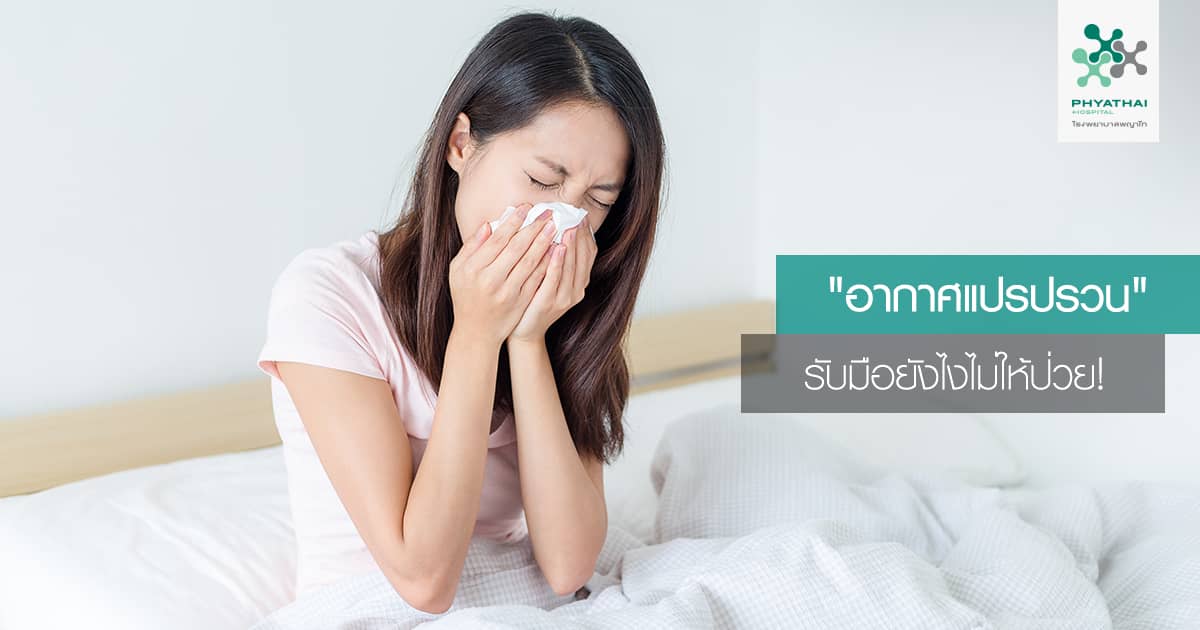
The Meteorological Department warns! Throughout Thailand, the weather will be unstable during January 29 – February 4, 2018, with rain, heat, and cold. Such sudden weather changes often cause the body to be unable to adapt quickly, lowering immunity, especially in high-risk groups such as children, the elderly, and those with chronic diseases like lung disease, heart disease, asthma, and emphysema. Phyathai 2 Hospital has methods to cope with possible diseases and ways to take care of yourself to stay strong and not fear illness! The diseases that may frequently occur are
Respiratory infections caused by both viruses and bacteria
- Symptoms start like a common cold, usually with fever, runny nose, cough, sore throat, and phlegm. If the cough is severe, there may be respiratory tract infections in the bronchi. If there is thick nasal mucus, nasal pain, and pain between the eyebrows, reduced sense of smell, or foul odor (sinusitis), pneumonia or lung infections may occur, often with symptoms of fatigue and chest pain.
- Prevention methods: Keep your body strong at all times, get enough rest, avoid going to crowded places, or if you must be close to patients, wear a face mask. Patients themselves should also wear face masks to reduce the spread of infection to others.
- When to see a doctor: Observe your symptoms for 1-2 days. If symptoms worsen or if you experience wheezing, shortness of breath, drowsiness, or inability to eat, you must see a doctor immediately.
Allergic diseases and asthma
Or people who already have respiratory diseases such as emphysema. Sudden weather changes may trigger disease flare-ups.
- Allergy symptoms are similar to a cold but usually without fever. There is clear nasal mucus and phlegm, slight sore or irritated throat. The severity is less than infectious diseases. Asthma or emphysema flare-ups may start with palpitations, chest tightness, wheezing, and noisy breathing.
- Prevention methods: Use oral or inhaled medications regularly as prescribed, treat symptoms, get enough rest, and if symptoms do not improve, see a doctor.
Doctors warn! Frequent weather changes and PM 2.5 dust may return
Fine toxic dust no larger than 2.5 microns, known as PM 2.5 dust, occurs when the air is still and stagnant, causing dust to accumulate in large amounts. The smaller the dust, the more dangerous it is because it can enter the respiratory tract and lungs directly. It can carry pathogens, toxins, or even carcinogens into the lungs. Air pollution problems may return if the weather remains unstable.
Doctors emphasize that patients with respiratory system diseases should avoid being outdoors. The general public, especially children and the elderly, should not engage in outdoor activities for long periods or protect themselves by wearing N95 masks, which can better protect against PM 2.5 dust than regular face masks.
5 ways to cope during sudden weather changes
- When the weather is cold, always wear clothing to keep your body warm
- Get enough rest
- Eat a balanced diet with all 5 food groups
- Exercise regularly
- People with chronic diseases should take their medication continuously to control their existing conditions
