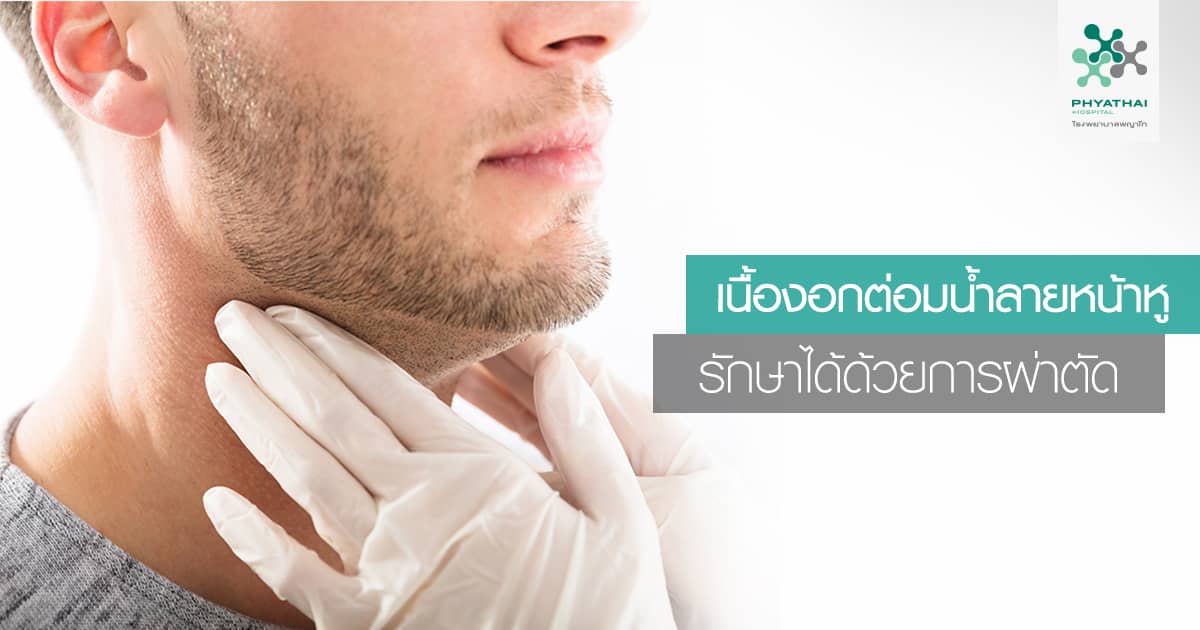
Normally, humans have 3 main pairs of salivary glands: the parotid glands, the submandibular glands, and the sublingual glands. All of these are responsible for producing different types of saliva within the oral cavity. The disease “Parotid gland tumor” is rare (3-4% of tumors in the head and neck region), so we are not very familiar with this disease. However, if this disease occurs, diagnosis requires a biopsy. Almost all treatments involve surgery to remove the tumor, called a Paraotidectomy.
Who is at risk of developing this disease?
Although the cause of parotid gland cancer has not been clearly proven, risk groups are suspected based on patients who have had the disease, including those exposed to radiation, workers in industrial factories such as rubber factories exposed to nitrosamines or glass factories exposed to silica dust. Some types of parotid gland tumors may be caused by smoking.
Lump found, facial asymmetry, warning signs to see a doctor immediately
Whether benign or malignant, parotid gland tumors usually do not cause pain, so patients need to observe lumps in the salivary gland area. If an abnormal lump is found, you should see a doctor immediately. If the lump is cancerous, it may cause facial asymmetry, inability to close the eye completely, or an uneven smile.
Benign or malignant lump? Know through these examination steps!
- Doctors perform a physical examination, take medical history, and assess the size of the lump.
- Needle biopsy to collect cells from the lump for diagnosis.
- After biopsy results, additional CT scan or MRI may be required to plan the surgery.
Phyathai 2 Hospital is ready with Paraotidectomy surgical techniques
Surgery for tumors in the parotid gland involves making an incision from the front of the ear around to the area behind the ear before removing the tumor. The surgeon will locate the facial nerve that supplies the muscles of the face and preserve it completely. The parotid gland is positioned around the nerve that controls facial muscles. If the nerve is not fully preserved or an accident occurs during surgery, it can cause abnormal facial muscle function such as facial asymmetry, inability to raise the eyebrow, drooping cheek, incomplete eye closure, and may lead to blindness if not properly managed. Therefore, Paraotidectomy requires meticulous technique and expertise from the medical team to reduce serious complications after surgery.
“If there are no limitations or the tumor is not too large, surgery can now be performed with hidden incisions within the hairline, making scars less visible than before.”
In cases where the patient has a large parotid gland cancer, it may be necessary to remove the skin in that area and dissect lymph nodes. Besides removing the tumor, wound repair is also required by using tissue from other parts of the body, such as chest or leg tissue, to reconstruct the surgical site so that the patient can return to a life as close to normal as possible.
Dr. Thanusak Srijai
Otorhinolaryngology Specialist
Head and Neck Surgery Center, Phyathai 2 Hospital
