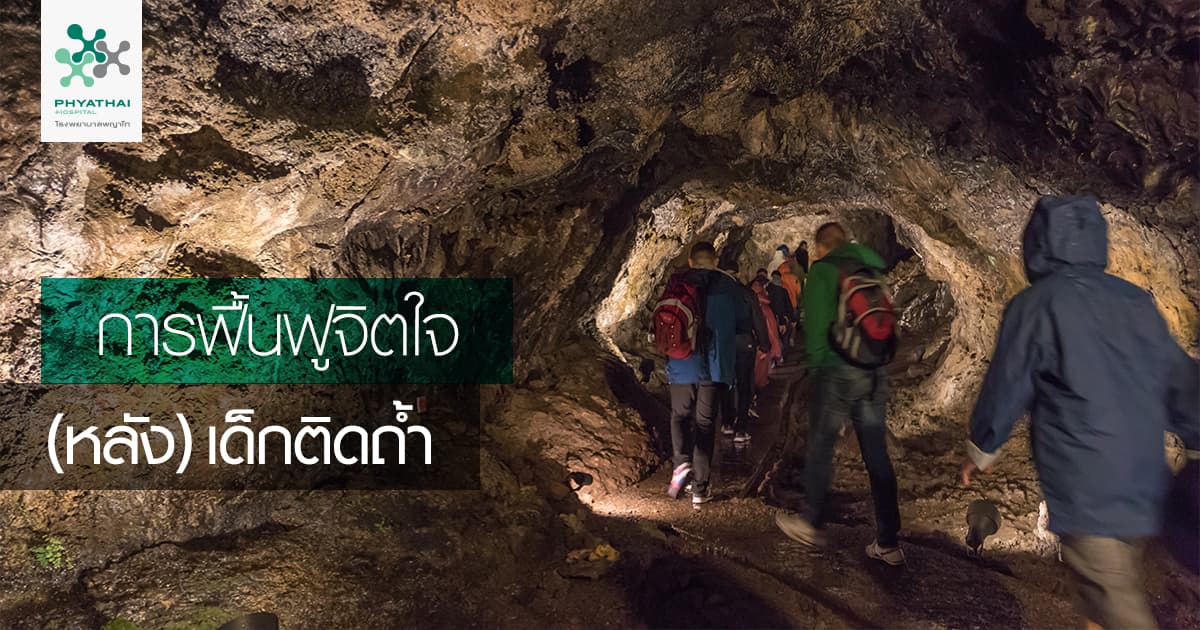
Disaster events are severe incidents that affect both the body and mind, especially when they happen to children. Caring for and restoring their mental state is crucial because a major disaster lasting only a few days can become a memory that impacts their mind for life. ‘The incident of 13 children trapped in Tham Luang-Khun Nam Nang Non cave’ lasted for over 10 days, making it an important lesson that everyone in society should learn about how to collectively restore children’s mental health.
How to boost children’s morale after leaving the cave
- When children have to stay in a confined environment, lack food, and live in darkness for a long time, both before and after leaving the cave, physical preparation must be provided to help them regain their strength. This includes providing fresh air, clean clothes, and nutritious food.
- After they return home from the cave, the living area must be made safe to create a sense of security for the children. Create an atmosphere of care, love, and attention, especially from the family who are the closest to them. They must understand what the child is going through, making the child feel understood and recognized for the hardships they have faced.
- Make this experience a valuable lesson for the child. Encourage them to think and learn how they overcame it, turning this into a source of pride in their life for having survived a difficult situation. Learning from past suffering will empower them to resume their life and responsibilities normally.
How to communicate to ensure children’s psychological stability
- Helping children who have experienced such events requires cooperation from many parties, including family, community, society, and the media. We must first observe the child’s emotional state after they come out. Some children may still be anxious, fearful, or emotionally unstable. Caregivers must remain calm, provide a safe environment, and avoid pressing questions that increase their anxiety to maintain their psychological stability.
- Asking questions to children is acceptable but should be open-ended rather than closed-ended. Open-ended questions allow them to express their feelings and tell their story fully. The person talking to the child must accept what happened without minimizing it or making the child feel unimportant. For example, avoid saying, ‘It’s okay, it will pass.’ Instead, acknowledge that what they faced was truly frightening and ask how they managed to get through it to help restore their strength.
- Ask about their needs at the moment. If they want to be independent and return to normal life, the help provided must be what they truly need, such as assistance with education, health, and mental well-being. The child should express their needs so those around them can provide appropriate support.
Psychological symptoms that may occur after a disaster
Mental illness symptoms from stress due to traumatic events appear in two phases. The first phase occurs within one month after the event and is called Acute Stress Disorder (ASD). After that, the second phase begins, which is after one month, known as PTSD.
- Patients in the ASD phase may recover on their own or show no symptoms in the first month. Children may have flashbacks of the event, such as images of darkness in the cave, hunger, and fear experienced while inside. If ASD symptoms persist for more than one month without improvement, it may develop into PTSD later.
- The disorder following traumatic stress is internationally known as PTSD (Post-traumatic Stress Disorder), an emotional disorder occurring after experiencing or witnessing violent or traumatic events, leading to stress and behaviors that affect daily life. Those who suffer psychological wounds from these events need treatment.
What to do when a child has mental health problems
It is not wrong, and some may understand and accept it. If a child experiences such feelings, they should be educated that these emotions can occur after unexpected events. These feelings do not mean they are weak or bad people. It is a bodily reaction that can happen to anyone. If they feel uncomfortable, they can express it to those around them and seek treatment from a child psychiatrist. Some children may not show symptoms immediately after leaving the cave, so symptoms should be monitored for up to one year to observe their emotions and feelings.
These symptoms reduce the child’s ability to live, worsen their learning, decrease interaction with others, and damage relationships. Their self-perception and confidence may change, leading to feelings of insecurity and doubt about overcoming the event. Therefore, proper and appropriate help and continuous monitoring can reduce fear, sadness, and anxiety that follow.
Although this event lasted only 10 days, it can leave a lasting impression on the child into adulthood. However, it depends on each child’s perspective on themselves, the problem, and those around them. If they view it as an opportunity for understanding, learning, and problem-solving rather than blaming themselves alone, this learning perspective can build mental strength. Society also plays a role in helping children change their perspective and strengthen their mental resilience.
Dr. Chonnipa Kaewpoolsri
Child and Adolescent Psychiatry Specialist
Child and Adolescent Health Center, Phyathai 2 Hospital
