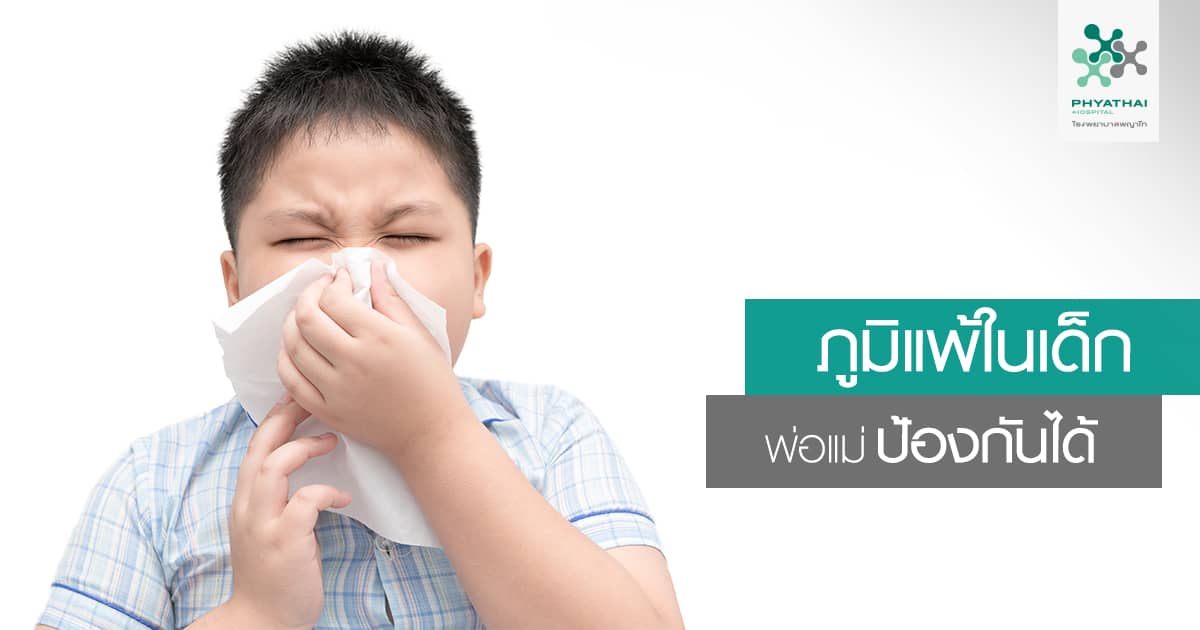
Have parents ever wondered if symptoms such as sneezing, nasal congestion, runny nose, itchy nose, or itchy eyes that come and go or are chronic in their child are signs of a disease? Are these symptoms allergies? How can they be prevented or treated? If parents are unsure, they should take their child to see a doctor for proper care and treatment.
Factors Affecting the Development of Allergies in Children Consist of Two Parts:
- Genetic Factors Children with a history of parents or siblings with allergies are at higher risk than children without a family history of allergies.
- Environmental Factors Some children without a family history of allergies also show allergic symptoms. Environmental factors influencing allergy development include dust mites, cockroaches, living in homes with furry pets such as dogs or cats, or exposure to air pollution such as vehicle exhaust fumes, industrial smoke, and cigarette smoke.
Allergic Symptoms Can Occur in Multiple Systems
Allergies occur due to an abnormal immune response to allergens entering the body, causing chronic inflammation in various organs. Parents can observe symptoms that may appear in their child according to the following systems:
Skin and Various Mucous Membranes
- Urticaria that comes and goes, often related to contact with certain allergens. Sometimes swelling around the eyes or lips may also occur.
- Dry skin with red, itchy rashes, especially on the face and cheeks, elbows, folds of the skin, knees, neck, and body.
Respiratory System
- Frequent colds or symptoms occurring at certain times, such as sneezing and runny nose, especially in the morning or at night.
- Chronic cold or sinusitis.
- Coughing or difficulty breathing at certain times, such as during play, exercise, weather changes, or after respiratory infections.
Digestive System
- Nausea, vomiting, frequent spitting up in infants.
- Bloating, diarrhea, mucus or blood in stool.
Common Allergic Diseases in Children
- Food Allergy is commonly found in the first year of life. Common allergenic foods in children include cow’s milk, eggs, wheat, various nuts, and seafood. Symptoms can affect multiple systems such as:
- Digestive system: children may experience abdominal pain, vomiting, diarrhea, and stools with mucus and blood.
- Skin symptoms: rashes, urticaria.
- Respiratory system: wheezing, nasal congestion, chronic runny nose.
- Atopic Dermatitis These children often have dry skin with red, itchy rashes on the cheeks, skin folds, knees, or elbows. It is commonly found in young children, with symptoms worsening upon exposure to allergens or unsuitable environments such as hot or dry weather.
- Asthma is a condition where the airways are sensitive to allergens or certain irritants such as cigarette smoke or fire smoke, causing airway swelling and narrowing, resulting in wheezing and chest tightness. Symptoms often worsen during exercise, cold weather, or respiratory infections.
- Allergic Rhinitis Children experience sneezing, itching, nasal congestion, and clear runny nose that is chronic, lasting several weeks during the rainy season or throughout the year.
- Allergic Conjunctivitis Children have itchy eyes, tearing, frequent eye rubbing causing darkened eyelid edges, often accompanied by allergic rhinitis symptoms.
Allergen Testing Methods
In addition to history taking and physical examination for allergy diagnosis, allergen testing is now available through various methods such as skin testing, nasal testing (in cases of allergic rhinitis), or blood tests. Currently, skin prick testing is commonly used to identify allergens because it is easy, quick, and provides immediate results. Knowing the results helps children and caregivers avoid allergens directly, improving treatment outcomes. Better allergy control also reduces medication use.
Guidelines for Allergy Prevention and Treatment
- Avoid allergens and environmental triggers such as cigarette smoke, vehicle exhaust, and industrial smoke to reduce allergy symptoms and minimize medication use.
- For allergic rhinitis, nasal saline irrigation and regular use of nasal sprays as prescribed by a doctor are recommended.
- Eat a balanced diet with all five food groups. In cases of food allergy, avoid the allergenic foods.
- Get enough rest and exercise regularly.
Allergy Immunotherapy
Allergy treatment with vaccines can be done for allergic rhinitis and asthma. Doctors administer the allergen that the patient is allergic to by injection or sublingual tablets to reduce the body’s response to that allergen, thereby reducing allergy symptoms. Treatment usually continues for at least 3-5 years. If a patient does not respond within one year, treatment will be discontinued.
