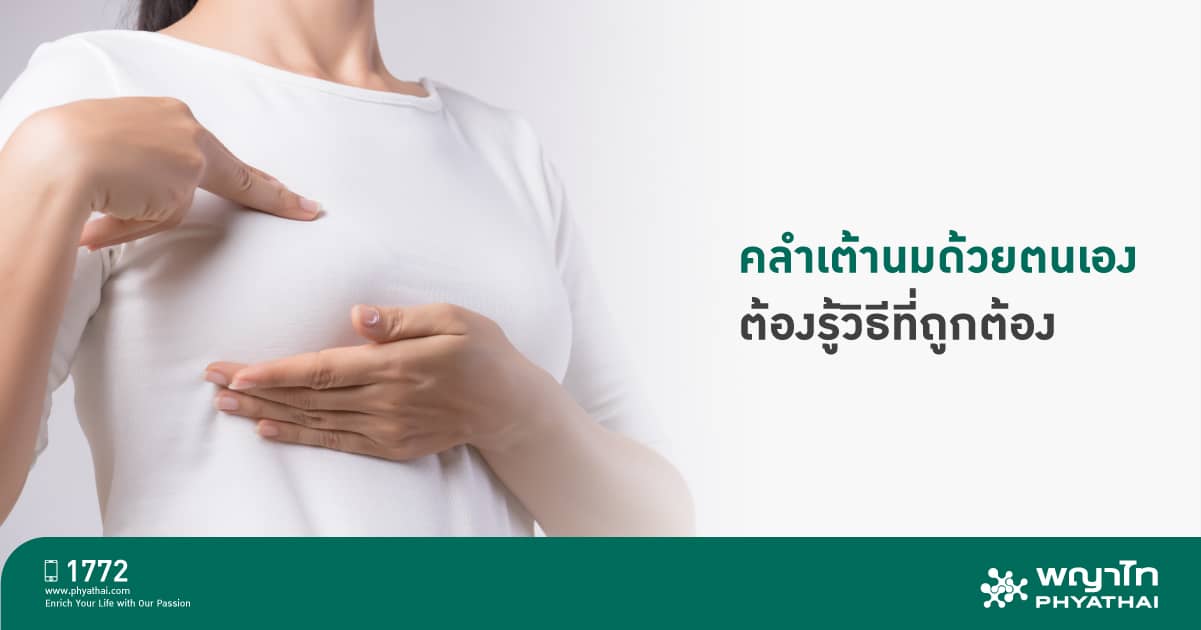
Before undergoing a breast examination by a doctor or a mammogram, “proper breast self-examination” is considered the first step in detecting the risk of “breast cancer”. If patients notice abnormalities early and promptly see a doctor for a detailed diagnosis, the chances of curing breast cancer increase significantly!
How often should you check your breasts… and on which days?
- Check regularly every month
- Check 7-10 days after your period starts, counting from the first day of menstruation
- Check on the same day every month if you no longer have periods
How to perform a breast self-examination… what should you do?
- Stand in front of a mirror, look at both breasts, and observe the size, shape, skin color, position of the breasts, and nipples. Compare any changes with previous months.
- Then raise both arms above your head and look at your breasts again. Slowly turn your body to view the sides of your breasts.
- Place your hands on your hips and lean forward slightly to check for any changes again.
- Gently squeeze the nipples to see if there is any blood, pus, or fluid discharge.
- Start palpating the breasts from the collarbone down. Use your left hand to examine the right breast, using your index, middle, and ring fingers to press gently and then firmly until you feel the ribs. Palpate the entire breast in all directions. There are various ways to palpate, but the important thing is to cover the entire breast area including the armpits. Then switch to the other breast and repeat the same method.
- After palpating while standing, change to palpating while lying down by placing a pillow under the shoulder of the breast being examined, and repeat the palpation as you did standing.
These are warning signs of breast cancer… that require immediate medical consultation
- Lump or thickening in the breast or underarm
- Red or warm skin
- Enlarged pores resembling orange peel skin
- Skin dimpling or retraction
- Skin bulging
- More pain than usual
- Itching or rash, especially around the nipple and areola
- Inverted nipple
- Change in nipple direction
- Blood discharge from the nipple
- Non-healing wounds on the breast or nipple
