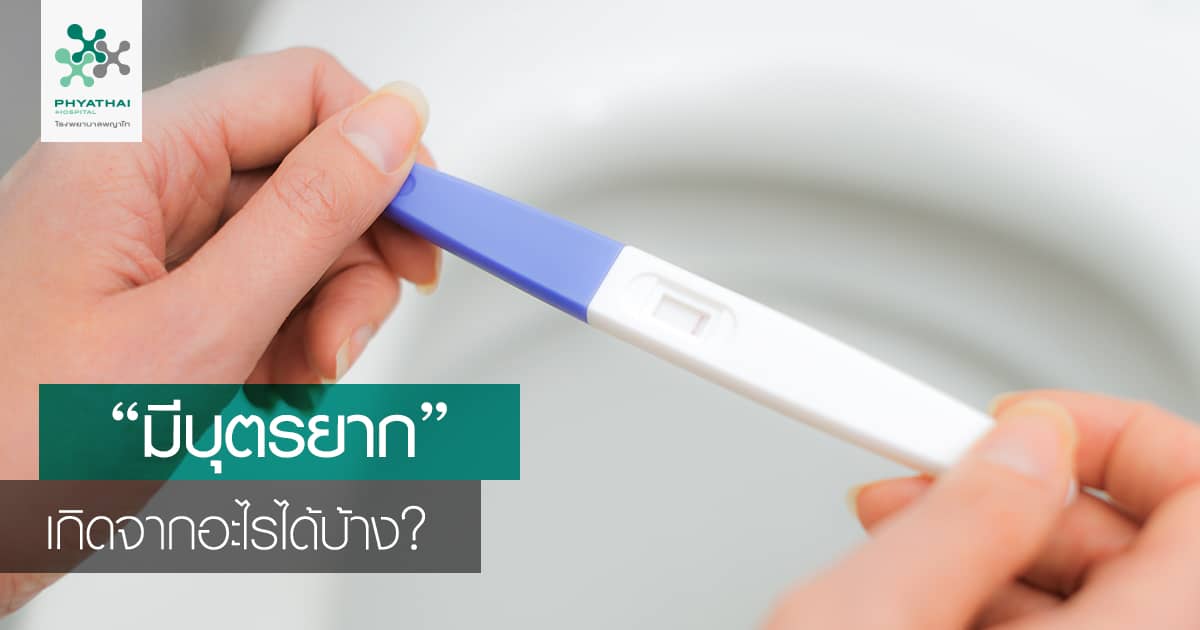
Infertile couples are married partners who live together and have regular sexual intercourse 2-3 times per week without contraception for more than 1 year… but still have not become pregnant. This group is considered to be infertile.
Factors Causing “Infertility”
- Factors from the Male Side
Infertility caused by male problems may arise from issues with “semen”, whether due to health problems such as chronic diseases, diabetes, hypertension, heart disease, or previous vasectomy. Additionally, a history of mumps in childhood, injuries or trauma to the genital area from accidents or sports involving friction and heat around the testicles, such as cycling or boxing, may cause abnormal sperm production in the testes.
Moreover, behaviors such as regular alcohol consumption, heavy smoking, drug addiction, or genetic problems like a family history of infertility or abnormalities of the reproductive organs such as inguinal hernia in the scrotum, varicocele in the scrotum, or undescended testicles from birth, are all causes of infertility. Ultimately, whether a man has problems or how severe they are depends mainly on the quality of the semen.
In fact, increasing age in men is not related to infertility. Conversely, even young men can have semen problems if they do not take good care of their health, have chronic diseases, or risky behaviors, which can lead to poor semen quality. Therefore, age is not the main factor causing male infertility.
- Factors from the Female Side
Internal reproductive organ structure because women need the uterus, ovaries, and fallopian tubes to conceive. It is necessary to check for diseases related to these structures, such as uterine fibroids, ovarian cysts, or blocked fallopian tubes. Blocked fallopian tubes can have many causes, including previous sterilization or adhesions around the tubes, which often occur after pelvic infections. Chronic diseases such as endometriosis (chocolate cysts) or previous pelvic surgeries like appendectomy, uterine fibroid removal, or ovarian cyst removal can also affect fertility. Any disease that causes problems with the uterus, fallopian tubes, or ovaries increases the risk of infertility. Other chronic diseases such as diabetes, hypertension, heart disease, and thyroid disorders, if poorly controlled, can also cause infertility.
Chronic anovulation or irregular ovulation, where patients often have irregular menstrual cycles, unpredictable timing, and infrequent periods. This is often associated with thyroid disease, high prolactin hormone, PCOS, or even obesity.
Age is another major cause of female infertility because as age increases, ovarian function declines, the number of eggs decreases, and egg quality deteriorates. The chance of natural conception decreases, and if pregnancy occurs, the risk of fetal abnormalities and miscarriage increases.
Simple observation for women with infertility is to monitor the menstrual cycle. If periods are irregular, it indicates irregular ovulation, making it difficult to predict ovulation days. Additionally, body weight, whether overweight or underweight, can also affect fertility.
Do contraceptive pills affect infertility?
If contraceptive pills have been taken for a long time but after stopping the pills the menstrual cycle returns to normal, it means the pills have lost their effect… and do not affect infertility at all.
Is preconception screening necessary?
When planning to start a family, the next step after marriage is deciding whether to have children immediately. If you want to have children right away, you need to assess any risks for having children, such as chronic diseases, sexually transmitted infections, or in some cases, unknown chronic diseases discovered during screening, such as thalassemia. This disease sometimes shows no symptoms because carriers are asymptomatic but can cause more severe disease in children than in parents. Therefore, screening to identify any risks to the child is recommended.
If screening shows no risk for having children, then check whether infertility criteria are met. It is recommended that the male partner undergo semen analysis and the female partner have an ultrasound to check for diseases related to the internal reproductive organ structure. If all criteria are normal, doctors may advise couples to try natural conception for 1 year. If unsuccessful, consult a doctor later. However, if the female partner is older, such as over 35 years, it is recommended to try for only 6 months before consulting a doctor promptly.
Therefore, not undergoing infertility screening before trying to conceive can waste time and opportunities for early treatment because as women age, fertility decreases.
“Stress” as a cause affecting infertility in both men and women
Stress directly affects hormone production from the pituitary gland. Semen production in the testes of men requires hormones, and abnormal sex hormone production leads to poor semen production and quality. In women, stress disrupts the ovulation process. During stressful periods, lack of sleep, or staying up late, ovulation may not occur, causing delayed or absent menstruation.
Dr. Panya Saksangwong
Specialist in Reproductive Medicine
Infertility Treatment Center, Phyathai 2 Hospital
