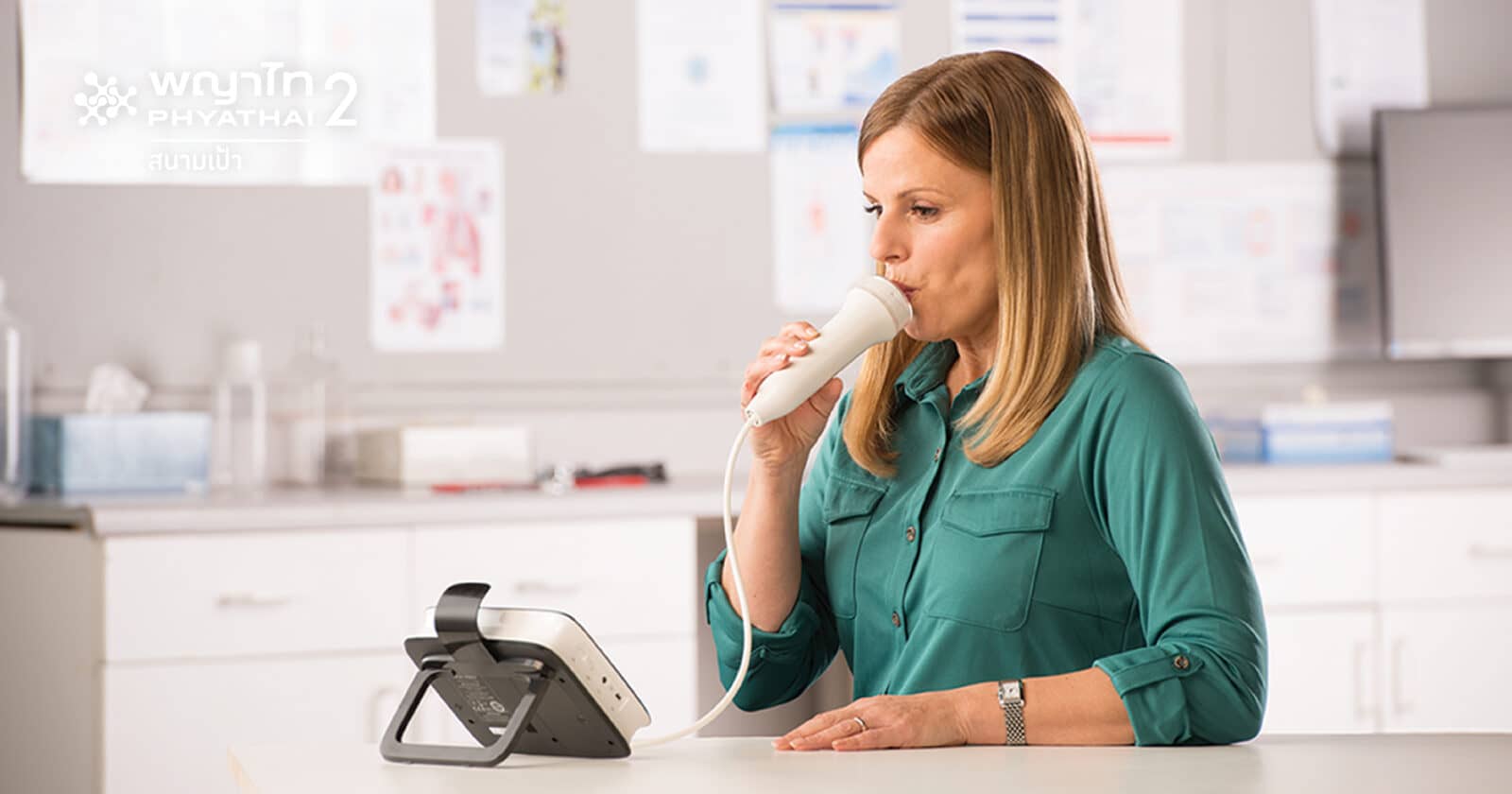
In the past, for patients with various bronchial conditions, such as asthma, pulmonary function tests (Spirometry) were commonly performed to assess airway constriction and lung expansion. Since the mechanism of asthma is primarily caused by airway inflammation, if we cannot control the airway inflammation, it will lead to a decrease in lung function, and during an exacerbation, hospitalization and nebulizer treatment may be required.
The FeNO Test (Fractional exhaled Nitric Oxide) Currently, there is a method for assessing airway inflammation called the FeNO Test (Fractional exhaled Nitric Oxide), which measures the level of nitric oxide in exhaled breath. This test provides an indication of airway inflammation, making it especially useful for monitoring and treating asthma patients.
For asthma patients whose symptoms are not well-controlled, treatment with biologic medications may be considered. Furthermore, recent medical research has extended this treatment approach to patients with chronic cough who do not show alarming signs. This test can help predict a patient’s response to inhaled corticosteroid treatments.
Which Patient Groups Benefit Most from the FeNO Test?
- Patients with chronic cough
- Asthma patients
- Severe asthma patients with uncontrolled symptoms, for consideration of biologic medications
Who Should Consider the FeNO Test?
- Patients with chronic cough
- Patients suspected of having asthma
Preparation for the FeNO Test
- Avoid smoking, tea, coffee, or caffeinated drinks for at least one hour before the test.
- Avoid alcohol consumption for 24 hours before the test.
- If experiencing a respiratory infection, wait until fully recovered before testing.
- Avoid foods high in nitrates, such as broccoli, kale, cabbage, celery, radishes, and smoked or pickled foods for three hours before the test.
- Refrain from vigorous exercise, lung function tests, or bronchial challenge tests for one hour before the FeNO test.
- If pulmonary function testing is scheduled for the same day, the FeNO test should be done first.
