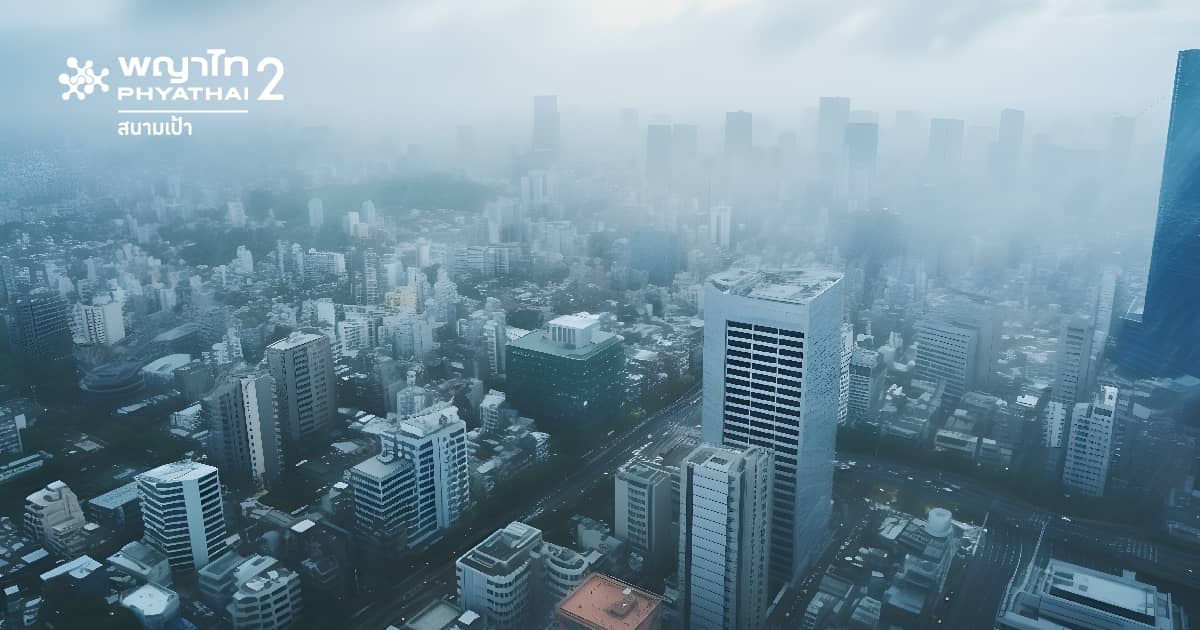
Nowadays, air pollution has become a major concern for many people, especially fine particulate matter known as PM 2.5. These particles are 25 times smaller than a human hair, making them invisible to the naked eye. PM 2.5 is generated from combustion in industries, vehicle exhaust, smoke, and other fuel-related activities. These tiny particles can easily enter the human body through respiration and pose long-term health risks.
PM 2.5 and Cancer Risk
Many people may believe that PM 2.5 is most strongly linked to lung cancer. However, according to ongoing research monitored by the Bermingham American Association for Cancer Research, it was found that 80% of the increased risk from every 10 micrograms per cubic meter of PM 2.5 exposure is associated with breast cancer—compared to only 35% for lung and liver cancer, and 42% for colorectal cancer. This highlights that PM 2.5 does not only affect the respiratory system but is also a significant factor in increasing the risk of breast cancer.
Other Health Effects of PM 2.5
In addition to increasing cancer risk, prolonged exposure to PM 2.5 can also negatively impact other aspects of health, such as:
- Increasing the risk of stroke by up to 24%
- Raising the risk of coronary artery disease by 13%
- Causing a 7.7% increase in skin wrinkles
- Leading to a 12.5% increase in facial dark spots
These health effects become even more severe when exposed to PM 2.5 levels of 50 micrograms per cubic meter or more for a continuous period of one year or longer.
How to Protect Yourself from PM 2.5
To reduce the health risks associated with PM 2.5, you can take the following preventive measures:
- Wear a protective mask – Regular surgical masks may not effectively filter out PM 2.5 particles. It is recommended to use masks that meet standards such as N95, or wear double-layered surgical masks for improved filtration.
- Stay hydrated – Drinking 2 to 2.5 liters of water per day can help support the respiratory system by maintaining the function of cilia—tiny hair-like structures in the airways that help filter out pollutants.
- Limit outdoor activities during high pollution periods – Monitor PM 2.5 levels via applications or the Pollution Control Department’s website, and avoid outdoor activities when pollution levels exceed safety standards.
- Use an air purifier – Installing an air purifier equipped with a HEPA filter can help reduce indoor PM 2.5 concentrations.
PM 2.5 is a silent threat that affects our health both in the short and long term—particularly by increasing the risk of breast cancer, respiratory diseases, and cardiovascular diseases. Protecting ourselves from air pollution by wearing masks, staying well-hydrated, and avoiding areas with high PM 2.5 levels is essential. These simple actions can significantly reduce health risks and help safeguard both ourselves and our loved ones from the harmful effects of PM 2.5.
