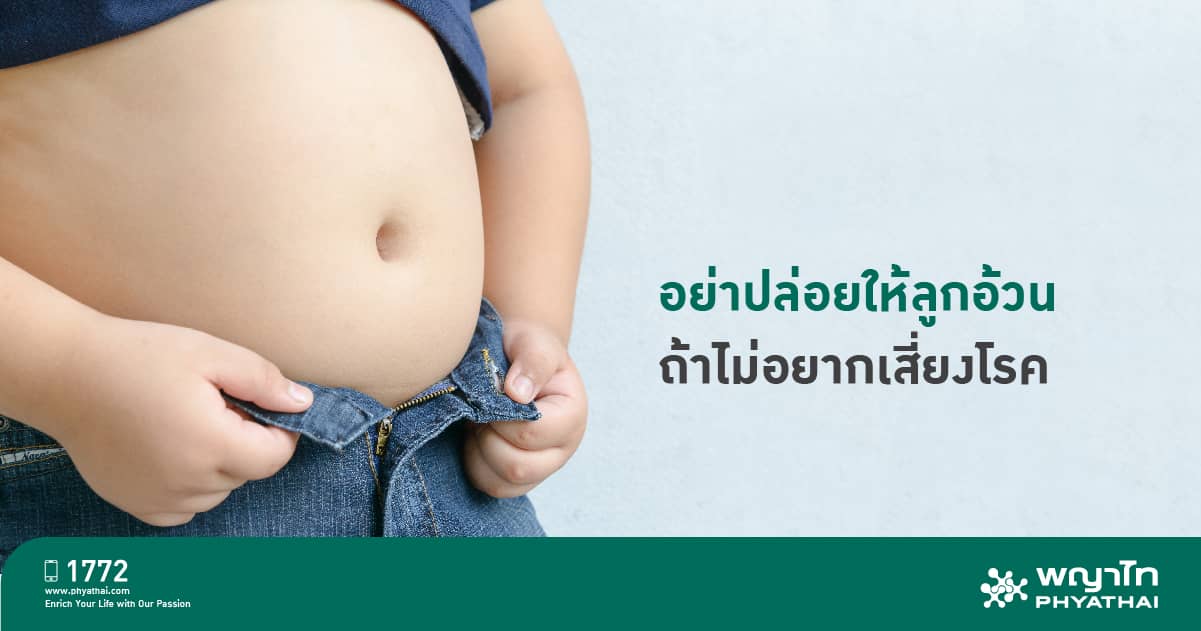
The National Health Security Office states that 1 in 5 major problems that need urgent attention is “obesity,” with over 20 million obese patients in Thailand’s total population. Among Thais aged 15 and over, 42.2% are obese and 39.4% have abdominal obesity. Thai children aged 3-18 have an overweight rate of 7% and an obesity rate as high as 9%.
Parents who smile broadly when someone compliments their child for being chubby and cute might want to check whether their child is just chubby or actually obese…
Is the child just chubby or truly obese?
“Obese children” refers to children who have an excessive accumulation of body fat. They may be overweight all over or just around the midsection. However, “chubby children” are those who weigh more compared to their age and height. Simply put, obesity is measured by the amount of body fat, not just body weight.
What factors might cause our child to be obese…
In fact, there are many factors that cause children to be overweight, including factors from the child themselves, the external environment, and even the parents. These may arise from both upbringing and genetics. If the parents are obese, the child has up to a 79% chance of growing up obese. As for factors from the child, overeating, enjoying all kinds of food, and lack of exercise certainly set the stage for obesity. However, if the child does not have risky behaviors, no genetic predisposition, and nothing seems to fit, a more detailed check might be necessary because obesity can also result from abnormalities in the child’s body, such as excessive energy storage in fat tissue or hormonal imbalances like thyroid, steroid, or insulin hormones.
Obese children left untreated… may risk serious diseases
When it comes to obesity, both children and adults are at risk of similar serious diseases such as sleep apnea, snoring, heart failure, coronary artery disease, high blood pressure, diabetes, gallstones, and premature degeneration of bones and joints. Research shows that obese children have a four times higher risk of chronic non-communicable diseases (NCDs) than normal children. Additionally, obesity may cause children to lack confidence and suffer from psychological and social problems due to embarrassment and teasing by peers.
How obese should a child be before consulting a doctor?
- Children with weight above the 75th percentile
- Children who are more obese than others of the same age
- Children who are significantly shorter than others of the same age
- Children who snore or sleep excessively during the day compared to other children, as this may indicate respiratory abnormalities
Obese but can be treated back to normal
Even if a child is classified as obese, if parents promptly consult a doctor and closely monitor the child, the child can return to a normal state. The method is to control the child’s weight within standard limits to prevent complications and reduce weight if complications occur (but the child must be older than 7 years because it may affect growth and health) or treat and correct complications along with weight control.
Feed your child well… but not obese, you can do it
The most important thing is to teach children to eat properly so they grow up healthy, which can be done as follows:
- Reduce and control high-energy foods such as starches, fats, and sugars
- Give your child an appropriate amount of food, not too much
- Encourage your child to exercise at least 3 days a week, 30 minutes each day
- Support your child to engage in regular physical activities instead of sitting watching TV, playing iPads, or gaming for long periods, so the body uses energy through movement
- Monitor your child’s growth regularly by checking weight and height to ensure they are within appropriate growth standards
- Promote breastfeeding from birth for at least 6 months, as the chance of obesity is lower than feeding with cow’s milk
- Parents should be good role models in eating, exercising, and doing activities to encourage children to be active and use energy, preventing excessive accumulation
However, if you suspect your child is chubby or truly obese… you can take your child for diagnosis and to plan treatment. Regular health check-ups are recommended to screen for diseases related to obesity such as blood lipid tests, liver and kidney function tests, and blood sugar levels.
Dr. Polinee Siritham
Pediatric Endocrinologist
Child and Adolescent Health Center
Phyathai 3 Hospital
