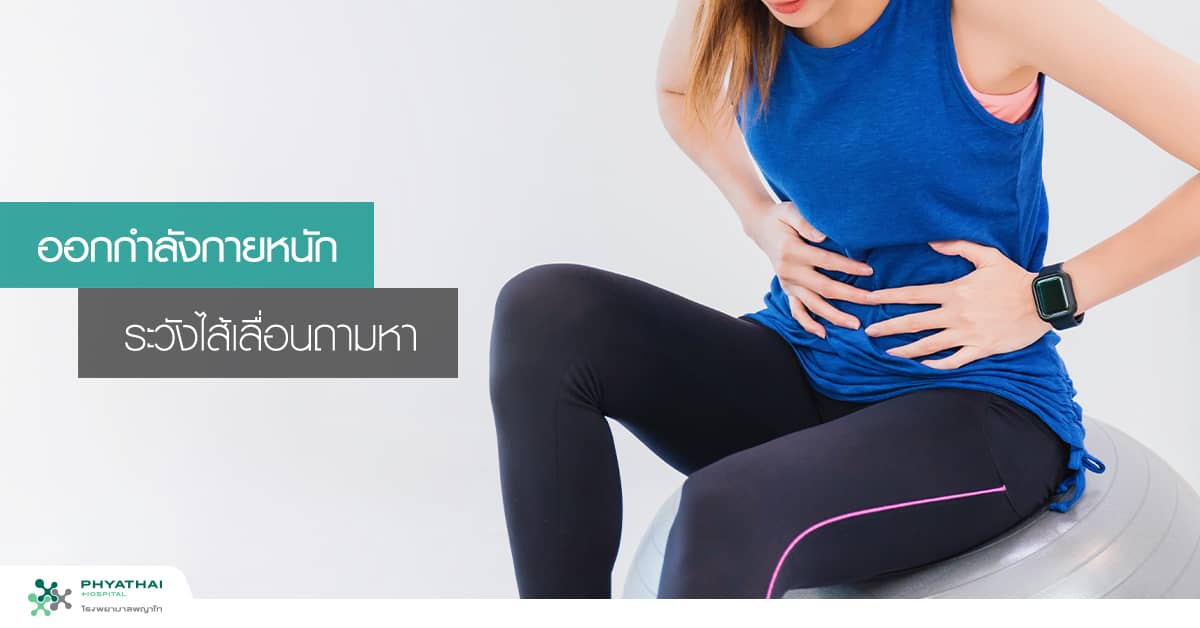
Many people have probably heard the belief that “not wearing underwear can cause a hernia.” In reality, medical research has clearly shown that whether you wear underwear or not does not significantly affect the chance of developing a hernia. The main cause that increases the likelihood of hernias, which many people may not have known before, is “doing heavy sit-ups or heavy weightlifting.” Therefore, to help everyone live comfortably and stay away from this disease, getting to know hernias seriously is the best option to keep us as safe as possible.
What is a hernia? Why can the intestines move out of place?
“Hernia” is when the intestines move out of their normal position, shifting from one cavity to another that is not their usual place. This is caused by weakness in the abdominal wall, which may be due to a congenital hole in the abdominal wall or increased pressure in the abdominal cavity that creates a hole, leading to a hernia. Hernias come in various types, named according to their location. The most common types are inguinal hernias, followed by abdominal wall hernias, and hernias from surgical scars, respectively.
Who is at risk and what behaviors increase the chance of hernia?
The group most likely to develop hernias are those with weak abdominal walls or congenital holes. However, even people born with normal abdominal walls can develop hernias if they have lifestyle behaviors that increase abdominal pressure. Groups at risk include:
- People who lift heavy objects, exercise intensely, or do frequent sit-ups, especially if they have congenital abdominal wall weakness, have a higher chance of hernias.
- People who smoke and drink alcohol regularly, as alcohol and smoking increase abdominal pressure and cause severe or chronic coughing, which further raises abdominal pressure and increases hernia risk.
- Labor workers such as farmers who dig soil or lift heavy objects regularly have a higher chance of hernias than those in other professions because their work increases abdominal pressure.
- People aged 50 and above have a higher risk due to years of strenuous activity and abdominal wall use, which weakens the abdominal wall and increases hernia risk.
- Men are more likely to develop hernias than women because men have a spermatic cord passing through the groin, creating a natural hole. Older men with enlarged prostate disease are at even higher risk because they strain more during urination, increasing abdominal pressure and hernia risk.
What symptoms indicate a hernia?
The most noticeable symptom of a hernia is a heavy or dragging sensation in the groin area, with a palpable lump and visible abnormal bulge near the testicles. Generally, hernias do not cause pain but only a feeling of heaviness. However, if pain occurs, it may be due to intestinal obstruction causing ischemia. Because hernias are usually painless, they can be life-threatening if left untreated, as the intestines can become strangulated, lose blood supply, become necrotic, and perforate. This severe condition often occurs in Alzheimer’s patients or bedridden patients who are unaware and leave the hernia untreated until it becomes dangerous.
How is a hernia treated?
Generally, hernias are easy to diagnose through physical examination, as they are visible and palpable. However, in some patients with thick abdominal walls or obesity, the lump may not be felt. In such cases, a CT scan is used to confirm the diagnosis and locate the hernia. Once diagnosed, treatment mainly involves surgery, which can be done by open surgery or laparoscopic surgery. For a single inguinal hernia, the surgical incision is very small, about 2-3 inches.
Open surgery and laparoscopic surgery are not very different, but for abdominal wall hernias or bilateral inguinal hernias, laparoscopic surgery is a better option because the incisions are smaller, less painful, and patients recover faster than with open surgery.
How to take care of yourself to avoid hernia risks?
The main way to protect yourself from hernias is to avoid behaviors that increase abdominal pressure, such as lifting heavy objects, overexerting during exercise, and avoiding alcohol and smoking, which directly and indirectly contribute to hernia development. At the same time, regularly monitor your symptoms. If you notice abnormalities, such as a lump in the groin or a heavy sensation lasting 2-3 days without improvement, consult a doctor immediately. Remember, leaving a hernia untreated for a long time can cause intestinal necrosis, perforation, infection, and even death.
Therefore, whether a hernia occurs depends largely on ourselves. If we do not take good care of ourselves, live recklessly, drink alcohol, smoke, have chronic coughs, overuse our bodies, lift heavy objects excessively, or overdo exercise, we increase our risk of hernias. Taking good care of yourself, doing things in moderation, and being cautious in daily life are important not only to protect us from hernias but also from other serious diseases and dangers.
Surgeon, Advanced Surgical Technology Center ASIT
Phyathai 3 Hospital
