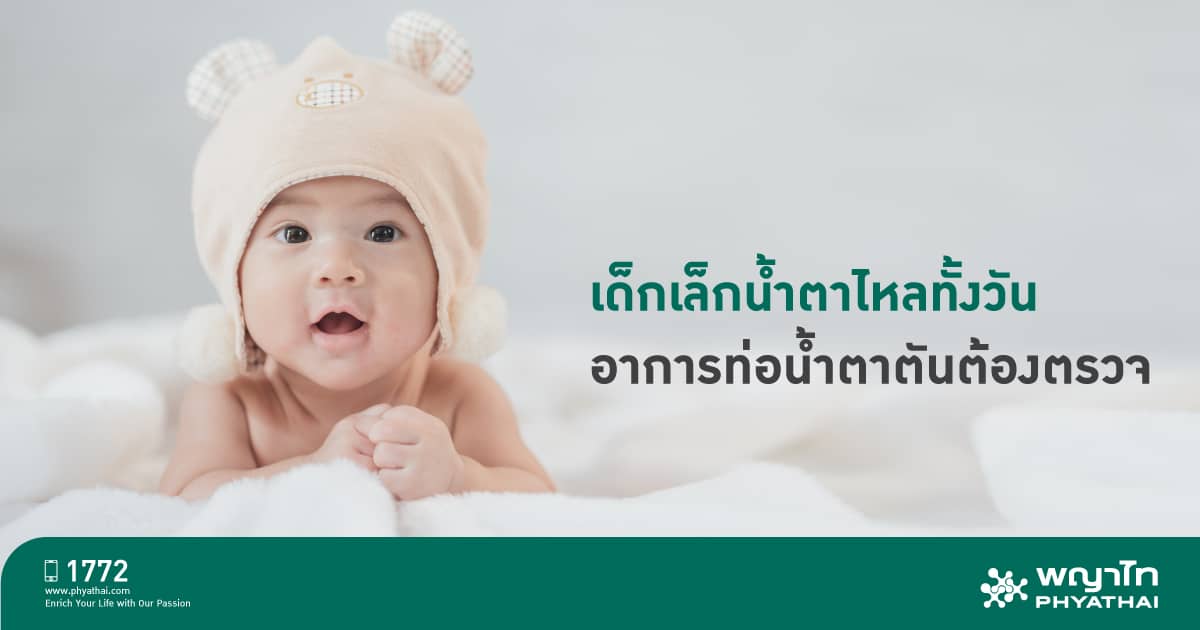
Children’s illnesses are something that parents must pay attention to because little ones cannot clearly communicate where they are hurting or how they feel unwell. Especially for newborns, parents need to closely observe any abnormalities. One of the most common conditions in newborns that parents should watch out for is “Blocked Tear Duct”, a condition that can cause our little ones to have constant tearing and risk chronic eye infections.
What is blocked tear duct in children and why is it common in newborns?
Blocked tear duct in children is a condition where the tear duct connected to the nose is very narrow, causing tears to accumulate in the tear sac and become infected. It is common in newborns because their bodies are small, so their tear ducts are also narrow. However, it can also occur in adults and the elderly, which may be caused by conjunctivitis or severe infections leading to scar tissue formation in parts of the duct, resulting in a blocked tear duct.
How to observe and check for symptoms of blocked tear duct in children?
Since newborns start producing tears at about 3-4 weeks of age, most symptoms are not immediately noticeable at birth but begin when the child is around 3 weeks old or older. Suspicious symptoms that parents should pay attention to include:
- Noticing the baby has tears flowing all day, clear drops
- Recurring eye infections with greenish discharge
- Feeling a lump near the inner corner of the eye that, when pressed, releases fluid, which is accumulated tears from the blocked duct
- Possible inflammation, swelling, and redness
Most cases of blocked tear duct in children present with excessive tearing, caused either by abnormal tear production with irritation leading to excessive tears or normal tear production but blocked ducts preventing tears from draining into the nose or throat, causing tears to overflow outside the eye, resulting in abnormal tearing.
How is blocked tear duct diagnosed in children?
When parents notice abnormal symptoms and bring their child to the doctor suspecting a blocked tear duct, the doctor will diagnose by examining symptoms, taking history, and performing a test by “pressing the tear sac near the inner corner of the eye”. If pressing causes fluid to release, it indicates a blocked tear duct with accumulated tears. Another diagnostic method is using a special eye dye called Fluorescein Angiogram. After injecting the dye mixed with tears, normally the dye should drain into the nose within about 5 minutes. If a large amount of dye remains in the eye, it suggests a blocked tear duct.
How to treat blocked tear duct in children?
The initial treatment for blocked tear duct in children is “massage” of the tear sac area near the inner corner of the eye to help tears drain and prevent accumulation. This also helps to open and widen the tear duct. The doctor will recommend massaging about 20-30 times in the morning, noon, evening, and before bedtime. Most cases improve with massage treatment. However, in some severe cases with heavy tear accumulation that cannot be drained by massage, inflammation and swelling called “dacryocystitis” may occur, characterized by a large swollen abscess. In such cases, the doctor will consider “tear duct surgery” or “tear duct probing” without waiting until the child is 1 year old. Normally, 90% of children with blocked tear ducts recover before 1 year of age. The surgical probing procedure includes:
- Screening for COVID-19 infection
- Blood test to check red blood cell count for safety during anesthesia
- Administering general anesthesia to put the patient to sleep
- Using a metal rod about the size of a pencil lead to probe and widen the blocked tear duct, leaving it in place briefly before removal
- The procedure takes about 10-15 minutes to complete
In most cases, 90% recover fully after just one probing surgery. However, about 10% of patients may not recover immediately and require a repeat probing or surgery with silicone tube insertion to keep the duct open and stable, as the duct may re-block after expansion, though this is rare.
How to care for children after blocked tear duct surgery?
For children who undergo tear duct probing surgery, since it is a surgery without external wounds, they can live normally. The day after surgery, they can bathe and get wet. Most children show clear improvement with less tearing immediately. If there is inflammation, antibiotics or antimicrobial medication will be given. Generally, no complications are observed after surgery.
In reality, although blocked tear duct in children is common, it is not difficult to treat. It is important to observe symptoms early to allow treatment with just massage and avoid severe cases requiring surgery. The most severe complication is frequent eye infections. There are also reports that frequent wiping of tears is associated with an increased risk of developing astigmatism. Therefore, the best prevention is for parents to closely monitor their child’s symptoms and consult a doctor promptly if abnormal tearing is noticed to ensure quick treatment.
Dr. Natsucha Wangthiranumai
Pediatric Ophthalmologist
Ophthalmology Center, Phyathai 3 Hospital
