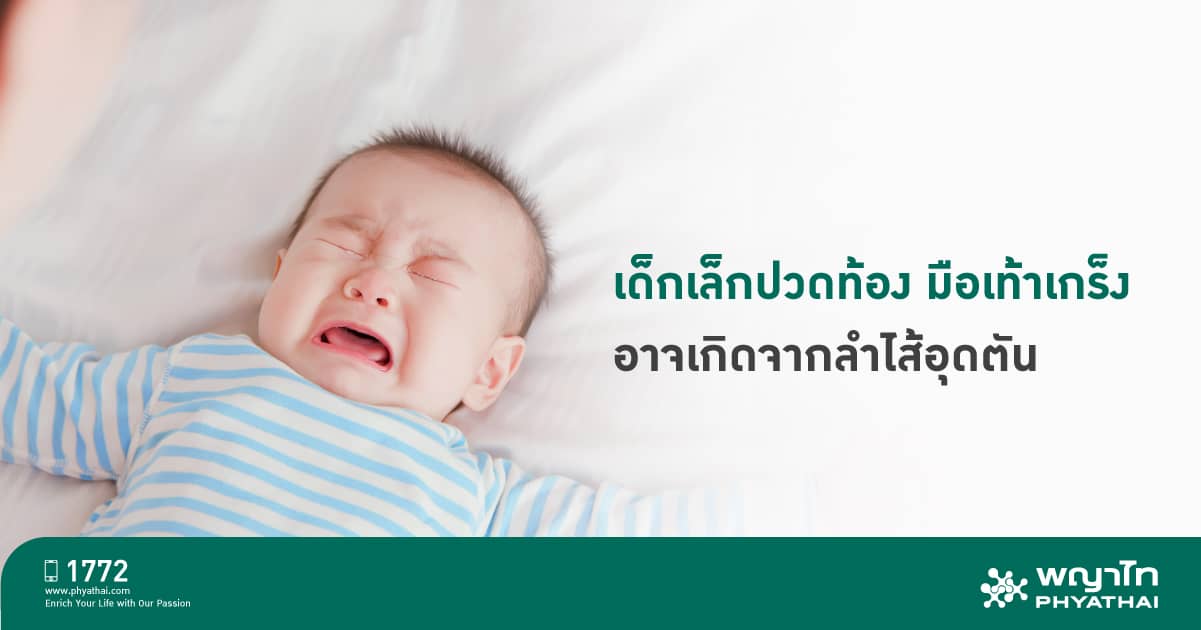
Intussusception is a condition where a part of the intestine slides into an adjacent part of the intestine, causing intestinal obstruction. This is a surgical emergency that requires prompt treatment to prevent severe complications such as intestinal ischemia and perforation. This condition is commonly found in children aged 4 months to 2 years and occurs more frequently in boys than girls.
As for the cause, 90% of cases have no definite cause. However, it may occur following intestinal inflammation caused by bacterial or viral infections, which cause the intestine to swell and contract abnormally, leading to intussusception. Alternatively, children may have abnormal lumps or polyps in the intestine, which can act as a lead point for intussusception.
We can observe that a child has intussusception from the following symptoms
- Usually presents acutely, starting with abdominal pain, restlessness, and clenched hands and feet. The symptoms often occur intermittently, lasting 15-30 minutes, then subside, followed by abdominal distension and vomiting. Initially, the vomit is milk or food, but later it may contain yellow or green bile.
- As intussusception progresses and blood supply to the intestine decreases, the patient will pass dark bloody stools mixed with mucus. Later stages often include fever and lethargy.
Diagnosis of Intussusception
- Physical examination may reveal a sausage-shaped mass in the abdomen.
- Abdominal ultrasound can detect the intussusception mass.
- Barium enema not only helps diagnose this condition but also serves as a treatment method.
There are 2 treatment methods for intussusception
- Barium enema uses pressure from the barium enema inserted through the anus to push the telescoped intestine back to its normal position. If successful, the treatment success rate is up to 80%. However, there is still a risk of recurrence within 24 hours, occurring in about 10% of cases. Most patients can eat within 1-2 days and be discharged within 2-3 days.
- Surgery The surgeon manually reduces the intussusception and examines the cause, such as polyps or abnormal masses in the intestine. If necrosis or perforation is found, the affected part of the intestine must be removed, and the healthy ends reconnected.
The prognosis for intussusception is quite good, especially if treated before complications such as intestinal ischemia or perforation occur. Therefore, when a child shows the symptoms mentioned above, caregivers should promptly take the child to see a doctor for examination, diagnosis, and appropriate treatment.
[base64_img]
Dr. Panida Saweangsak
Pediatric Gastroenterologist and Hepatologist
For more information, please contact
Child Health Center
Phyathai 3 Hospital, 4th Floor
Tel. 02-467-1111 ext. 3419