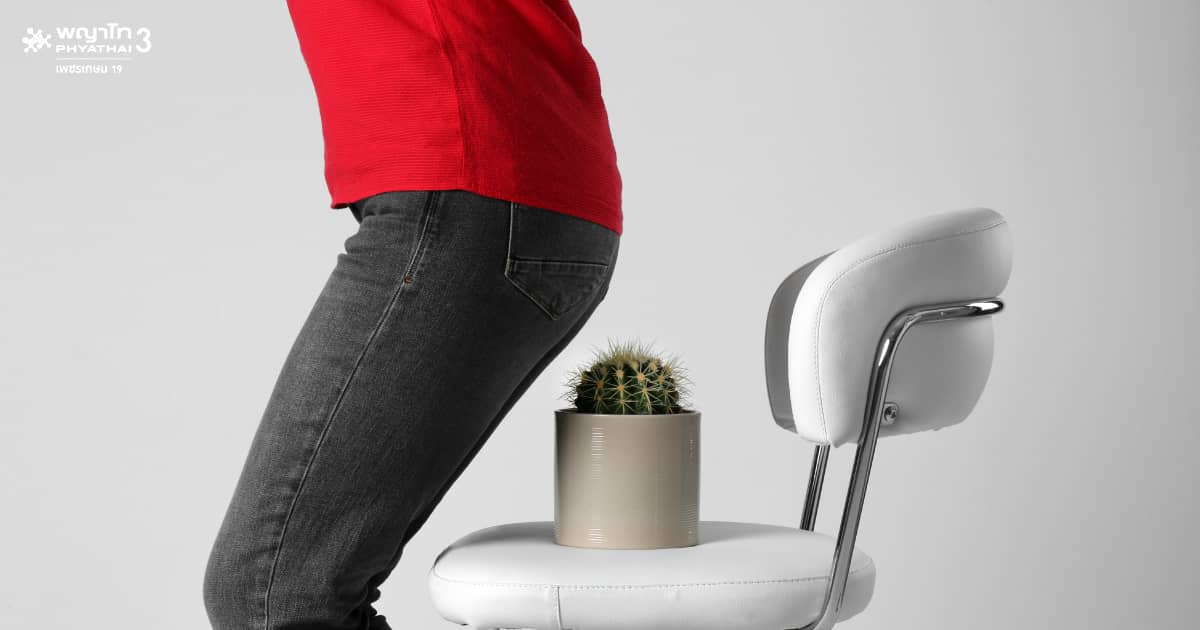
What are Hemorrhoids?
Hemorrhoids are a condition where the blood vessels around the anus and the end of the rectum become swollen or inflamed. This may be caused by increased pressure in the abdominal cavity, such as frequent straining during bowel movements, constipation, pregnancy, or prolonged sitting. Hemorrhoids are divided into 2 main types:
- Internal Hemorrhoids: Occur above the dentate line (the line dividing the anus and the end of the rectum). They are usually painless but may bleed during bowel movements.
- External Hemorrhoids: Occur below the dentate line. They may cause pain and itching. Sometimes, blood clots (Thrombosed Hemorrhoids) form, causing severe pain.
Symptoms of Hemorrhoids
- Bleeding: Usually fresh blood is seen after bowel movements.
- Pain or itching: Especially in external hemorrhoids or prolapsed internal hemorrhoids.
- Lumps: A lump may be felt around the anus.
- Irritation: Itching or burning sensation may occur.
Treatment of Hemorrhoids
Treatment depends on the severity of symptoms and the type of hemorrhoids, divided into 1. Non-surgical treatment and 2. Surgical treatment.
Non-surgical Treatment
Behavioral Modification
- Eat a high-fiber diet, sip water frequently, drink more than 2-3 liters per day to prevent constipation.
- Avoid straining too hard or sitting for long periods during bowel movements, and avoid using books or electronic devices while on the toilet.
- Exercise regularly; body movement can stimulate bowel function.
Medications
- Topical ointments or suppositories to reduce inflammation and pain.
- Oral medications to improve venous circulation and varicose veins.
- Mild laxatives to prevent constipation, such as fiber or liquid laxatives. Avoid stimulant laxatives like senna.
Other Non-surgical Treatments
- Rubber Band Ligation: Used only for internal hemorrhoids grades 1-3 by tying off the base to cut off blood supply and cause it to fall off.
- Sclerotherapy: Injection of chemicals to shrink hemorrhoids. Its popularity has decreased due to complications such as anal stenosis.
- Cryotherapy: Using cold to freeze hemorrhoids causing them to die and fall off.
Laser Treatment for Hemorrhoids
Uses laser energy to shrink hemorrhoid tissue and reduce pain.
Procedure for Laser Treatment of Hemorrhoids
- The patient receives local or general anesthesia.
- Laser is applied to the base of the hemorrhoid to cut off blood supply and shrink the tissue.
- The procedure takes only 15-30 minutes for internal hemorrhoids and another 15-30 minutes for external hemorrhoid removal. Most patients can go home the same day or the next day and return to work and normal activities within 2-7 days.
- Wound healing is rapid. If only internal hemorrhoids are treated, wounds heal within 1-2 weeks. If external hemorrhoids are also removed, complete healing takes 6-8 weeks, similar to conventional surgery but with less pain.
Advantages of Laser Treatment
- Highly precise treatment, reducing injury to the sphincter muscles.
- Less pain and faster recovery.
- Reduced risk of infection and bleeding.
- Can treat both internal and external hemorrhoids simultaneously and multiple hemorrhoids at once.
Results
- Pain and bleeding decrease rapidly.
- Lower recurrence rate compared to traditional treatments, with a success rate over 90%.
- Almost no scarring in the anus, no anal stenosis or severe pain.
- Laser treatment can be repeated if symptoms recur in the future.
- Low chance of recurrence requiring another procedure, less than 5% within 5 years.
Surgical Treatment
- Hemorrhoidectomy: Used for severe hemorrhoids (grade 4) or cases unresponsive to other treatments. The hemorrhoids are excised and sutured, using scissors or a vessel-sealing device (Ligasure). This causes tissue loss in the anus, limiting treatment to 2-3 hemorrhoids per session. There is a risk of sphincter injury and anal stenosis. If too much tissue is removed, pain is greater than other methods.
- Stapled Hemorrhoidopexy: This involves cutting and stapling internal hemorrhoids to reduce prolapse and tighten the anal tissue using an automatic stapling device. It causes less pain and faster recovery than hemorrhoidectomy but carries risks of deep tissue injury, anal stenosis, chronic discomfort, or irritation from staples in 2-5% of cases. Repeat surgery is difficult if recurrence occurs.
Prevention of Hemorrhoids
- Eat a high-fiber diet: such as vegetables, fruits, and whole grains.
- Drink plenty of water: helps soften stool and ease bowel movements.
- Avoid straining too hard during bowel movements.
- Exercise regularly: to stimulate bowel function.
- Avoid sitting or standing for too long: change positions frequently.
Summary
- Hemorrhoids are a common condition that can be treated in various ways, from behavioral modification and medication to surgery.
- Laser treatment is a modern, highly precise method that causes less pain and allows faster recovery, suitable for patients seeking good results and reduced risk of recurrence.
- If you have symptoms of hemorrhoids, you should consult a doctor for diagnosis and to choose the most appropriate treatment.
Dr. Benjaporn Nantasanti
Advanced Surgical Interventional Technologies (ASIT) Center
Phyathai 3 Hospital
