
“Ovarian Cancer” is one of the silent cancers that women need to be cautious about, ranking among the top concerns. According to global statistics, there are approximately 295,000 new ovarian cancer cases per year (referenced from the World Health Organization (WHO) report “Globocan 2020”)
In Thailand, reproductive organ diseases in women show that ovarian cancer is the second most common cancer after cervical cancer and ranks sixth among all cancers found in Thai women. It is a dangerous threat that women must watch out for because ovarian cancer often shows no clear symptoms but can be detected early and prevented or treated promptly before the disease progresses too far.
Table of Contents for Ovarian Cancer
- What is ovarian cancer?
- Understanding the stages of ovarian cancer
- What are the symptoms of ovarian cancer? Warning signs to see a doctor immediately
-
-
- What are the symptoms of end-stage ovarian cancer?
-
- Causes and risk factors of ovarian cancer
- How many types of ovarian cancer screening methods are there?
- Guidelines for ovarian cancer treatment
- Can ovarian cancer be cured?
- Can ovarian cancer be prevented?
What is ovarian cancer?
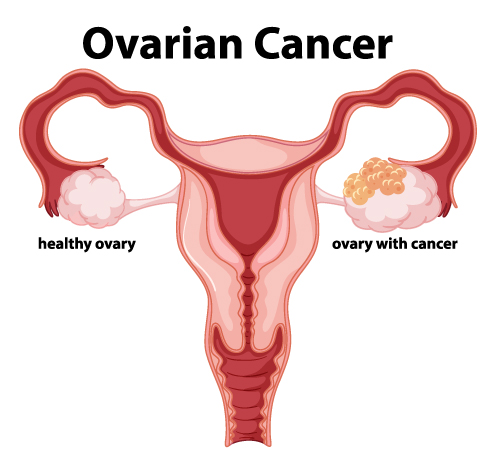
Ovarian cancer (Ovarian Cancer) is a cancer disease caused by abnormal cells in a woman’s ovaries that grow rapidly and abnormally, forming tumors or cancer.
The ovaries play an important role in producing female sex hormones such as estrogen and progesterone, as well as producing eggs for pregnancy. The frightening aspect is that early-stage ovarian cancer usually has no symptoms. If symptoms appear, the cancer is often already advanced and has spread to other parts of the body if not treated properly.
Important to know: Ovarian cancer is one of the most common cancers in the female reproductive system and is difficult to treat because early symptoms are often absent or unclear, making diagnosis difficult. It is also a severe cancer with a low survival rate in late stages. Early and appropriate treatment is crucial as it increases the chance of survival.
Understanding the stages of ovarian cancer
How many stages of ovarian cancer are there? Which stage increases survival chances?
The staging of ovarian cancer mainly uses the FIGO (International Federation of Gynecology and Obstetrics) system, divided into 4 major stages as follows:
Stage 1 (Stage I) Cancer is limited to the ovaries
- Stage 1A: Cancer is in one ovary only
- Stage 1B: Cancer has spread to both ovaries
- Stage 1C: Cancer has spread outside the ovary, such as the ovarian surface, or cancer cells are found in the abdominal fluid (not visible to the naked eye)
Stage 2 (Stage II) Cancer has spread to other organs within the pelvic area
- Stage 2A: Cancer has spread to the uterus and/or fallopian tubes
- Stage 2B: Cancer has spread to other organs in the pelvic area
Stage 3 (Stage III) Cancer has spread outside the pelvic area into the upper abdomen
- Stage 3A: Cancer has spread outside the pelvis but is small and not visible to the naked eye, size not exceeding 2 cm
- Stage 3B: Cancer has spread outside the pelvis, size > 2 cm, or spread to lymph nodes in the pelvis
- Stage 3C: Cancer has spread to the peritoneal lining in the abdominal cavity
Stage 4 (Stage IV) Cancer has spread to organs outside the abdominal cavity such as lungs, liver, brain
The prognosis for ovarian cancer survival depends on many factors. Early-stage detection and immediate treatment increase the chances of survival.
What are the symptoms of ovarian cancer? Warning signs to see a doctor immediately
Early symptoms of ovarian cancer may be absent or unclear, but as the disease progresses, symptoms may include:
- Lower abdominal pain or discomfort in the abdomen
- Indigestion, feeling full quickly after eating a small amount
- Constipation or frequent urination
- Loss of appetite, weight loss
- Low-grade chronic fever, easy fatigue or weakness
- Sudden severe abdominal pain or cramping
- Palpable abdominal mass
These symptoms may indicate ovarian cancer and should prompt a visit to a doctor for diagnosis. However, these symptoms can also occur in other diseases, so diagnosis by a gynecologic specialist is very important.
What are the symptoms of end-stage ovarian cancer?
In the final stage of ovarian cancer, symptoms become more severe than those mentioned above because the cancer has spread to vital organs. Symptoms that may be found at this stage include:
- Severe abdominal pain due to large tumors in the abdomen, which may cause abdominal swelling
- Significant weight loss from loss of appetite, nausea, vomiting
- Abnormal bleeding from the vagina or rectum
- Difficulty breathing, easy fatigue, weakness due to cancer spreading to the lungs
- Swollen legs due to cancer pressing on veins
- Difficulty urinating or painful urination from cancer spreading to the bladder
- Severe constipation from cancer pressing on the intestines
- Extreme fatigue and exhaustion as the body fights the severe disease
- Anemia due to significant blood loss
Some patients may experience other severe symptoms such as muscle spasms, confusion, hallucinations due to the disease spreading to the brain and nervous system. If these symptoms occur, immediate medical consultation is recommended as it indicates a late stage of cancer, which is highly dangerous.
Causes and risk factors of ovarian cancer
The exact cause of ovarian cancer is still unknown, but several risk factors may cause or contribute to the disease, such as:
- Genetic factors history of breast cancer
- A family history of ovarian, fallopian tube, or breast cancer increases the risk of ovarian cancer more than the general population.
- Having certain abnormal genes such as BRCA1 and BRCA2 significantly increases the risk of ovarian cancer.
- Hormonal factors
- Combined oral contraceptive pills help reduce the risk of ovarian cancer.
- Women who have never been pregnant or carried a pregnancy to term
- Use of hormone therapy after menopause increases the risk of ovarian cancer compared to menopausal women who do not use hormones.
- Environmental and behavioral factors
- Smoking increases the risk of certain types of ovarian tumors.
- Consuming certain foods can reduce the risk of ovarian cancer, such as vegetables, low-fat foods, whole grains, avoiding processed foods and sugar.
- Obesity or BMI > 30
- Lack of exercise leads to hormonal imbalances.
- Age factors
- The risk of ovarian cancer generally increases with age, mostly found after menopause (>50 years old).
- Early menstruation before age 12
- Late menopause after age 55
To reduce the risk from these causes and factors, regular pelvic examinations at least once a year can help lower the risk of “ovarian cancer.”
How many types of ovarian cancer screening methods are there?
Diagnosing ovarian cancer may require several combined methods, which include:
1. Physical examination The doctor will palpate the abdomen and pelvic area to detect tumors or swelling.
2. Blood test Testing for the CA-125 enzyme level in the blood, which is elevated in ovarian cancer cases but can also be high in other conditions such as uterine cancer or pregnancy.
3. Ultrasound Using high-frequency sound waves to create images of internal organs, which can detect tumors or fluid accumulation in the uterus or ovaries.
Methods 1-3 are general screening methods. If abnormalities are found, additional tests will be conducted to determine the location, size, and type of cancer more precisely, using the following methods:
4. Computed Tomography (CT Scan) Uses X-rays combined with a computer to create images of internal organs, allowing determination of the tumor’s location and size.
5. Magnetic Resonance Imaging (MRI) Uses magnetic fields and radio waves to create detailed images of internal organs, with higher resolution than CT scans.
6. Biopsy Involves taking tissue or fluid samples from the tumor to check for cancer cells. Biopsy is the definitive diagnostic method.
7. Exploratory laparotomy or laparoscopy Surgery to directly view the abdominal cavity and ovaries, used when diagnosis is uncertain and confirmation is needed. Tissue samples may be taken for examination. This is the most accurate diagnostic method.
Guidelines for ovarian cancer treatment
Treatment depends on factors such as disease stage, cancer type, patient age, and physical condition. Generally, the main treatments include:
- Surgery is the primary treatment for ovarian cancer aimed at removing as much tumor and cancer tissue as possible. The type of surgery depends on the disease stage and includes:
- Total hysterectomy with bilateral salpingo-oophorectomy (removal of ovaries and fallopian tubes)
- Debulking surgery (removal of as much tumor as possible)
- Removal of other organs affected by cancer spread, such as intestines, liver, spleen, etc.
- Chemotherapy Uses chemotherapy drugs to eliminate remaining cancer cells after surgery. It may be given before or after surgery depending on the disease stage. Common drugs include Carboplatin, Paclitaxel, Docetaxel, Gemcitabine, etc.
- Radiation therapy Uses high-intensity radiation to kill remaining cancer cells, often combined with surgery or chemotherapy for advanced or late-stage patients.
- Targeted therapy Uses drugs designed specifically to target cancer cells, minimizing side effects on normal cells. Examples include PARP inhibitors and angiogenesis inhibitors.
- Palliative care For end-stage patients who cannot be cured, focusing on symptom relief and maintaining the best quality of life.
Combining multiple treatment methods can improve effectiveness and increase the chance of cure, depending on various factors and the physician’s judgment.
Can ovarian cancer be cured?
Ovarian cancer can be cured if diagnosed and treated early. Survival chances depend on several factors:
- Disease stage at diagnosis Patients diagnosed at an early stage (Stage 1) have a survival rate of up to 90% after treatment, but those diagnosed at advanced stages (Stage 3-4) have a survival rate of about 30% only.
- Cancer type and subtype Some cancer cell types, such as epithelial ovarian cancer, respond better to treatment than others.
- Tumor spread Extensive spread to other organs makes treatment difficult and lowers survival chances.
- Age and physical condition Younger and healthier patients tolerate treatment better.
- Treatment methods and consistency Surgery combined with chemotherapy is more effective than single treatments, and treatment adherence affects outcomes.
With proper diagnosis and treatment at an early stage, ovarian cancer can be cured. Therefore, regular screening is important to detect the disease early and increase the chance of cure.
Can ovarian cancer be prevented?
Currently, there is no 100% effective prevention method for ovarian cancer because the exact cause is unknown. However, some methods may help reduce the risk, including:
- Avoid risk factors
- Do not smoke, as toxins in cigarettes increase the risk of ovarian and other cancers.
- Avoid exposure to dust, toxins, or radiation.
- Eat nutritious food with minimal processing.
- Exercise regularly to maintain a healthy weight.
- Pregnancy and breastfeeding
Women who have been pregnant and breastfed have a lower risk of ovarian cancer because the ovaries rest from ovulation and reduce hormone production during these periods, which are risk factors for the disease.
- Use of oral contraceptives
Long-term use of oral contraceptives may reduce the risk of ovarian cancer by about 40-60% because they temporarily stop ovulation.
- Oophorectomy or salpingectomy surgery
In high-risk cases, such as a family history of ovarian cancer or BRCA gene mutations, removal of ovaries or fallopian tubes may be considered to reduce risk (depending on the patient and doctor’s opinion).
- Regular screening
Screening does not directly prevent the disease but effectively prevents severity by detecting ovarian cancer early, making treatment more effective. Women aged 35 and older are recommended to have annual screenings.
Although ovarian cancer is a silent threat, prevention by combining the above methods can reduce the risk to some extent, especially regular screening, which is essential. Early detection and treatment can reduce the risk significantly.
Dr. Net Boonkum
Gynecologist, Women’s Health Center, Phyathai 3 Hospital
