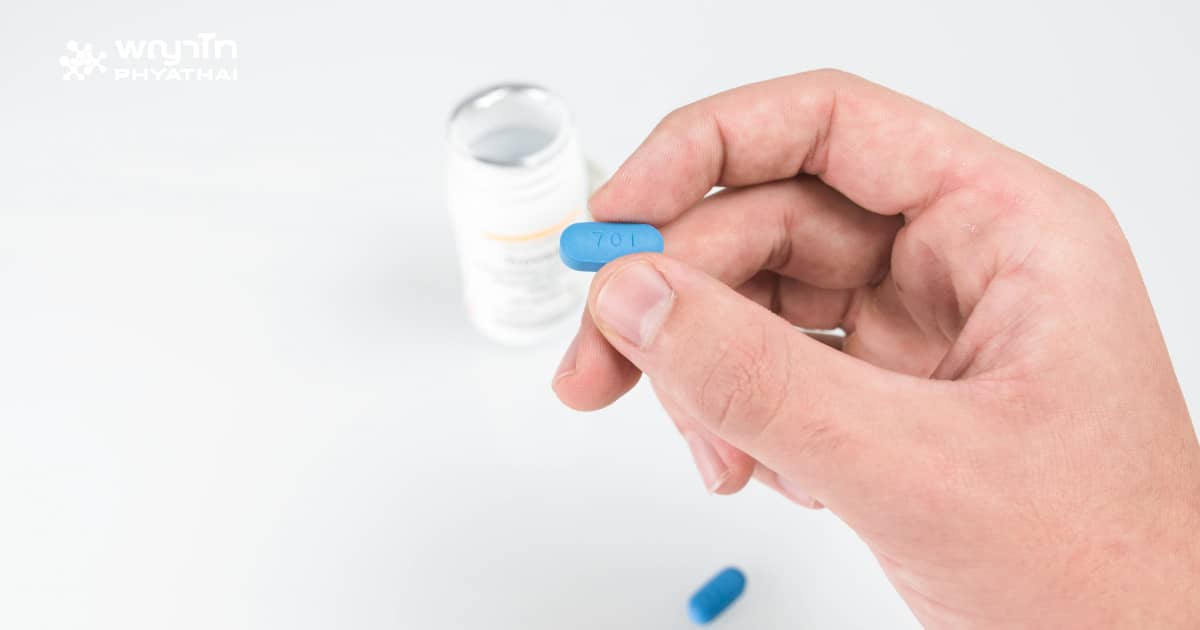
What are PrEP and PEP medications?
Both PrEP and PEP are medications used to prevent HIV infection. The difference is that PrEP stands for Pre-Exposure Prophylaxis, which means it is used to prevent HIV infection before being at risk. On the other hand, PEP stands for Post-Exposure Prophylaxis, which is medication used to prevent infection after exposure within 72 hours. Both medications are effective only if HIV infection has not yet occurred.
Which type of PrEP and PEP medication is suitable for whom?
|
PrEP Suitable for taking before exposure to risk or for those who already know they are at risk |
PEP Suitable for those who have already been exposed to risk within 72 hours |
| People who have sexual intercourse with HIV-positive partners | People who have sexual intercourse with strangers |
| People who share injection needles with others | People who have unprotected sex |
| People who have multi-partner sexual relationships | People who use condoms but experience condom breakage |
| Men who have sex with men | People who share injection needles with others |
| People who frequently use PEP and have long-term risk exposure for 3 months | Healthcare workers who have been pricked by used needles |
How to use PrEP medication correctly?
PrEP (Pre-Exposure Prophylaxis) medication consists of 2 active ingredients in 1 pill (Fixed Dose Combination). It can be used in 2 ways: Daily PrEP, taken every day continuously, and On Demand PrEP, taken when you know and plan in advance that you will be at risk. On Demand PrEP is used for a short period. In Thailand, Daily PrEP is more commonly used because the effectiveness of On Demand PrEP has only been studied in men who have sex with men and should not be used in those co-infected with hepatitis B virus.
How to use Daily PrEP
When visiting a doctor, blood tests will be done to screen for HIV infection, check liver and kidney function, and test for hepatitis B virus before prescribing medication. Daily PrEP should be taken at least 7 days before exposure to risk, taken every day, 1 pill at the same time each day. This ensures the medication is effective enough to prevent infection. Usually, medication is prescribed for 3 months to monitor for HIV infection during use before prescribing another 3 months supply.
How long should the medication be taken? The answer is to continue taking it until the risk ends. For example, for sex workers, doctors recommend continuing the medication until they stop the profession. Even after the risk ends, medication should not be stopped immediately but continued for at least 4 more weeks, followed by another HIV screening. If no infection is detected, medication can be stopped.
How to use On Demand PrEP
On Demand PrEP has a specific usage method. You must take 2 pills 2-24 hours before exposure to risk. After sexual intercourse, take 1 pill daily and continue for 2 more days after the last exposure or sexual encounter. For example, if exposure risk is on Monday night, take 2 pills on Monday at 9 AM, then 1 pill daily at 9 AM. If by Wednesday the partner returns home and no further sexual activity occurs, continue taking the medication for 2 more days (Thursday and Friday) at 9 AM, then stop.
“Studies have found that if PrEP is taken correctly, on time, and consistently,
it can prevent HIV infection by up to 90%.”
Do PrEP and PEP have side effects?
Both medications may cause mild side effects such as fatigue, dizziness, and nausea during the first 2-3 days of use because the body is not yet accustomed to the medication. However, most symptoms are not severe and daily life can continue as usual.
Who is at higher risk of HIV infection, the insertive or receptive partner?
Whether in male-to-male or male-to-female sexual intercourse, studies consistently show that the “receptive” partner is at higher risk of HIV infection because they are more likely to have wounds from intercourse and receive bodily fluids, increasing the chance of the virus entering through wounds more than the insertive partner.
Is oral sex with an HIV-positive person risky or not?
The clear answer is “there is a risk,” especially if there are wounds in the mouth, which increases the chance of infection. However, it also depends on whether the HIV-positive person is receiving treatment. If the virus is suppressed to an undetectable level, known as U=U (Undetectable=Untransmittable), the chance of transmission is very low.
Is it true that if you use PrEP/PEP, you don’t need to use condoms?
This is a misconception. Both PrEP and PEP only protect against HIV. They do not protect against other sexually transmitted infections. Therefore, even if you are taking PrEP/PEP, it is recommended to use condoms every time you have sex.
If you know you are at risk of HIV infection, don’t panic! Do this immediately
- Stay calm
- Go to the nearest hospital to get an HIV screening test
- Get PEP medication and take it continuously and correctly
