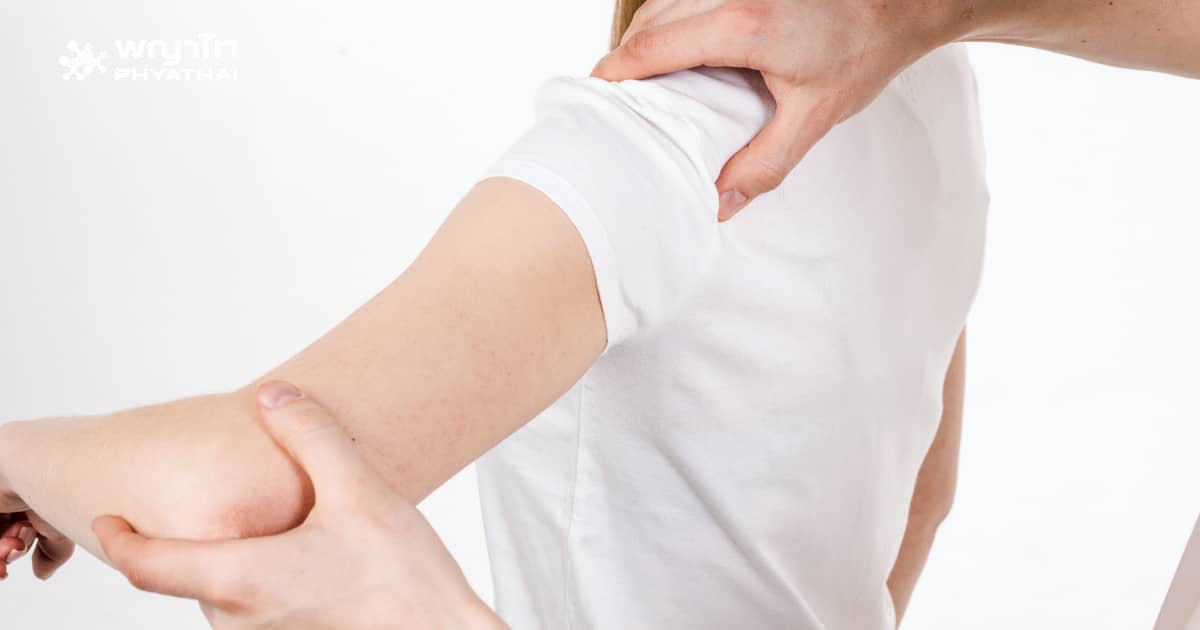
Insomnia, pain when turning over, unable to lift the arm, difficulty putting on clothes, unable to comb hair—what exactly is wrong? But wait! Nothing has changed except exercising harder, lifting heavier weights, and for longer durations. This is it! You are at risk of “rotator cuff tear” from exercising beyond what your body can handle.
We all know that the ‘shoulder’ is an organ that connects the arm and torso, supported by muscles and tendons around it. Therefore, when the shoulder tendon tears, it can cause pain around the shoulder joint. Some people may experience radiating pain down the upper arm, weakness in lifting the arm, and inability to use the shoulder as before—even simple actions like combing hair, fastening a bra hook, zipping up the back, or just putting on a shirt can be difficult.
Shoulder pain should not be taken lightly
The shoulder is often neglected and heavily used, forgetting that excessive use of the arm, such as lifting heavy objects, playing contact sports, or picking up things with improper posture, can cause damage to various parts of the shoulder. The main causes of rotator cuff tears are threefold:
- Degeneration of the shoulder tendons, commonly found in middle-aged and older patients, due to excessive shoulder use over a lifetime, reduced blood circulation in the tendons causing them to become brittle and easily torn, or problems from calcium deposits under the upper shoulder bone rubbing against the tendons causing damage.
- Continuous prolonged use of the shoulder joint, often seen in athletes or laborers. Even with proper use, overexertion and lack of adequate rest can damage the shoulder tendons.
- Injury or overexertion, such as lifting excessively heavy objects, quickly grabbing falling items, or forcing movements against the body’s natural posture, all of which can harm the shoulder.
Common symptoms when experiencing a rotator cuff tear
- Shoulder pain when sleeping, especially when lying on the affected shoulder
- Shoulder pain when spreading arms, supporting the arm, or reaching for objects
- Weakness in lifting or supporting the arm; in severe cases, the arm may not lift or cannot be fully raised
- In some cases, frozen shoulder may occur due to reduced shoulder joint movement caused by pain
Therefore, if you experience these symptoms, you should see a doctor promptly for treatment. Leaving it untreated may cause the rotator cuff tear to worsen.
Treatment for rotator cuff tears
Choosing the appropriate treatment approach depends on the doctor’s evaluation of medical history, physical examination, and detailed diagnostic imaging. Treatment is divided into:
- Conservative treatment, such as reducing shoulder and arm use, applying hot or cold compresses, taking anti-inflammatory and pain relief medications, and in some cases, physical therapy to reduce pain, treat frozen shoulder, and strengthen muscles around the shoulder joint.
- Surgery, if symptoms are severe and the shoulder cannot be used, the doctor may consider arthroscopic surgery to repair the rotator cuff. This minimally invasive surgery has several advantages, such as:
- Small incisions resulting in minimal scarring, less injury, less blood loss, and fewer complications
- Clear visualization of the pathology, allowing precise repair of the torn tendon and associated conditions
- Shorter recovery time compared to open surgery, enabling a quicker return to daily activities
Therefore, whenever you feel something abnormal with your shoulder, you should see a doctor. If the rotator cuff is only inflamed, there are treatments to prevent it from worsening to a tear. If the rotator cuff is torn, treatment will prevent the tear from expanding, which would make treatment more difficult and affect arm use and daily life.
