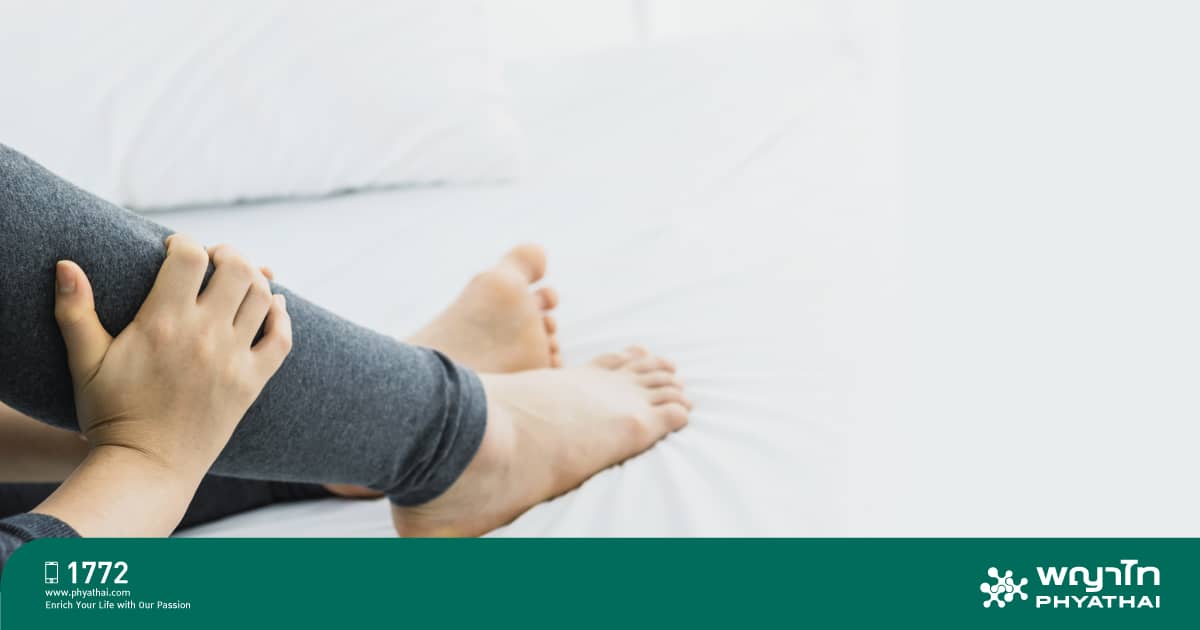
Have you ever? Experienced cramps while sleeping
Many people may have suddenly woken up in the middle of the night due to leg cramps, causing a restless night’s sleep. Do you know! What causes cramps while sleeping? And is it possible that… it is a sign indicating some diseases?
This symptom is called “cramps”
Cramps are a condition where muscles suddenly contract and tighten, forming a hard lump, causing pain in the area of the contracted muscle. Common areas affected are the calf muscles, the back and front of the thigh muscles. Nighttime cramps that wake you up in the middle of the night are called “Nocturnal Leg Cramps”.
Causes of “Nocturnal Leg Cramps”
Although the exact cause of cramps occurring at night during sleep is still unknown, information shows it is related to muscle health, nerve dysfunction, and poor blood circulation to the muscles. There are also certain illnesses and other factors such as:
- Sleeping in the wrong position; placing feet incorrectly during sleep can cause cramps
- Sitting or standing in the same position for long periods during the day without much movement
- Overworking the muscles, such as heavy exercise or activities requiring intense leg strength
- Muscle stiffness and contraction of muscles and tendons
- Arteriosclerosis or arterial blockage causing poor blood circulation to the muscles
- Health problems such as nerve dysfunction, diabetic neuropathy, peripheral neuritis, Parkinson’s disease, heart disease, thyroid disorders, liver disease, kidney disease, or dehydration
- Structural problems such as flat feet or spinal canal stenosis
Cramps may result from multiple factors combined. Therefore, it is important to observe other accompanying symptoms to inform your doctor, which will help in faster diagnosis and treatment.
See a doctor… when symptoms are suspicious
Many people may think that “nighttime cramps” are normal and common, but if you have these signs indicating abnormalities, you should see a doctor immediately:
- Frequent nighttime cramps disturbing sleep, and symptoms do not improve despite self-care
- Swelling, redness, or changes in skin on the legs
- Muscle weakness accompanying the cramps
When visiting a doctor, they will take your medical history, ask about symptoms and medication use, then perform a physical examination to find possible causes. Blood tests may also be done if other problems are suspected, to diagnose and provide appropriate treatment.
Relieve “nighttime cramps” by yourself
Most “nighttime cramps” are not dangerous and can be relieved by yourself using simple methods as follows:
- Gently massage the cramped muscle to help it relax
- Stretch the muscle by straightening the leg and slowly flexing the ankle so the toes point toward the body
- Apply heat to the cramped area with a hot water bag or warm wet cloth, or apply cold with a cold cloth or ice pack wrapped in a towel
- If there is pain, you can take pain relievers such as paracetamol or ibuprofen
Take care of yourself… to avoid nighttime cramps
You can take care of yourself to reduce the chance of nighttime cramps for a restful sleep without waking up in the middle of the night.
- Try to stretch your muscles frequently; avoid sitting or standing in the same position for long periods
- Stretch muscles before and after sports or exercise
- Frequently flex and extend your ankles to improve blood circulation and prevent calf muscle contraction
- Drink enough water, at least 8-10 glasses per day, to avoid dehydration
- Reduce consumption of foods and drinks containing caffeine, such as coffee and chocolate
- Choose foods rich in calcium such as yogurt, cheese, soy milk; foods high in potassium such as cocoa, prunes, sunflower seeds, bananas, salmon, spinach; and foods high in magnesium such as bananas, peas, spinach, corn, pumpkin seeds, sesame. Pregnant women should consume these nutrients more than usual
Sleep time is a happy time and essential for the body to repair and recharge to feel refreshed the next morning. However, if your sleep is frequently interrupted by “Nocturnal Leg Cramps”, it will negatively affect sleep quality and long-term health. Those who have this problem should see a doctor promptly to find the cause and receive proper treatment.
Dr. Kobsak Udomdej
Orthopedic Surgery Specialist
Muscle, Bone and Joint Center Phyathai Nawamin Hospital
