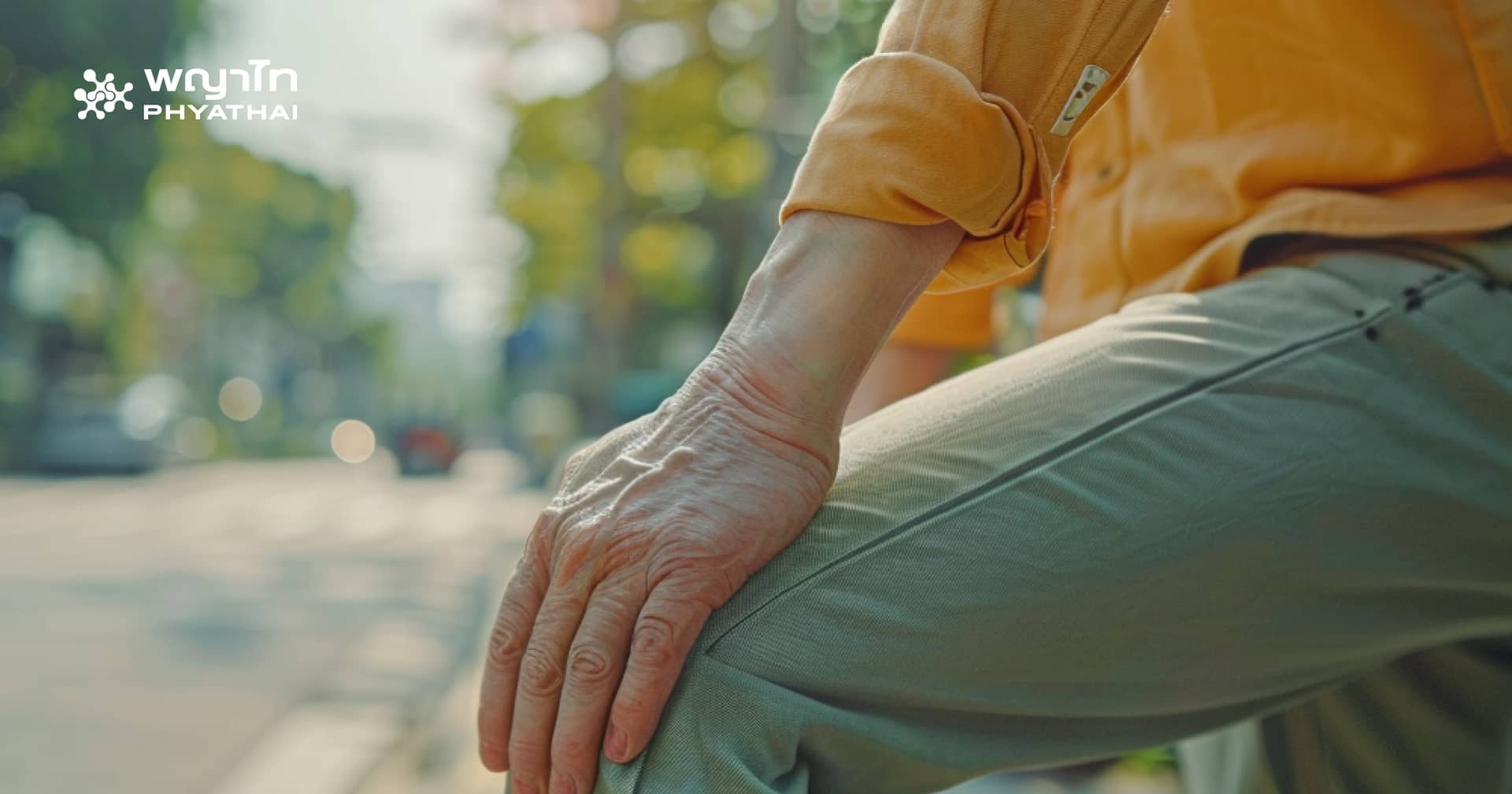
“Knees” of all of us will deteriorate with age, but that does not mean everyone will have knee pain or discomfort that prevents walking or exercising as usual. Many elderly people do not have knee pain severe enough to require medication or medical treatment. However, there are still a number of working-age people and elderly individuals who experience significant knee problems.
The main factor causing changes in the form of knee deterioration is the “articular cartilage,” which is a special type of cartilage with a smooth, shiny surface that experiences very little friction during joint movement. If this cartilage is injured, damaged, or worn out to the point where it cannot repair or regenerate itself, it usually loses its functional capacity, leading to knee osteoarthritis.
Causes of Knee Osteoarthritis
There are several causes, with the most common being:
- Excessive body weight Normally, when walking on flat ground, each knee bears about three times the body weight. When walking up and down stairs, the load increases to about four times the body weight. Therefore, if the body weight is excessive, the pressure on the knees during walking increases significantly, which can rapidly cause damage or wear to the articular cartilage, leading to premature deterioration.
- Minor injuries to the knee such as from heavy sports like rugby or football that involve strong impacts on the knee, or tears in the cartilage or ligaments inside the knee, which reduce the stability and strength of the knee from a young age, causing cartilage damage and early knee deterioration before old age.
- Various diseases causing chronic inflammation of the synovial membrane which accelerate cartilage deterioration.
How to Prevent Premature Knee Deterioration
Try to maintain a normal body weight and avoid being overweight or obese.
Strengthen the muscles around the knee. When walking or running, the muscles around the knee absorb or bear the weight passing through the knee before the remaining weight or excess load is transferred to the articular cartilage. Therefore, the amount of weight passing through the cartilage depends on the strength of the muscles around the knee.
If the muscles around the knee are very strong, the force passing through the cartilage will be minimal. But if the muscles are weak, more force will pass through the cartilage. Excessive force on the cartilage can damage the cartilage, leading to deterioration. Thus, strengthening the knee muscles is very important in preventing knee deterioration.
Avoid knee positions that cause excessive pressure or friction, such as squatting, kneeling, sitting on the heels, or sitting cross-legged.
Does Running Really Accelerate Knee Deterioration?
Regarding the question of whether running causes impact on the knees and accelerates knee deterioration, in reality, running is more beneficial than harmful. It strengthens the muscles around the knee and reduces body weight, which helps decrease the force passing through the knee cartilage during daily activities. However, if knee deterioration has already occurred and causes pain that prevents running, one should consult a doctor for advice on muscle strengthening exercises that do not harm the cartilage in the future.
Symptoms Indicating Knee Osteoarthritis
- Pain when moving or bending the knee.
- Condition of the knee before surgery: if the knee is stiff or severely deformed, such as bow-leggedness, or if the knee muscles are atrophied and weak, the knee cannot immediately return to normal after surgery and requires long-term rehabilitation.
- Grinding or cracking sounds in the knee during movement.
- Inability to walk or move normally.
How to Diagnose Knee Osteoarthritis?
The doctor will start by taking a medical history and examining the knee for swelling, redness, tenderness, and abnormal movement. Additional tests may include X-rays or Magnetic Resonance Imaging (MRI) to provide a more detailed diagnosis and identify the cause.
The doctor may also analyze joint fluid or blood to diagnose other causes of joint pain or symptoms similar to osteoarthritis, such as gout, rheumatoid arthritis, inflammation, or infections.
Treatment of Knee Osteoarthritis with Joint Lubricant Injections
Currently, there are several treatment options for knee osteoarthritis. If the condition is not severe enough to require knee replacement surgery, doctors may consider treatment with joint lubricant injections. This method helps treat osteoarthritis by restoring the quality of the joint fluid, which becomes less concentrated and less elastic due to degraded hyaluronic acid. The injection helps lubricate the knee, reducing friction and pain.
Exceptions for Joint Lubricant Injections
This treatment is not suitable for everyone. If the patient has a joint infection or skin disease at the injection site, the doctor will consider other treatments. Many patients worry about injections, but typically, joint lubricant injections do not cause serious side effects. Mild pain, swelling, or redness may occur, similar to other injections, but these symptoms usually resolve on their own or can be relieved with cold compresses. After the injection, rest the knee for at least 2 days.
When to Consider Knee Replacement Surgery
When the knee deterioration causes severe pain and cannot be managed with medication or physical therapy, knee replacement surgery may be performed. This involves removing the damaged cartilage and replacing it with a new surface made from special medical materials that are strong, durable, and compatible with body tissues. The artificial knee is designed to move like a natural knee.
Factors Affecting the Success of Knee Replacement Surgery
- The experience and skill of the surgeon performing the operation.
- The condition of the knee before surgery. If the knee is stiff or severely deformed, such as bow-leggedness, or if the knee muscles are atrophied and weak, the knee cannot immediately return to normal after surgery and requires long-term rehabilitation.
- The patient’s cooperation with post-operative knee rehabilitation.
Use of Computer in Knee Replacement Surgery (Computer Assisted Surgery)
Currently, computers are used to assist in knee replacement surgery, helping to accurately position the artificial knee.
Minimally Invasive Surgery
Minimally invasive surgery aims to reduce post-operative pain compared to traditional surgery. Patients recover faster, wounds heal quicker, and patients can return to normal walking sooner. However, surgeons will evaluate on a case-by-case basis whether this method is suitable, considering factors such as disease severity and the patient’s overall health. If you have knee pain and are concerned about osteoarthritis, it is recommended to see a doctor promptly for diagnosis and treatment before symptoms worsen and cause severe pain. The Musculoskeletal Center at Phyathai Nawamin Hospital has specialists ready to care for, treat, and advise all patients.
Dr. Kobsak Udomdej
Orthopedic Surgery Specialist
Musculoskeletal Center Phyathai Nawamin Hospital

