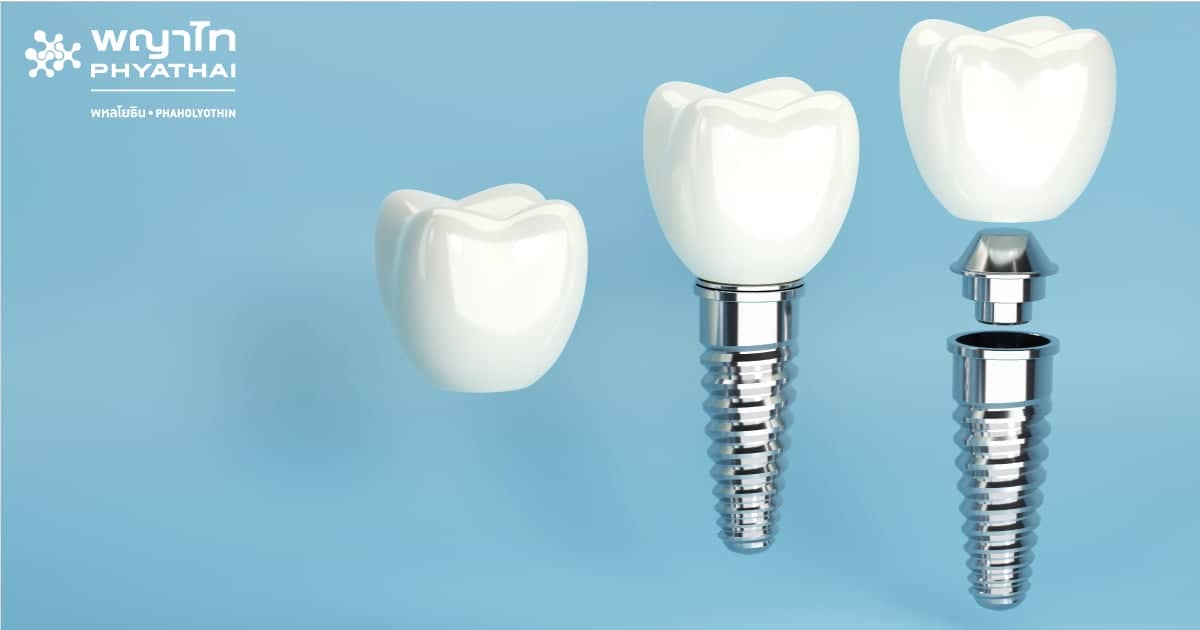
Dental Implant
Besides creating new teeth to replace lost natural teeth for chewing food, dental implants also provide benefits in appearance that closely resemble real teeth. However, dental implant procedures require a preparation process, starting from oral health examination, preparation of the gums and jawbone before implant placement, to the installation of the crown, which enhances both the strength and aesthetics of the teeth. Today, we will take you through the detailed steps of the dental implant procedure from the beginning until you have strong, functional, and beautiful new teeth.
Preparation of the Gum and Jawbone Area Before Dental Implant
Checking and preparing the gum and bone area before dental implant placement is an important step in the procedure, with details as follows:
- Oral Health Examination
The dentist will start by taking X-Ray or CT Scan images to check the internal structure of the mouth, especially the thickness of the jawbone and the tissue on the gum ridge. This helps make the treatment plan accurate and suitable for each individual. Additionally, the condition of the gums will be assessed to ensure they are healthy and strong enough for implant placement. If the gums are not strong, treatment may be necessary before proceeding.
- Assessment of Jawbone Condition
If the jawbone is insufficient to support the implant, bone grafting may be required to increase the thickness or height of the jawbone, using either the patient’s own bone or synthetic bone. This process requires about 4-6 months for the bone to heal and be ready for implant placement. Moreover, the position of the sinus cavity must be checked. If the sinus cavity is too close to the jawbone, sinus lift surgery may be needed to create more space for the implant.
- Oral Health Preparation
If there are infections or tooth decay, they must be treated first to prevent the spread of infection. The mouth must also be cleaned thoroughly and free of bacteria. In some cases, the dentist may recommend scaling or deep cleaning (scaling & root planing) before implant placement, which helps the healing process after surgery and reduces the risk of infection during treatment.
Digital Technology Used in Dental Implant Design
The use of digital technology in designing and placing dental implants increases the accuracy of implant positioning, reduces treatment time from diagnosis, planning, manufacturing, to installation, and also helps reduce pain and recovery time. The technologies used in these processes include:
- 3D Oral Scanning with an Intraoral Scanner to create models of the teeth, gums, and jawbone, which helps improve the accuracy of implant placement and avoid risky areas such as nerves and sinuses that could be damaged if the implant is placed incorrectly.
- Digital Implant Planning using specialized dental software combined with 3D radiographic images (CT Scan or CBCT) to precisely determine the position, angle, depth, and size of the implant.
- Implant Manufacturing with CAD/CAM (Computer-Aided Design / Computer-Aided Manufacturing) systems that are fast and accurate, producing components that fit perfectly in the mouth and reduce the need for adjustments during treatment.
- Use of Digital Surgical Guide to guide implant placement through 3D printed models from digital designs, allowing precise drilling points during surgery, reducing errors, increasing safety, and minimizing tissue damage around the area.
Dental Implant Surgery Procedure
After preparing the oral health, the dental implant surgery procedure begins as follows:
- The dentist will inject local anesthesia at the implant site to numb the area and reduce discomfort during the procedure.
- Once the anesthesia takes effect, the dentist will make an incision in the gum to access the jawbone where the implant will be placed.
- A hole is drilled into the jawbone at the planned position using special tools to prepare the site for the implant.
- The titanium implant is placed into the jawbone, and the position is checked to ensure it is correct and stable.
- After confirming everything is in order, the dentist will suture the gum to close the wound, allowing the healing process and osseointegration (the bonding of the implant with the bone) to begin.
Generally, this entire process takes about 1-2 hours, depending on the number of implants placed and the complexity of the oral health condition.
Crown Installation for Strength and Aesthetics
Crown installation is the final step to complete the dental implant procedure, ensuring long-term functionality. The crown protects the implant material from wear, increases strength during use, and reduces the risk of cracking or further damage. It also helps shape and color the tooth to look natural, blending harmoniously with other teeth and improving chewing function. The crown installation steps are as follows:
- Placement of the Abutment: Once the bone has healed well, the dentist will place an abutment to support the crown. This abutment is attached to the implant and protrudes above the gum to hold the crown.
- Impression Taking: To create a permanent crown that fits perfectly in size and shape, the dental lab will take about 5-7 days to fabricate it.
- Temporary Crown Installation: While waiting for the permanent crown from the lab, the dentist will place a temporary crown for aesthetics and to protect the prepared tooth.
- Permanent Crown Installation: When the permanent crown is ready, made from ceramic or metal, the dentist will cement it securely onto the abutment, checking the fit and making necessary adjustments. Some crowns may be screw-retained to the abutment.
Recovery Time After Dental Implant
The recovery time after dental implant depends on several factors such as the patient’s physical condition, post-crown installation care, and lifestyle habits. It is important to avoid trauma to the wound, keep the area clean, avoid smoking or alcohol to reduce infection risk, and regularly visit the dentist for follow-up to monitor bone and implant healing. Generally,
- In the first 1-2 days after surgery, there may be pain and swelling, so medication should be taken as prescribed, cold compresses applied, and adequate rest taken. Avoid chewing hard or sticky foods.
- During 7-14 days after surgery, avoid heavy chewing, very hot or spicy foods. If stitches were placed, the dentist will schedule a removal appointment. Patients should monitor the wound regularly and seek immediate medical attention if symptoms worsen, such as increased pain, redness, swelling, or pus.
- During 2-6 months, the implant will gradually integrate with the jawbone. Excessive biting force should be avoided as in the initial period to ensure good implant stability and maintain cleanliness around the implant.
If you have lost teeth and want strong new teeth through dental implants, the Digital and Implant Dentistry Center at Phyathai Phaholyothin Hospital is ready to provide implant services with a team of specialized dentists using modern technology. You can be confident that dental implants will effectively solve your problems and bring back your bright smile.
Dr. Thanapon Noomanoi
Prosthodontics Specialist
Digital and Implant Dentistry Center
Phyathai Phaholyothin Hospital
