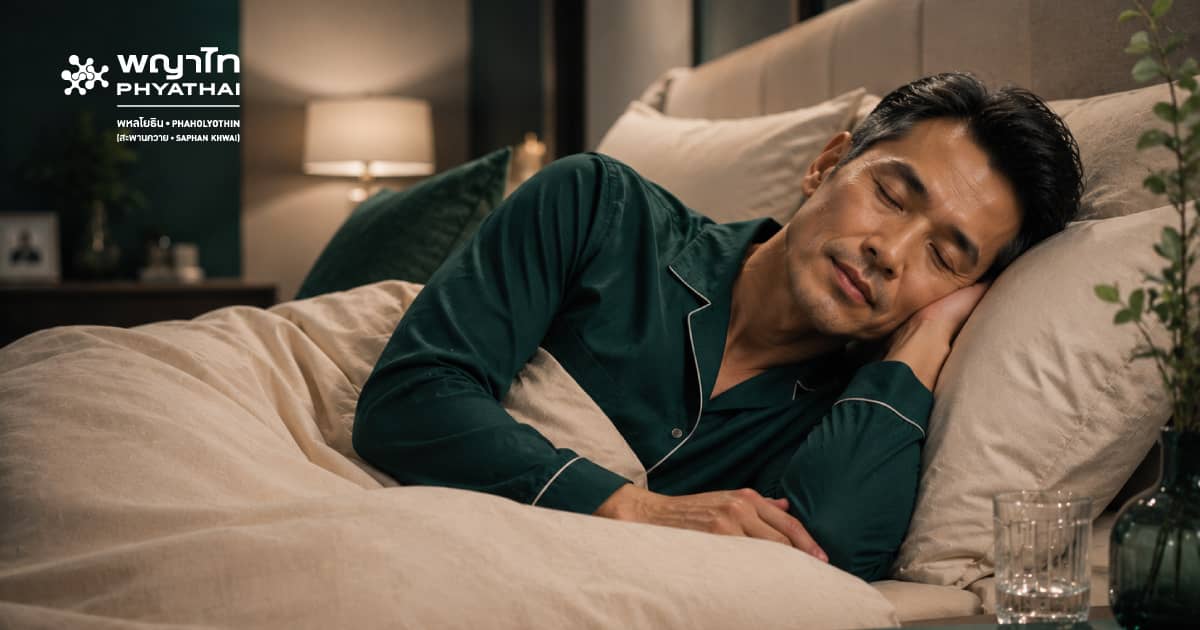
Obstructive Sleep Apnea (OSA) is a condition where the upper airway is repeatedly blocked during sleep, causing temporary breathing pauses more than 5 times per hour. This affects sleep quality, brain, heart, and overall health. Common symptoms include loud snoring, daytime sleepiness, and waking up feeling unrefreshed despite adequate sleep. Diagnosis is done through a Sleep Test, and there are various treatment options including the use of CPAP machines.
What is Obstructive Sleep Apnea (OSA)? Why is it more dangerous than you think?
While we sleep, the muscles in the throat and airway naturally relax. In people with Obstructive Sleep Apnea (OSA), these muscles relax too much, causing the airway to narrow or completely block, leading to decreased oxygen in the blood. The brain then signals the body to wake up to open the airway. This process repeats throughout the night, sometimes more than 30 times per hour without the person being aware of waking up.
Many people think snoring is normal and harmless, but medically, snoring is a sign that the airway is being blocked and in severe cases, the body repeatedly stops breathing throughout the night without awareness. The accumulated damage to the heart and brain is invisible but happens every night.
Dr. Petchrat Saengthong, ENT and Sleep Medicine Specialist

Symptoms of Obstructive Sleep Apnea
Symptoms of Obstructive Sleep Apnea (OSA) can be divided into two groups: symptoms during sleep, which are often noticed by a bed partner or someone nearby, and symptoms during the day, which patients often mistake as stress or overwork.
| Symptoms During Sleep (Night) | Symptoms During the Day |
| Consistent loud snoring | Excessive daytime sleepiness despite adequate sleep |
| Intermittent breathing pauses (noticed by bed partner) | Difficulty waking up, poor concentration at work |
| Startled awake with choking or gasping sounds | Morning headaches, especially around the temples |
| Frequent awakenings at night, frequent urination | Mood swings, irritability, depression |
| Restless sleep, frequent turning | Memory and decision-making decline |
| Dry mouth, sore throat upon waking | Falling asleep while driving or sitting still |
Signs You Should See a Doctor
- Your bed partner notices you stop breathing during sleep
- You feel so sleepy that you have fallen asleep while driving or working
- You wake up with a racing or irregular heartbeat
- You have high blood pressure that is difficult to control with medication
Causes and Risk Factors of Obstructive Sleep Apnea (OSA)
Obstructive Sleep Apnea (OSA) is not caused by a single factor but is the result of multiple physical and behavioral factors. Doctors will assess comprehensively to design the most appropriate treatment plan.
Physical Factors
- Narrow airway structures such as enlarged tonsils, long uvula, or small jaw
- Overweight or obesity, with fat accumulation around the neck narrowing the airway
- Neck circumference greater than 40 cm (women) or 43 cm (men)
- Nasal abnormalities such as deviated septum or chronic nasal mucosa inflammation
- Increasing age causing airway muscle degeneration
- Male gender, with 2–3 times higher risk than females; postmenopausal women have significantly increased risk
Behavioral and Comorbid Factors
- Alcohol consumption before bedtime, causing increased throat muscle relaxation
- Use of sleeping pills or muscle relaxants
- Smoking, causing inflammation and swelling of the airway lining
- Hypothyroidism, high blood pressure, diabetes
- Acid reflux causing airway lining irritation
Severity Levels of Obstructive Sleep Apnea (OSA)
The severity of OSA is measured by the Apnea-Hypopnea Index (AHI), which is the number of apnea or hypopnea events lasting more than 10 seconds per hour of sleep.
| Normal AHI < 5 | No obstructive sleep apnea, normal sleep No treatment needed but risk factors should be managed preventively |
|
Mild AHI 5–14 |
Daytime sleepiness, occasional snoring, not severe Behavioral modification recommended; oral appliance may be considered |
|
Moderate AHI 15–29 |
Severe daytime sleepiness, nightly snoring, frequent oxygen desaturation CPAP or combined treatments recommended |
|
Severe AHI ≥ 30 |
Frequent apnea, risk of heart disease, stroke, sudden death CPAP is the main treatment and should be started as soon as possible |
Assess Your Risk of Obstructive Sleep Apnea (OSA) with STOP-BANG
STOP-BANG is a globally recognized risk assessment tool for Obstructive Sleep Apnea (OSA), widely used in hospitals worldwide, including pre-surgical screening for at-risk patients.
| Abbreviation | Question | Criteria for “Yes” |
| S – Snore | Do you snore loudly? | Loud enough to be heard in the same room |
| T – Tired | Do you often feel tired or sleepy during the day? | Sleepy despite enough sleep |
| O – Observed | Has anyone observed you stop breathing during sleep? | Bed partner or household member reports |
| P – Pressure | Do you have high blood pressure? | Diagnosed or on medication |
| B – BMI | Is your BMI over 35? | Weight (kg) ÷ height (m)² > 35 |
| A – Age | Are you over 50 years old? | – |
| N – Neck | Is your neck circumference > 40 cm (female) / 43 cm (male)? | Measured at the Adam’s apple |
| G – Gender | Male? | – |
Score Interpretation
- 0–2 points: Low risk. Recommended to monitor symptoms and manage risk factors.
- 3–4 points: Moderate risk. Should consult a doctor for further evaluation.
- 5–8 points: High risk. Recommended to undergo a Sleep Test promptly.
🔍 Test your risk for Obstructive Sleep Apnea (OSA) now
Takes less than 2 minutes Click for the internationally standardized STOP-BANG assessment
Phyathai Phaholyothin Hospital | Integrated Sleep Wellness Center
How Does Obstructive Sleep Apnea (OSA) Affect Long-Term Health?
Untreated OSA is not just a sleep problem but a major risk factor for many chronic diseases due to repeated oxygen deprivation and overactive autonomic nervous system throughout every night.
| Effects on Cardiovascular System |
|
| Effects on Brain and Mental Health |
|
| Effects on Metabolism |
|
| Effects on Quality of Life |
|
Diagnosis of Obstructive Sleep Apnea (OSA) with Sleep Test
Accurate diagnosis of OSA is done by a Sleep Test or Polysomnography (PSG), which measures multiple vital signs simultaneously throughout the night.

What Does the Sleep Test Measure?
- Brain waves (EEG) to identify sleep stages
- Heart function (ECG) to detect arrhythmias
- Blood oxygen levels (SpO2) to check for oxygen deprivation during sleep
- Airflow and breathing effort to detect apnea and hypopnea
- Leg movements to detect Restless Legs Syndrome
- Sleep posture to analyze the relationship between position and symptoms
At Integrated Sleep Wellness Center, Phyathai Phaholyothin Hospital, Sleep Test results are analyzed by a multidisciplinary team of specialists to ensure comprehensive diagnosis and precise treatment planning.
Treatment Approaches for Obstructive Sleep Apnea (OSA)
There is no “one-size-fits-all” treatment for OSA. Doctors select treatment based on severity, anatomy, comorbidities, and individual patient needs.
- CPAP Machine (Continuous Positive Airway Pressure)
The gold standard treatment for moderate to severe OSA. The machine delivers pressurized air through a mask to keep the airway open all night. Modern CPAP devices are smaller, quieter, and have automatic pressure adjustment (Auto CPAP). Most users notice significant improvement from the first night. - Oral Appliance
A special dental device that pushes the lower jaw and tongue forward to widen the airway. Suitable for mild to moderate OSA or patients who cannot tolerate CPAP. - Surgery
Considered for correctable anatomical issues such as enlarged tonsils, deviated septum, or floppy soft palate. ENT surgeons will evaluate together with sleep medicine specialists before deciding. - Behavioral Modification and Weight Loss
Used as adjunctive therapy including weight reduction, avoiding alcohol before bedtime, adjusting sleep position, myofunctional therapy (exercises for airway muscles), and treating comorbid conditions that increase risk.
Supported Insurance and Payment Options
Phyathai Phaholyothin Hospital supports all insurance types for diagnosis and treatment of Obstructive Sleep Apnea (OSA).
| Social Security | Private Health Insurance | Self-Pay / Credit Card |
|
|
|
Check your insurance eligibility and make an appointment
Contact Integrated Sleep Wellness Center, Phyathai Phaholyothin Hospital
Staff are happy to assist with Social Security, private insurance, and suitable packages
FAQ – Frequently Asked Questions
Q: Can Obstructive Sleep Apnea (OSA) be completely cured?
A: It depends on the cause. OSA caused by correctable factors such as obesity, enlarged tonsils, or deviated septum may be cured after treating the root cause. However, most patients require long-term symptom management, and CPAP is very effective if used consistently.
Q: I don’t snore but feel very sleepy. Could this be OSA?
A: Yes. Some types of OSA may not have obvious snoring, especially in women who often have shallow breathing rather than complete apnea. If you experience excessive sleepiness, unrefreshing sleep, or morning headaches, you should consult a doctor for evaluation.
Q: Can children have Obstructive Sleep Apnea (OSA)?
A: Yes. OSA in children is more common than thought, usually caused by enlarged tonsils and adenoids. Parents should watch for loud snoring, mouth breathing, restless sleep, or developmental delays. If observed, see a specialist for evaluation.
Q: How long does it take for symptoms to improve after using CPAP?
A: Many patients notice significant improvement from the first night, such as feeling more refreshed, less daytime sleepiness, and reduced snoring. However, adjustment to the device may take 1–4 weeks. The medical team will monitor and adjust treatment accordingly.
If you or your loved ones have symptoms of Obstructive Sleep Apnea (OSA)
Don’t wait Click to take the STOP-BANG risk assessment (free of charge)
Or make an appointment directly at
Integrated Sleep Wellness Center | Phyathai Phaholyothin Hospital
BTS Saphan Khwai | Open daily | Supports all insurance types
“Sleep Better, Live Better”
