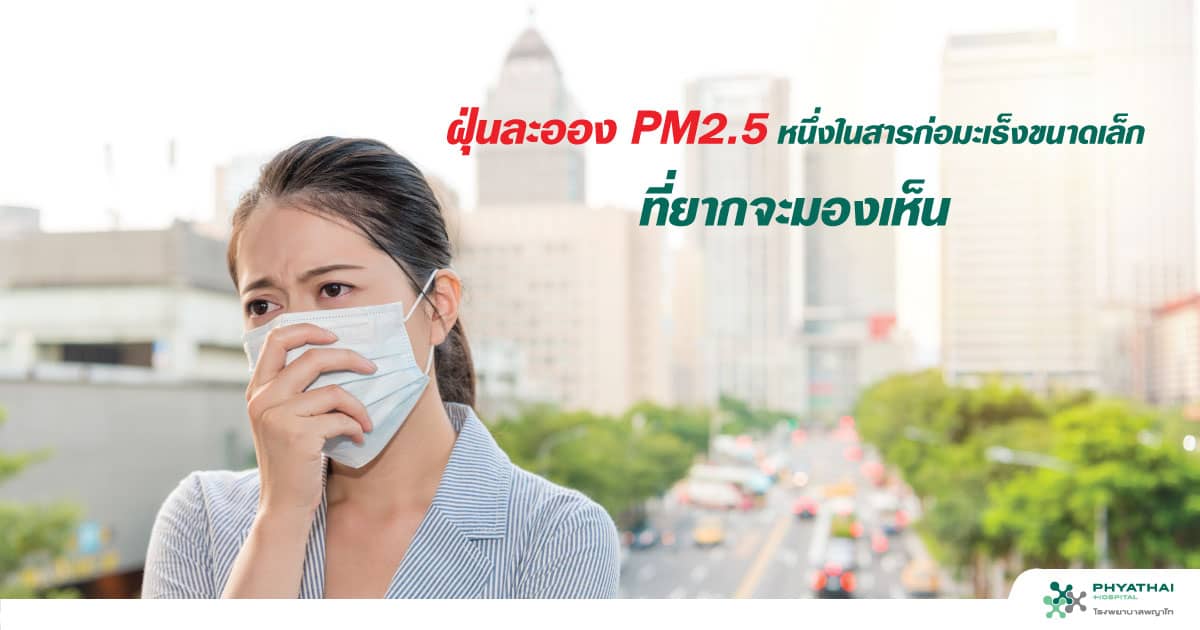
Nowadays, the air we breathe is filled with dust particles containing many toxic substances. One of them is PM2.5, or particulate matter with a diameter of no more than 2.5 microns, which contains chemical components such as mercury, cadmium, arsenic, or polycyclic aromatic hydrocarbons. The World Health Organization (WHO) classified these as Group 1 carcinogens in 2013.
Dangers and Health Effects of PM2.5
For healthy individuals who exercise regularly, exposure to PM2.5 may not show immediate effects. However, prolonged or accumulated exposure can eventually cause abnormalities in the body. These effects can impact both internal organs and the skin.
What Diseases Can PM2.5 Cause?
- Coughing, sneezing, or allergies
- Those who already have dust allergies may experience worsened symptoms
- Chronic respiratory diseases
- Chronic cardiovascular diseases
- Chronic lung diseases or lung cancer
Sources of Toxic Dust
It is certainly difficult to avoid inhaling toxic dust unless wearing a protective mask. Toxic dust comes from various sources around us. According to statistics, toxic dust originates from:
- Open burning, 54%
- Manufacturing industries, 17%
- Transportation, 13%
- Electricity production, 9%
- Residential or commercial activities, 7%
It can be seen that if we reduce behaviors or activities that generate toxic dust, the air quality can improve.
4 Ways to Cope with PM 2.5 Dust
- Wear a dust protection mask. The most effective mask for PM2.5 protection is the N95 mask, which is more expensive than a regular surgical mask. Although some may feel uncomfortable or have difficulty breathing, it is necessary.
- If an N95 mask is not available, use a surgical mask with a 3-layer filter, which is often labeled as capable of filtering PM2.5. If that is not available, wearing two surgical masks layered or placing a handkerchief or tissue paper inside can also help.
- Avoid all outdoor activities when air quality is hazardous to health. If outdoor activities or being outside is necessary, always wear a dust protection mask.
- Use an air purifier, as indoor air may not always be safe from PM2.5, especially in buildings with frequent door openings due to many people entering and exiting. Therefore, an air purifier is essential to keep indoor air clean.
