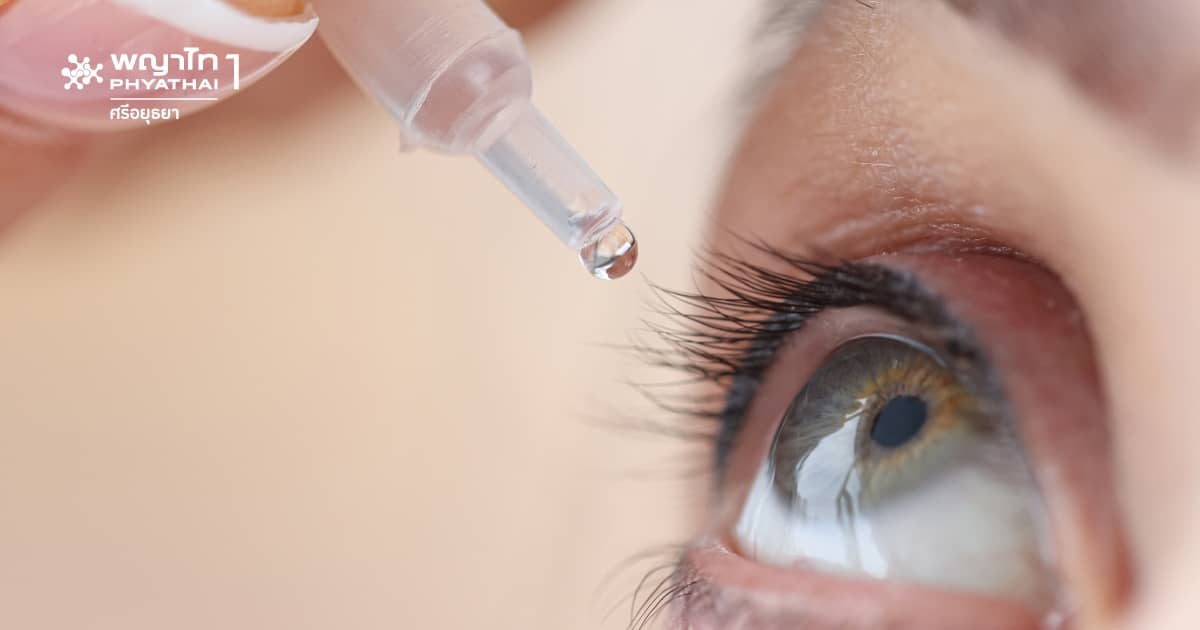
The tears produced by our eyes function like a fortress that protects the eyes from the environment. The main component of tears in terms of volume is the aqueous/watery layer, which is the middle and thickest layer. Another important layer is the lipid/oil layer, which is the topmost or outermost layer. The oil coating helps smooth the tear surface and prevents evaporation of the other two tear layers covered by the oil layer, preventing the eye surface from drying out too quickly. Whenever the body produces insufficient tears, including factors or diseases that cause tears to evaporate faster or more than normal, artificial tears play an important role in supplementing or replacing natural tears. Additionally, they can help treat other eye conditions or diseases.
6 Main Components of Artificial Tears
1. Viscosity-Enhancing Agents in Artificial Tears
Viscosity-enhancing agents are the most commonly used substances and the main components of artificial tears. They help relieve irritation and lubricate the surface of the eyeball. The U.S. Food and Drug Administration classifies viscosity-enhancing agents into 6 subgroups, all of which can be found in commonly available artificial tears, including
- Cellulose derivatives
- Dextran
- Gelatin
- Liquid polyols
- Polyvinyl alcohol
- Povidone
2. Electrolytes in Artificial Tears
Electrolytes are normally found in tears produced by the body, such as sodium, potassium, chloride, magnesium, and calcium. These substances help maintain the water balance on the surface of the eyeball. When applied to the eye, electrolytes in artificial tears help complete the tear composition. Some electrolytes, such as boric acid, help regulate pH or act as preservatives when used with sorbitol, zinc, and propylene glycol (SofZia preservative system).
These substances help increase the thickness of the tear layer and make tears adhere to the surface of the eyeball longer. They also have water-retaining properties, providing moisture to the eyes by preventing water loss. The most commonly used viscosity enhancer is sodium carboxymethyl cellulose, which is plant-derived, easily dissolves in cold or room temperature water without boiling, is odorless, tasteless, and provides suitable viscosity for mild to moderate dry eye, keeping the eyeball surface moist and stabilizing tears.
3. Osmoprotectants in Artificial Tears
They function to maintain tear balance in dry eye disease that causes thick or highly concentrated tears, leading to death of corneal epithelial cells and self-destructive conjunctival tissue (apoptosis). To prevent this cell death, some artificial tears contain osmoprotectants such as L-carnitine, which is synthesized in the liver and kidneys; erythritol, a sweetener; betaine, extracted from lettuce or sugar beet; sorbitol, a sugar substitute sweetener; glycerin, a sugar alcohol; and trehalose, a natural sugar synthesized from plants, algae, fungi, animals, and some bacteria.
4. Oily Agents and Surfactants in Artificial Tears
The most common type of dry eye disease is caused by loss of the tear film lipid layer. The presence of lipids and proteins in the lipid layer is important for the surface tension of tears and the attraction or retention of moisture on the eye surface. Increased tear evaporation causes changes in the tear lipid layer. Lipid agents in artificial tears help replenish this lipid layer, often in the form of liposomes, which are small spherical vesicles, and fine oil nanodroplets primarily suspended in water.
Besides these two types, there are also oil-in-water emulsions. Evidence suggests that dry eye disease is associated with oxidative stress, which reduces the body’s antioxidant defenses. Some artificial tears therefore include antioxidants such as vitamin A, vitamin E, coenzyme Q10, or lipoic acid.
Many artificial tear brands in Japan add epsilon amino caproic acid (EACA), vitamin E, vitamin B6, vitamin B12, and vitamin B5 (panthenol).
However, studies on topical antioxidants for the eyes have not examined each antioxidant individually but rather in combination with other components, so further research is needed.
5. Agents in Artificial Tears That Promote Wound Healing and Reduce Inflammation (agents promoting wound healing and reducing inflammation)
Besides the viscosity of artificial tears, hyaluronic acid (HA), especially high molecular weight hyaluronic acid (HMW-HA), helps wounds heal faster after corneal scraping or chemical injuries from alkali burns. These substances can adhere to most cells on the eye surface, similar to carboxymethyl cellulose (CMC), which can adhere to human corneal epithelial cells and help restore damaged eye surfaces.
Cationic emulsions help replenish the tear lipid/oil layer, promoting closure or healing of abrasions both in experimental wounds and actual corneal surface wounds.
6. Preservatives in Artificial Tears
Multi-dose artificial tears require preservatives to prevent contamination in the bottle and extend shelf life. The most commonly used preservative in artificial tears is benzalkonium chloride (BAK). Later, new preservatives with fewer side effects (soft preservatives) were developed, including polyquaternium-1 (PQ, POLYQUAD®), sodium chlorite (PURITE® or OcuPURE®), and edetate disodium (EDTA). However, preservative-free formulations have shown better healing in living cell wound models used in experiments.
Artificial tears contain various substances that help reduce causes of dry eye disease and replace insufficient tear volume. Some have multiple benefits or roles. Each artificial tear product has different components, so consulting an ophthalmologist for thorough and continuous eye examination and tear testing to select the appropriate artificial tears, along with using medications or other specialized treatments according to disease severity, is important.
