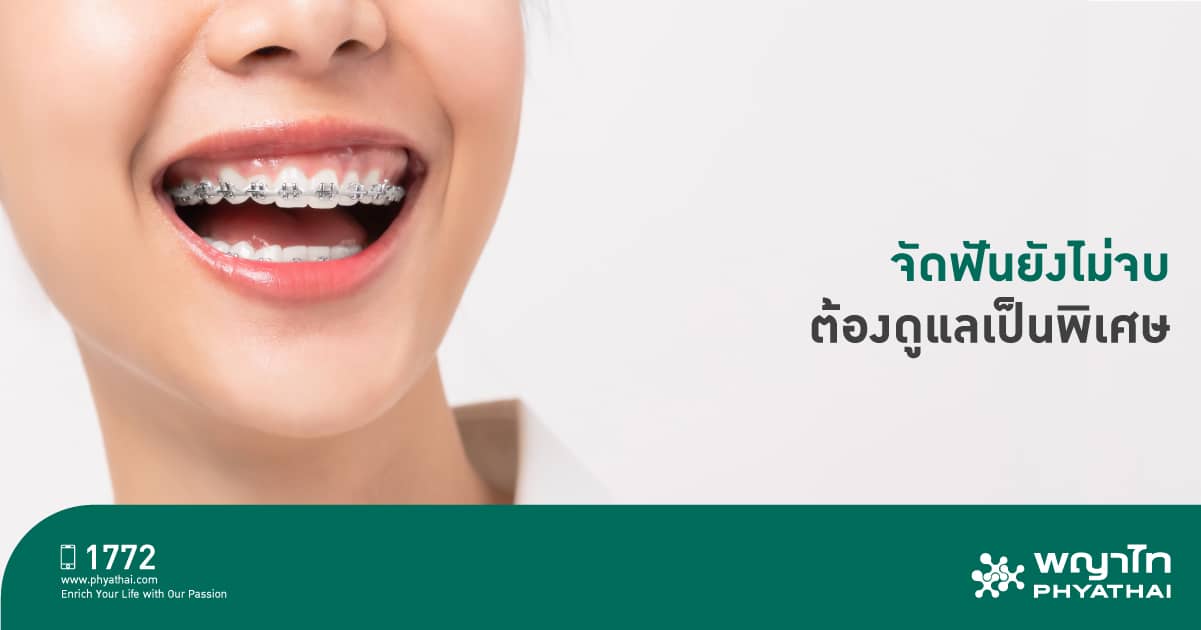
Everyone wants to have clean, beautiful, and attractive teeth, especially those who have problems with protruding, crowded, or misaligned teeth. Orthodontics is one way to improve the alignment of teeth and create a more beautiful smile. However, during orthodontic treatment, patients must be meticulous in caring for their dental and oral health to prevent cavities from developing during the treatment. Here are some recommendations:
1. Maintain oral hygiene better and more thoroughly than before getting braces because after braces are attached, cleaning becomes more difficult. Plaque can adhere more to the tooth surface, increasing the risk of cavities and gingivitis. Those with braces should follow these guidelines:
-
- Brush your teeth within 30 minutes after every meal and before bedtime to remove food debris easily and prevent it from sticking to the tooth surface.
- Use a toothbrush designed for orthodontic patients and fluoride toothpaste. Clean between teeth thoroughly and use dental floss to clean your teeth.
- Brush your teeth correctly by following brushing techniques and using supplementary tools recommended by the Orthodontic Association of Thailand by scanning this QR code.
2. Take care of your orthodontic appliances as if they are part of your mouth.
-
- Brush your teeth and use interdental brushes to clean around the orthodontic appliances. If food debris accumulates around the appliances, it increases the risk of cavities, white spots on teeth, and plaque buildup that can cause the appliances to loosen easily.
- If you use removable orthodontic appliances, clean them with a toothbrush and soapy water or dishwashing liquid. For stubborn tartar, clean by soaking the appliance in a mixture of water and vinegar at a 2:1 ratio for about 4-6 hours, then brush it off with soapy water.
3. Avoid chewing sticky or hard foods or behaviors that may harm orthodontic treatment as follows:
-
- Avoid ice, squid, nuts, candies, toffee, crispy pork, tough meats, and do not bite or gnaw on fried chicken, corn, or apples with your front teeth. Cut them into bite-sized pieces and eat appropriately. Avoid chewing gum as it can cause the orthodontic appliances to loosen.
- Do not bite your nails, suck your thumb, or push your teeth or orthodontic appliances with your tongue, as these behaviors may cause teeth to move in the wrong direction.
4. During the first week after getting braces, you may feel tooth pain and irritation on your lips and cheeks. These symptoms will gradually subside in the second week. You can reduce irritation by applying orthodontic wax to the areas of the appliances that cause discomfort.
5. Apply relief or visit your orthodontist to trim any long wire ends.
6. Get tartar removed and have your teeth checked for cavities every 6 months.
7. If any orthodontic appliance comes loose, keep it and bring it to your orthodontist at your next visit
Dr. Phonlakorn Buranaprasertsuk
Orthodontic Specialist
Dental Center, Phyathai 2 Hospital
