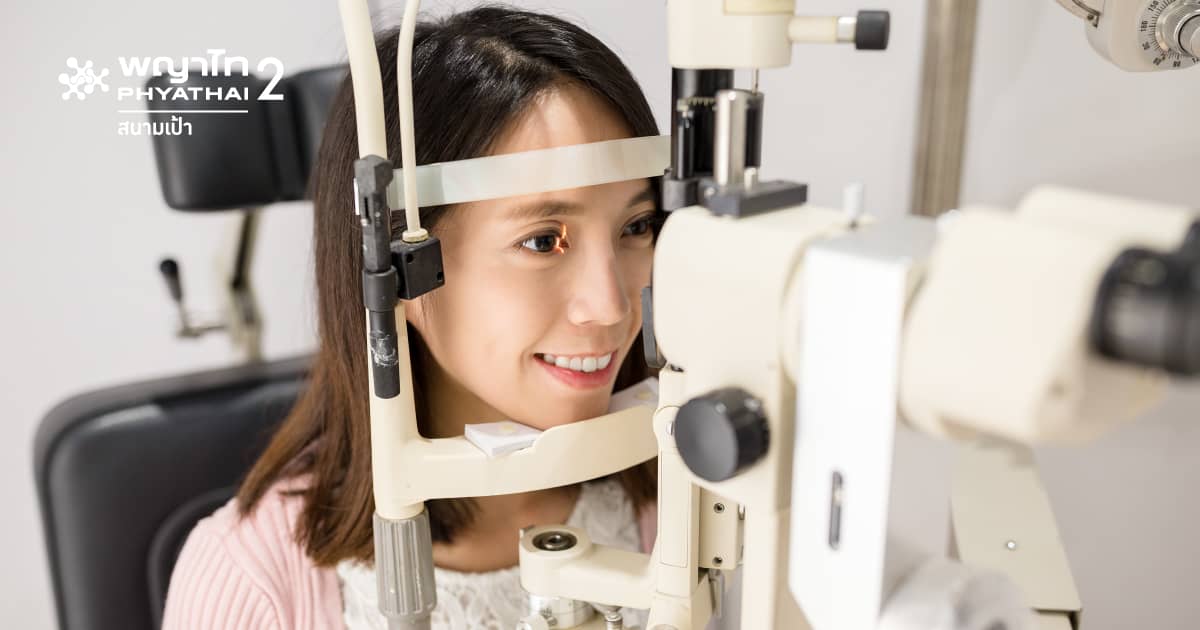
Eye health check-ups and vision tests are not only for when your vision is blurry or your eyes feel irritated. The “annual eye exam” is one of the health screenings that should be done regularly, just like blood tests, blood pressure checks, or annual physical exams.
The eyes are very delicate organs. Many eye disorders may not show clear symptoms in the early stages, such as glaucoma, diabetic retinopathy, or macular degeneration. If left until symptoms appear, it is often harder to treat or may cause permanent vision loss.
Annual Eye Exam (Comprehensive Eye Examination)
is an assessment of eye health and vision by an ophthalmologist or eye care specialist. It does not only measure nearsightedness, farsightedness, or astigmatism but also includes examining the eye structures such as the cornea, lens, retina, optic nerve, and measuring intraocular pressure.
A full eye exam therefore includes both
- Screening for eye diseases
- Adjusting vision prescription/glasses to suit real-life use
Why is it “necessary” to have an annual eye exam?
- To detect eye diseases that show no symptoms in the early stages but if left untreated, can cause permanent blindness, such as
-
- Glaucoma: High intraocular pressure damages the optic nerve. If unnoticed, it may cause permanent loss of visual field.
-
- Diabetic Retinopathy: Diabetic patients may develop leaking or bleeding blood vessels in the retina, causing blurred vision. Early detection allows treatment with medication, laser, or surgery to prevent permanent blindness.
-
- Early-stage cataracts: The lens begins to cloud, causing images to become blurry gradually. Some patients think “there is not enough light,” but in fact, the lens is becoming cloudy.
- Measure vision and solve real-life vision problems Using computers/mobile phones for long periods causes many people to experience
-
- Blurry near vision
- Eye strain, dizziness
- Double vision, blurred vision in the evening
- Squinting when looking at distant objects while driving
The annual eye exam helps assess whether your vision is still suitable for real-life use, such as whether you need to change your glasses lenses, use screen filter lenses, or if you have started to develop presbyopia (especially if you are 40+)
- Safety for driving working with machinery, and using computers. Vision that is 10–20% unclear may still be “usable” in daily life, but for night driving, reading road signs, or detailed work such as acupuncture, procedures, or financial data entry, visual clarity directly affects “safety” and “accuracy.”
- Part of long-term health care especially if you have chronic diseases such as
-
- Diabetes
- High blood pressure
- High blood lipids
- Certain thyroid conditions
All of these may be reflected in the eyes, so you should always inform your doctor when having an eye exam.
How often should you have an eye exam?
-
- Children, students, and working-age people who use computer screens should have an eye exam and vision test at least once a year.
- People aged 40 and above should have regular annual eye exams because they are at risk of glaucoma, cataracts, and presbyopia.
- Diabetic patients should have regular eye exams at least once a year or more frequently as recommended by their doctor if abnormalities are found.
If you have abnormal symptoms such as seeing flashes of light, many floating black spots, distorted images, clear central vision but loss of peripheral vision, see an ophthalmologist immediately without waiting for your annual exam.
Summary of the steps for an eye exam / vision test
Generally, an eye health check-up may include
- Taking eye health and medical history
- Have you had eye surgery?
- Have you had any eye injuries?
- Is there a family history of eye diseases such as glaucoma?
- Do you have any chronic diseases or medications?
- Refraction test to measure nearsightedness, farsightedness, or astigmatism and determine if new lenses are needed
- Visual acuity test: reading letters on a chart (like a poster) to assess clarity of vision in both eyes
- Examination of external eye structures and the cornea, such as the cornea, conjunctiva, eyelids, and eye moisture
- Intraocular pressure measurement, an important index for glaucoma screening
- Fundus exam to check the retina and optic nerve, especially in diabetic or hypertensive patients or those suspected of optic nerve abnormalities. The doctor may dilate the pupils (using eye drops) to examine the retina in some cases, which may cause temporary blurred vision and light sensitivity after the exam.
- OCT (Optical Coherence Tomography) scan to examine the optic nerve head and retina for early disease detection. It is painless, quick, and has no radiation or side effects.
How to prepare before an eye exam
- Get enough rest You should sleep at least 7 hours before the exam. Lack of rest causes fatigue in the body and eyes, eye muscles may tense or focus poorly, leading to dry eyes, irritation, or temporary blurred vision, which can affect the accuracy of vision measurement. If you stay up late, have red or tired eyes, the test results may be inaccurate.
- Avoid alcohol Do not drink alcohol before the eye exam because alcohol affects the nervous system and eye muscle responses, causing temporary abnormal depth perception and focusing, which leads to inaccurate vision measurement/assessment. Avoid alcohol at least 24 hours before the exam.
- Contact lens wearers should remove lenses for an appropriate period. This is very important for those who “mostly wear contacts and rarely glasses.” Contact lenses, especially if worn for long periods, may cause slight temporary changes in corneal shape and moisture. Measuring vision immediately after removal may not reflect the true eye condition.
Recommendations by lens type
- Soft contact lenses (Soft Lens) should be removed at least about 30 minutes before the exam.
- Hard contact lenses (Hard Lens / Rigid / Ortho-K some types) should be removed about 2 weeks before the exam.
- Always inform your doctor about your chronic diseases and medications Many people overlook this, but it is very important because some diseases directly affect the eyes, for example
- Diabetes increases the risk of diabetic retinopathy causing retinal swelling, bleeding, and blurred vision.
- High blood pressure may cause changes in retinal blood vessels.
- Certain thyroid conditions cause eye muscle inflammation, bulging eyes, or double vision.
- High blood lipids are associated with blockage of small retinal blood vessels.
- Certain medications, such as some steroids, may increase the risk of high intraocular pressure/glaucoma.
Therefore, before starting the exam, inform your doctor about
- Your chronic diseases
- Medications you regularly take
- Any allergies to eye drops
This helps the doctor plan a personalized exam, such as detailed retinal examination or close intraocular pressure monitoring.
- If you already have glasses, bring them every time You should bring your current glasses (or all pairs you use, such as computer glasses or night driving glasses) with you.
- The doctor can read the prescription of your current lenses and compare it with your actual vision during the exam.
- Determine if your current glasses are still suitable or if the prescription is becoming weaker or stronger than needed.
- Assess specific problems, such as why you have eye strain when using the computer even though your prescription seems “correct” on paper. It may be because the lenses do not suit real-life use (e.g., sitting 50 cm from the screen all day).
Who “should not delay” their annual eye exam?
- People aged 40 and above This age group is at risk of glaucoma, cataracts, and presbyopia. Even if symptoms do not significantly affect daily life, monitoring changes annually helps plan timely treatment.
- People who work on computers/mobile phones for more than 6–8 hours per day such as programmers, graphic designers, page admins, accountants, traders, etc. This group often experiences eye strain, dry eyes, poor near focus, and headaches at the end of the day.
- People who drive regularly (especially night or long-distance driving) Slightly unclear vision may affect safety.
- Diabetic, hypertensive, or thyroid patients because they are at risk of changes in the retina and optic nerve.
- People who have had LASIK / PRK / or other vision correction procedures should have regular follow-ups as recommended by their doctor, even if their vision is currently “clear.”
An annual eye exam is an investment for sustainable vision. Regular eye health check-ups help prevent future vision loss. Proper preparation before the exam ensures accurate results and the best care plan. The earlier problems are detected, the better the chances for timely treatment and prevention.
Assoc. Prof. Dr. Prartana Hirunpatrwang
Ophthalmologist specializing in glaucoma and cataracts
