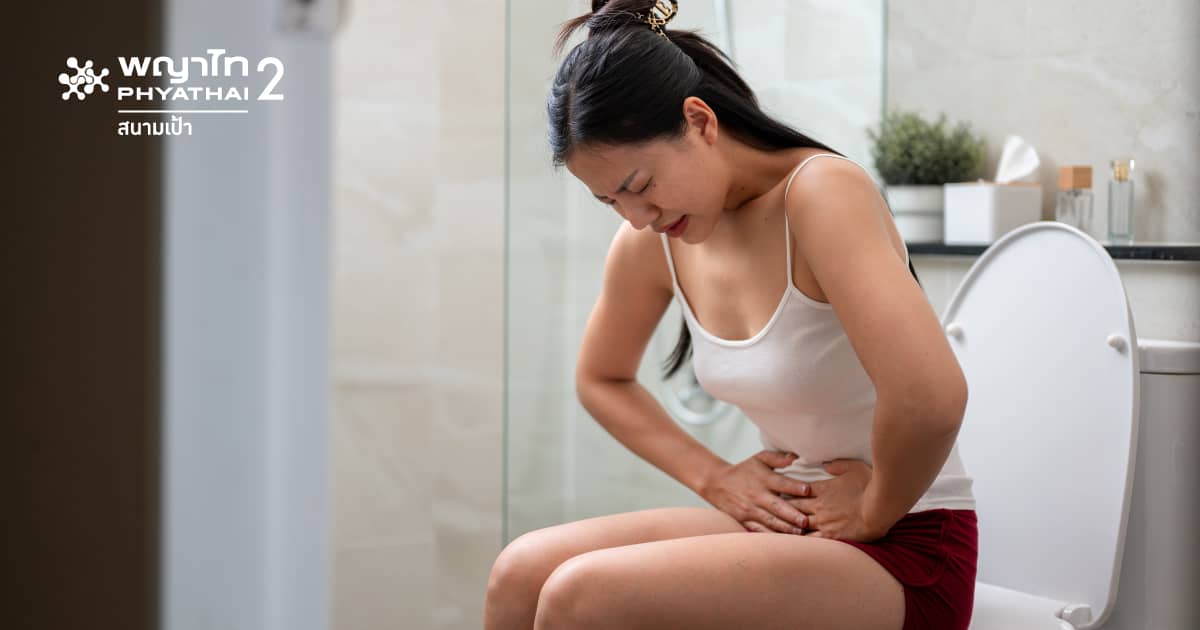
Fecal Impaction (Fecal Impaction) or commonly referred to as “full bowel” is a severe constipation condition that most people consider minor and not dangerous, thinking that just buying laxatives will cure it. Especially in working-age groups with a fast-paced lifestyle and irregular bowel habits, this group is at high risk of developing severe constipation easily. If this lifestyle continues, it may lead to unexpected serious diseases.
What is Fecal Impaction or Full Bowel Disease?
Fecal impaction or full bowel disease is medically called chronic constipation (Chronic constipation). It is a condition of relatively severe constipation with significant fecal impaction in the intestines caused by a disturbed bowel system. Generally, people have bowel movements about 1-3 times per day or 3 times every few days but not more than 3 times. If someone has bowel movements less than 3 times or more, it indicates the beginning of constipation.
The more it accumulates, the greater the impact. Over time, it will become full bowel because the liquid stool in the upper intestine is absorbed back into the lower part, forming lumps. Sometimes, stool held for a long time hardens due to water absorption. When it becomes very hard, it causes difficulty in defecation because the intestine, when stretched to a certain point, does not have enough force to contract back, making the stool too large to be expelled naturally.
Treatment involves cleansing the intestines first and then investigating the cause, such as whether there is a mass pressing on the bowel or a large amount of hardened stool accumulated. In some groups with constipation but no well-formed stool, passing small pellet-like stools resembling goat droppings or even loose stools, the cause may be due to abnormal bowel contractions or dysfunction, accounting for about 80-90%. The remaining 10-20 % may be due to hidden diseases that require urgent diagnosis and treatment.
What Causes Fecal Impaction?
Most causes come from our lifestyle behaviors, accounting for up to 80%, especially people who live a fast-paced life, go to work early, skip breakfast, feel the urge to defecate while stuck in traffic, and hold stool until reaching work.
Holding stool disrupts bowel movements, including bowel contractions and causes the sphincter not to relax, leading to constipation. Sometimes, taking vitamins such as calcium and zinc can also cause constipation. People who regularly drink tea or coffee tend to urinate frequently, leading to reduced water intake. Less water intake causes stool to harden. Some people eat little fiber-rich fruits and vegetables, resulting in insufficient fiber intake, making constipation easier. These factors need to be differentiated between high-risk groups for serious diseases or simple constipation as follows:
- High-risk groups for serious diseases include people aged 45 – 50 years and older, with a family history of gastrointestinal cancers such as colon or stomach cancer, those with blood in stool, unexplained weight loss, anemia, or those with normal constipation who suddenly develop alternating diarrhea and constipation.
- Young working-age people with a fast-paced lifestyle may try to change their lifestyle habits. If symptoms do not improve, they should see a doctor for diagnosis.
- Additionally, fecal impaction or constipation mostly occurs in women under 40 -45 years old in the working-age group
Constipation is more common in women than men because women have menstruation and issues like retrograde menstruation. Severe cases, called endometriosis, cause pulling on the intestines, leading to poor bowel contractions and misalignment. Women who have given birth naturally are also more prone to constipation.
Women are more prone to constipation than men, and surgeries such as cesarean section, gallbladder removal, or appendectomy increase the risk of abdominal adhesions, making constipation more likely.
What Should You Do When You Have Constipation?
Generally, the initial management for common constipation includes:
1. Train regular bowel movements
Constipation caused by lifestyle habits usually occurs after breakfast because upon waking, the intestines contract to expel old food to prevent blockage in the upper intestine. This is a smart mechanism where the body pushes stool and old food down for defecation to make room for new food. Therefore, training regular bowel habits and drinking plenty of water can normalize bowel movements, which may occur after waking or after meals.
2. Avoid unnecessary vitamin supplements
Some vitamin supplements like calcium and zinc can cause constipation. If you have constipation or irregular bowel habits, try to adjust and avoid unnecessary vitamins first.
3. Drink plenty of water and eat fiber-rich foods
Drink at least 1.5-2 liters of water per day and consume fiber-rich fruits and vegetables about 20 -30 grams daily for constipation. Normal people consume about
12 – 15 grams, which is sufficient. For example, one apple contains about 5 grams of fiber, so you should eat fiber equivalent to about four apples or vegetables like kale and cabbage that are high in fiber, not fruits or vegetables high in sugar with little fiber. After increasing fiber intake and drinking plenty of water, and trying to change your habits, constipation symptoms will improve.
4. Do not self-medicate with laxatives
This is very important. If you have constipation, doctors do not recommend buying laxatives on your own because laxatives stimulate bowel movements, which can make the intestines lazy. Many people like laxatives because they help defecate easily, but long-term use causes the intestines to become dependent on stimulation, slowing contractions, requiring more medication, which is harmful to health.
5. Sit properly when defecating
People with constipation should not sit on the toilet at a 90 degree angle because it makes defecation difficult. Instead, sit at about a 35 degree angle for easier bowel movements as it is more comfortable.
What Diagnostic and Treatment Technologies Are Available Today?
If lifestyle changes do not improve constipation, you should see a doctor to find out if there is any hidden cause.
The diagnostic process for patients with chronic constipation starts with medical history and screening for serious diseases such as slow bowel contractions, poor sphincter function, pelvic floor relaxation, intestinal ulcers, cancer, or issues related to calcium and thyroid.
Initially, doctors will perform blood tests to check for these conditions. If none are found, the next step is to assess if the patient is in a risk group and screen for cancer. If no cancer risk is present, further examinations will be conducted as follows:
1. Measuring bowel contractions using the innovative Sitzmarks Capsule method
This is used to diagnose gastrointestinal and large intestine diseases in patients with severe constipation. The Sitzmarks test helps doctors diagnose colonic inertia and obstruction or failure of the distal sphincter to relax by swallowing one Sitzmarks Capsule containing 24 small O-ring-shaped radiopaque markers. After 5 days, results are followed up by X-ray examination.
If the X-ray shows that 80% of the O-rings have been expelled or fewer than 5 remain in the intestines, it indicates normal bowel motility. However, in patients with bowel problems, markers often accumulate in the lower colon. If the colon’s motility is normal but the distal colon is slow or obstructed, further treatment is required.
2. Anismus or abnormal sphincter and diaphragm function
Normally, the colon sphincter has two layers. When we feel the urge to defecate, the inner sphincter relaxes, signaling the need to use the bathroom but cannot hold stool, while the outer sphincter can hold stool. In people who frequently hold stool, the inner sphincter does not relax because relaxing and holding simultaneously causes the body to hold stool. When pushing, the lack of relaxation causes inability to defecate.
Some people use enemas to ease defecation. This condition is called dyssynergic defecation, common especially in women. Treatment involves retraining bowel habits. Another case is pelvic floor relaxation near the sphincter, often seen in women who have had surgery or childbirth, causing nerve or diaphragm relaxation, reducing defecation force. Currently, there are two diagnostic methods:
- High-Resolution Anorectal Manometry to measure the function of the colon and anal sphincter, assessing how the sphincter works.
- MRI Defecography, an MRI X-ray examination to observe pathology of the distal bowel and muscles, pelvic floor abnormalities, and anal sphincter function. It shows the relationship between defecation and pelvic floor and sphincter muscle function. Patients can see and understand bowel and pelvic muscle function during defecation with doctor explanations.
During diagnosis and treatment, medications are given but laxatives or bowel stimulants such as those containing senna are avoided.
Fecal impaction, or commonly known as “full bowel”, may seem like a minor problem but if left untreated, it can become a serious health issue affecting long-term quality of life.
Behavioral changes, proper diet, and regular bowel training may relieve symptoms in mild cases. However, those with chronic symptoms or risk factors such as blood in stool, unexplained weight loss, or family history of gastrointestinal cancer should seek specialist diagnosis promptly.
Do not let “constipation” be just a minor issue If you or someone close has chronic bowel problems, do not self-medicate with laxatives as it may worsen bowel dysfunction.
Consult a gastroenterology specialist at Phyathai 2 Hospital. We have a team of specialists ready to care for you with understanding and advanced diagnostic technology, including bowel function tests and pelvic floor and sphincter muscle assessments to identify the cause precisely and plan personalized treatment.
Because bowel movements are important for health, don’t wait until it’s too late
Dr. Jirawat Silasuwan
Gastroenterology and Hepatology Specialist
Phyathai 2 Hospital
