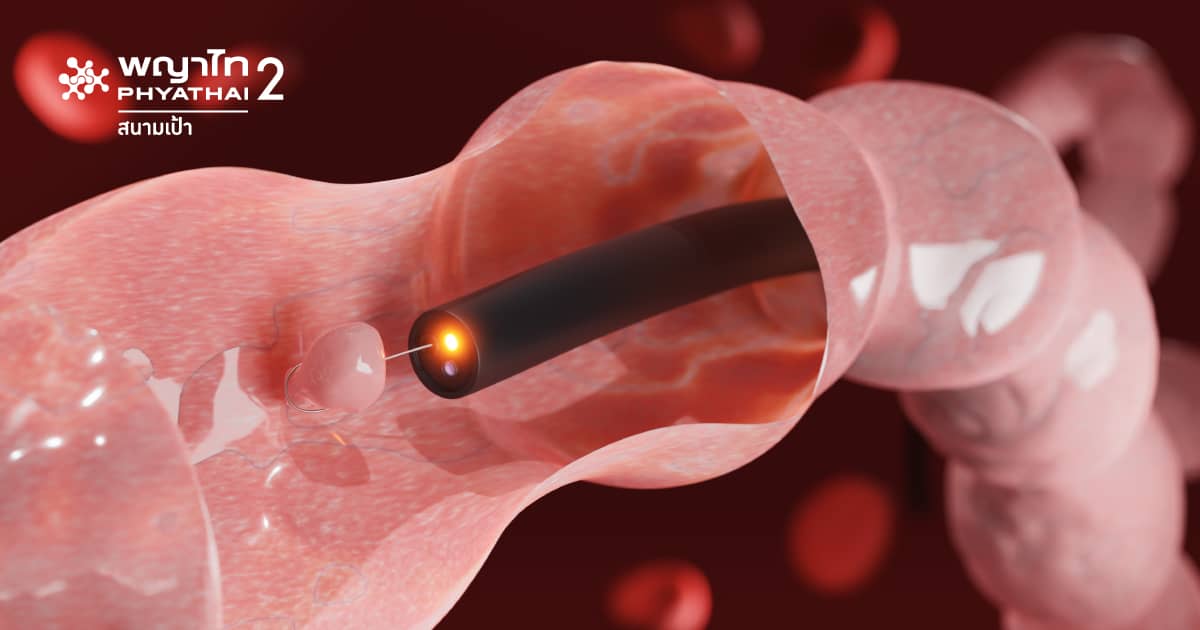
Gastrointestinal cancer refers to a group of cancers that develop in various organs of the digestive system, such as the esophagus, stomach, small intestine, colon, and rectum. Common types of gastrointestinal cancer include:
- Esophageal Cancer
This type of cancer is often associated with risk factors such as smoking, alcohol consumption, and dietary habits—particularly the intake of nitroso compounds or nitrosamines found in processed meats. Chronic gastroesophageal reflux disease (GERD) is also a contributing factor. Esophageal cancer is mainly divided into two types: Squamous Cell Carcinoma and Adenocarcinoma. - Stomach Cancer
Most commonly presents as Gastric Adenocarcinoma, which is linked to infection with Helicobacter pylori, smoking, and certain dietary practices—especially the consumption of very salty or fermented foods. - Colorectal Cancer
Key risk factors include genetics, dietary patterns, and lifestyle. Screening plays an essential role, as early detection significantly improves treatment outcomes and increases survival rates.
Early-Stage Cancer Overview
Early-stage cancer (Stages 0 and 1) refers to the phase in which cancer cells are confined to the innermost lining of the affected organ. These stages can be further categorized as follows:
- Stage Tis (Carcinoma in situ): This is the earliest stage where abnormal cancer cells have just begun to form and are confined to the epithelial layer (the innermost surface lining) without invading deeper tissues or spreading to other areas.
- Stage T1: At this stage, cancer cells have started to invade the inner mucosal layer but have not penetrated beyond that.
In most cases, patients with early-stage cancer do not exhibit noticeable symptoms. These cancers are often detected through screening programs or routine endoscopic examinations. When identified at this stage, treatment is typically very effective. A common treatment method is Endoscopic Submucosal Dissection (ESD), which involves removing the cancerous tissue using a specialized endoscope. This technique is usually sufficient on its own, as the risk of lymph node metastasis is very low.
The treatment outcomes for early-stage cancers are excellent, with a 10-year survival rate of over 90%.
What is ESD (Endoscopic Submucosal Dissection) for Cancer Treatment?
Assoc. Prof. Dr. Chonlada Krutsri explains that endoscopic Submucosal Dissection (ESD) is a technique used to remove early-stage cancers or precancerous lesions in the gastrointestinal (GI) tract.
The procedure involves inserting an endoscope through the mouth (Esophagoduodenoscopy; EGD) for treating cancers in the esophagus or stomach, or through the rectum (colonoscopy) for removing cancers in the colon or rectum. ESD enables precise removal of tumors located in the mucosal layer without the need for major surgery, as the risk of cancer cells spreading to lymph nodes at this stage is very low.
Endoscopic cancer surgery using ESD can serve both diagnostic and therapeutic purposes, such as removing polyps that may develop into cancer (e.g., high-grade dysplasia or adenomas), and treating early-stage GI cancers like esophageal or gastric cancer. However, ESD is not suitable for tumors that have invaded the muscular layer or have metastasized to the lymph nodes.
Steps of Endoscopic Submucosal Dissection (ESD)
- The procedure begins with a thorough diagnosis to determine the location, size, and characteristics of the tumor or cancerous lesion. If the tumor is found to be confined to the mucosal layer and has not spread to the lymph nodes, treatment can proceed.
- On the day of the procedure, the patient will be given either general anesthesia or deep sedation, depending on the case. The physician then uses an endoscope to carefully examine the tumor. A special solution—such as saline, hyaluronic acid, or methylene blue dye—is injected into the submucosal layer to lift the mucosa away from the muscle layer. This makes dissection easier and helps avoid injury to the muscle layer, reducing the risk of damage to surrounding tissues.
- A specialized electrosurgical knife is used to gradually cut around the lesion, separating the mucosa from the underlying tissue. If bleeding occurs, the doctor may use electrocoagulation, hemostatic clips, or inject a hemostatic agent to control it. Once the lesion is completely removed, the tissue specimen is sent for pathological examination to confirm whether it is cancerous and to identify the specific type of cancer.
Recovery After Endoscopic Submucosal Dissection (ESD)
In general, patients only need to stay in the hospital for a few days after ESD, depending on the size of the tumor and the complexity of the procedure. During the initial recovery period, patients may experience abdominal bloating, fullness, or mild bleeding.
If the procedure involves esophageal cancer, patients may also experience a sore throat. The doctor will recommend starting with a soft or liquid diet and will monitor for possible complications such as delayed bleeding or perforation. In rare cases where severe symptoms occur, an additional endoscopic procedure may be needed for treatment. Once the patient has recovered, regular follow-up visits are essential to monitor treatment outcomes and watch for any recurrence.
Advanced-Stage Cancer
Advanced cancer refers to tumors that have invaded the deeper submucosal layers (T1b) or the muscular layer of the gastrointestinal tract (T2, T3), which have a higher risk of spreading to the lymph nodes compared to early-stage cancers. This stage is commonly seen among Thai patients. Symptoms may include bloating, indigestion, gastrointestinal bleeding, difficulty passing stools, or narrow stool caliber.
Treatment for Advanced-Stage Cancer
Treatment options for this stage of cancer include
Surgical Resection of the Stomach and Lymph Nodes
In appropriate cases, surgery can be performed using a minimally invasive or laparoscopic approach. This technique offers advantages such as faster recovery, less postoperative pain, with no significant difference in surgical outcomes compared to open surgery.
- Chemotherapy
This involves the use of chemical drugs to destroy cancer cells. It can be combined with other treatments to shrink tumors and prevent recurrence, especially in cases of metastatic cancer.
- Radiation Therapy
This method uses high-energy radiation to target and destroy cancer cells. It is suitable for early to intermediate-stage cancers or used palliatively in advanced cases to improve the patient’s quality of life.
- Immunotherapy
This treatment stimulates the immune system to recognize and destroy cancer cells. It is particularly useful in certain cancers that do not respond to conventional treatments, especially in metastatic stages.
- Targeted Therapy
This approach uses drugs that specifically block proteins or molecular mechanisms that drive cancer growth.
Often, multiple treatment methods are used together to enhance efficacy and reduce the risk of recurrence. For example:
- Chemotherapy may be combined with radiation therapy, targeted therapy, or immunotherapy before surgery to shrink the tumor.
- Chemotherapy, radiation, or immunotherapy may be used after surgery to prevent recurrence.
Metastatic Cancer
This refers to cancer that has spread to other organs such as the liver, pancreas, abdominal cavity, lungs, or distant lymph nodes. In this stage, the primary treatment is chemotherapy. Surgery is typically reserved for complications like gastrointestinal obstruction or uncontrollable bleeding. Although the prognosis at this stage is generally poor, some patients respond well to chemotherapy and may later become eligible for curative surgery.
In addition, modern approaches are available for treating peritoneal metastasis (cancer spread within the abdominal cavity). Traditional treatment with systemic intravenous chemotherapy often fails to adequately reach tumors in the abdominal cavity and provides insufficient drug concentration to destroy widespread cancer cells.
Today, a more advanced approach—Cytoreductive Surgery (CRS) combined with Hyperthermic Intraperitoneal Chemotherapy (HIPEC)—is used to improve survival rates in patients with peritoneal carcinomatosis.
What is CRS with HIPEC in Cancer Treatment?

Dr. Worapong Anuponganan explains that Cytoreductive Surgery (CRS) combined with Hyperthermic Intraperitoneal Chemotherapy (HIPEC) is an increasingly recognized treatment for advanced-stage cancer that has spread within the abdominal cavity. This approach addresses the limitations of traditional intravenous chemotherapy, which often cannot adequately reach tumors dispersed throughout the abdomen. Additionally, the concentration of chemotherapy drugs administered through the bloodstream is usually not high enough to effectively destroy large volumes of cancer cells.
CRS aims to surgically remove all visible tumors from the abdominal cavity, while HIPEC involves the direct application of heated chemotherapy drugs into the abdomen during surgery. This allows for high-concentration, localized chemotherapy that penetrates microscopic cancer cells more effectively, improving the chances of disease control and potentially extending survival in selected patients.
What Types of Cancer Can Be Treated with CRS and HIPEC?
The combination of surgery and chemotherapy through Cytoreductive Surgery (CRS) and Hyperthermic Intraperitoneal Chemotherapy (HIPEC) enhances the effectiveness of treatment for advanced-stage cancer by targeting and destroying residual cancer cells that may remain in the abdominal cavity after surgery. Cancers that can be treated with CRS + HIPEC include:
- Peritoneal carcinomatosis (cancer spread within the peritoneal lining)
- Appendiceal cancer
- Ovarian cancer
- Colorectal cancer
- Stomach (gastric) cancer that has not spread beyond the abdominal cavity
- Pseudomyxoma peritonei, a condition involving mucinous fluid accumulation in the abdomen, often caused by appendiceal cancer
However, this approach is not suitable for all patients and must be carefully evaluated by a specialist based on the individual’s condition.
Treatment Process: CRS Combined with HIPEC
The CRS + HIPEC procedure involves two critical steps:
- Cytoreductive Surgery (CRS)
The surgeon removes as much visible tumor tissue as possible. For optimal effectiveness, any remaining cancerous tissue should be no larger than 2.5 mm. The surgery may involve resecting affected organs or peritoneal surfaces where cancer has spread.
- Hyperthermic Intraperitoneal Chemotherapy (HIPEC)
After the surgery, a heated chemotherapy solution (41–43°C) is circulated within the abdominal cavity for 30 to 120 minutes. The elevated temperature increases drug penetration into cancer cells and enhances the ability to destroy microscopic cancer that may remain.
At the Advanced Surgery Excellence Center, Phyathai 2 Hospital, we offer comprehensive cancer care through a team of specialized physicians and multidisciplinary experts, supported by state-of-the-art technology and a wide range of surgical techniques. These include advanced endoscopic procedures such as Endoscopic Submucosal Dissection (ESD) and minimally invasive laparoscopic surgery, which minimize visible scarring, speed up recovery, and improve patients’ quality of life.
For patients with abdominal metastatic cancer, CRS combined with HIPEC provides a powerful and effective treatment option to increase survival outcomes.
If you have any questions, you are welcome to schedule a consultation. Our team will help tailor a treatment plan that meets your needs, aligning with the principles of Value Healthcare in every aspect.
