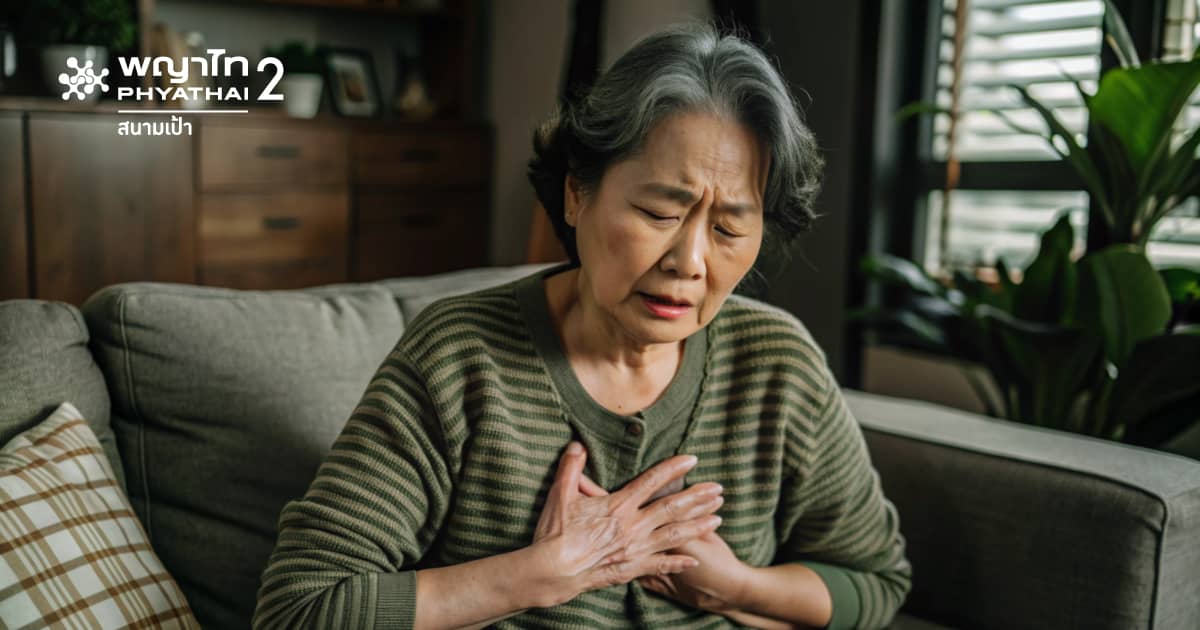
In an era where cardiovascular disease remains one of the leading causes of death among Thais and worldwide, a major problem complicating treatment is “coronary artery calcification” or vascular hardening due to calcium buildup (Severe Coronary Calcification).
The IVL (Intravascular Lithotripsy) technology has therefore been developed to help “break down calcium deposits inside the blood vessels,” increasing the safety and effectiveness of vessel dilation and stent placement.
What is IVL?
IVL (Intravascular Lithotripsy) is a medical technology that uses “low-energy shockwaves” delivered through a balloon inside the blood vessel to break and dissolve calcium attached to the coronary artery walls. The principle is similar to kidney stone lithotripsy but is specifically designed for coronary arteries. It can break down hard and deep calcium without damaging the surrounding normal tissue.
What causes coronary artery calcification?
Calcium accumulation in the vessel walls results from chronic inflammation and fatty plaque buildup (Atherosclerosis), commonly found in individuals with risk factors such as:
- Diabetes
- High blood pressure
- High blood cholesterol
- Smoking
- Increasing age
When vessels harden and narrow, normal dilation may be difficult, risking incomplete stent expansion, which increases the chance of restenosis in the future.
IVL treatment procedure
- The doctor inserts a catheter through the blood vessel to the narrowed site.
- The IVL balloon is positioned at the site with calcium deposits.
- Low-energy shockwaves are released through the balloon.
- The shockwaves create small cracks in the calcium.
- The balloon is then expanded, and the stent is properly placed.
This technique helps make the vessel walls more flexible and reduces the pressure needed for vessel dilation.
Advantages of IVL
- Breaks down calcium in both superficial and deep layers
- Reduces the risk of vessel tearing compared to other calcified vessel treatments
- Improves stent placement effectiveness
- Uses low energy, minimizing damage to surrounding tissues
- Helps reduce certain complications in patients with severe vascular calcification
Who is it suitable for?
IVL is usually considered for patients who have:
- Coronary artery stenosis with heavy calcium buildup
- Previously unsuccessful vessel dilation or stent expansion failure due to calcium
- High risk of complications from high-pressure dilation
- Elderly patients or those with multiple comorbidities
The choice of treatment depends on the evaluation by a cardiovascular specialist.
How is IVL different from other methods?
| Treatment Method | Principle | Highlights |
| Conventional Balloon | Dilation by pressure | Suitable for less hardened fatty plaques |
| Rotational Atherectomy | High-speed rotating burr | Cuts calcium on the inner surface |
| IVL | Uses shockwaves to break calcium | Breaks calcium on both inner surface and deep layers, increasing vessel flexibility |
Who is Intravascular Lithotripsy (IVL) technology suitable for?
- Patients with coronary artery stenosis with heavy calcium deposits (Severe Coronary Calcification) where vessels are hardened and difficult to dilate, risking incomplete dilation with conventional balloons.
- Those who have had unsuccessful vessel dilation, such as incomplete stent expansion or recurrent stenosis due to severe vessel hardening.
- Elderly patients or those with diabetes, chronic kidney disease who often have more vascular calcium buildup than the general population.
- Patients seeking to reduce risks from complex procedures. IVL uses low-pressure shockwave energy to break calcium while minimizing vessel wall injury compared to some traditional techniques.
Coronary artery disease with “heavy calcium buildup” is one of the conditions that complicate treatment and increase the risk of future complications. The IVL (Intravascular Lithotripsy) technology plays an important role in breaking down calcium from inside the vessels, making the vessel walls more flexible and enabling appropriate vessel dilation or stent placement according to medical indications.
However, the choice of treatment method—whether Balloon, Rotational Atherectomy, or IVL—requires detailed evaluation by a cardiovascular specialist and accurate diagnostics to plan the most suitable treatment for each individual.
At the Heart Center, Phyathai Hospital 2, we provide comprehensive care for cardiovascular patients, from risk screening and diagnosis using advanced technology to treatment by an experienced specialist team under the safety standards of a leading private hospital.
Assoc. Prof. Dr. Kulyos Jongpipatvanich
Cardiologist and Specialist in Cardiac Catheterization and Vascular Dilation
Heart Center, Phyathai Hospital 2
