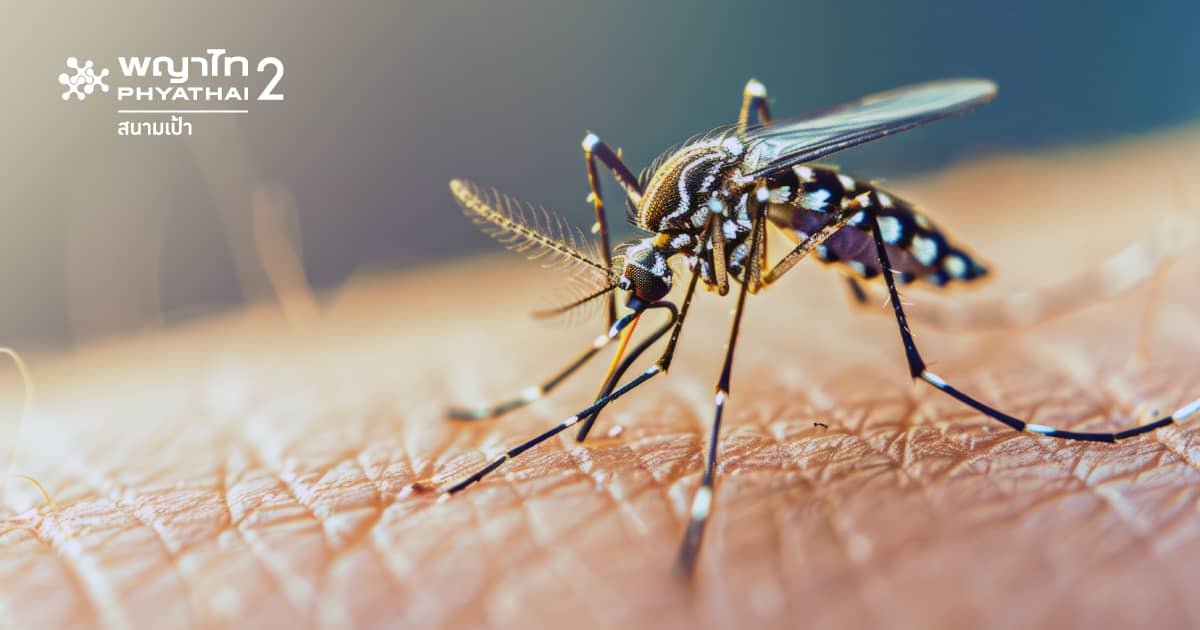
In many parts of the world, the “sound of mosquitoes” is not just a nuisance, but sometimes… it can be a warning sign of a serious disease called “Malaria, an infectious disease that remains a major public health problem in many countries, including Thailand, especially in border areas or near forests and mountains
‘What causes Malaria?’
Malaria is caused by an infection of a parasite called Plasmodium which enters the body through the bite of a female mosquito of the genus Anopheles. The parasite then travels to the “liver” to mature before entering the bloodstream and starting to destroy red blood cells, causing symptoms of fever, chills, and fatigue . In Thailand, several species are found, such as
- Plasmodium falciparum the most severe type, which can be fatal
- Plasmodium vivax commonly found and can relapse
- Plasmodium knowlesi a parasite found in monkeys but can infect humans in some areas
Symptoms of Malaria
Symptoms usually begin within 7–14 days after being bitten by a mosquito, characterized by “cyclical fever” and symptoms that worsen if untreated. Common symptoms include
- High fever, chills, excessive sweating
- Headache, body aches
- Nausea, vomiting
- Fatigue, loss of appetite
- In severe cases, symptoms may include pale skin, jaundice, seizures, or unconsciousness
If left untreated for a long time, the parasite may spread to the brain, kidneys, or liver, causing cerebral malaria (Cerebral Malaria), which can be life-threatening
Diagnosis
Malaria can be diagnosed by several methods, such as
- Blood smear microscopy (Blood smear) to detect parasites in red blood cells
- Rapid Diagnostic Test (RDT) to quickly detect parasite proteins
- PCR or molecular methods for accurate species identification
If you have a fever and have traveled to a risk area, you should see a doctor immediately for a blood test because the earlier the diagnosis, the more timely the treatment
Treatment of Malaria
Treatment depends on the species of parasite and severity of the disease. Doctors will prescribe antimalarial drugs (Antimalarial drugs) such as
- Artemisinin-based Combination Therapy (ACT)
- Primaquine (for some species that hide in the liver to prevent relapse)
There is also symptomatic treatment such as fluid replacement, fever reduction, and monitoring for complications. It is important not to stop medication on your own and to complete the full course as prescribed by the doctor
How to prevent Malaria?
- Sleep under a mosquito net or insecticide-treated net
- Apply mosquito repellent, especially on arms, legs, and neck
- Wear long-sleeved shirts and long pants when in risk areas
- Eliminate mosquito breeding sites such as standing water
- If traveling abroad, consult a doctor to receive malaria prophylaxis medication (Prophylaxis)
Thailand was once one of the countries with a high incidence of malaria outbreaks, but through cooperation from many sectors, currently more than 46 provinces have been declared malaria-free . However, there are still border areas, forests, mountains, and migrant workers that remain at risk, requiring continuous surveillance and prevention
“Malaria” is a treatable disease if detected early, but if neglected…it can be life-threatening. Do not ignore fever symptoms after returning from risk areas and remember to protect yourself from the tiny mosquitoes that can bring serious diseases to you at any time
Dr. Pitak Dechaporntewan
Infectious Disease Specialist
Phyathai 2 Hospital
